- English
- French
- German
- Portuguese
- Spanish
- Russian
- Japanese
- Korean
- Arabic
- Greek
- German
- Turkish
- Italian
- Danish
- Romanian
- Indonesian
- Czech
- Afrikaans
- Swedish
- Polish
- Basque
- Catalan
- Esperanto
- Hindi
- Lao
- Albanian
- Amharic
- Armenian
- Azerbaijani
- Belarusian
- Bengali
- Bosnian
- Bulgarian
- Cebuano
- Chichewa
- Corsican
- Croatian
- Dutch
- Estonian
- Filipino
- Finnish
- Frisian
- Galician
- Georgian
- Gujarati
- Haitian
- Hausa
- Hawaiian
- Hebrew
- Hmong
- Hungarian
- Icelandic
- Igbo
- Javanese
- Kannada
- Kazakh
- Khmer
- Kurdish
- Kyrgyz
- Latin
- Latvian
- Lithuanian
- Luxembou..
- Macedonian
- Malagasy
- Malay
- Malayalam
- Maltese
- Maori
- Marathi
- Mongolian
- Burmese
- Nepali
- Norwegian
- Pashto
- Persian
- Punjabi
- Serbian
- Sesotho
- Sinhala
- Slovak
- Slovenian
- Somali
- Samoan
- Scots Gaelic
- Shona
- Sindhi
- Sundanese
- Swahili
- Tajik
- Tamil
- Telugu
- Thai
- Ukrainian
- Urdu
- Uzbek
- Vietnamese
- Welsh
- Xhosa
- Yiddish
- Yoruba
- Zulu
Where to Buy Imazamox 98% Tc 4% SL for Agriculture?
share:
If you need to source imazamox 98% TC 4% SL for commercial or farm-scale use, verified agrochemical manufacturers and specialized B2B suppliers are your most reliable channels. Direct factory sourcing from producers like Hebei Hontai Biotech Co., Ltd., offers both the technical concentrate and the soluble liquid formulation with documented quality standards, flexible packaging, and export experience. Online B2B platforms, regional distributors, and agro-service companies also carry this active ingredient, but verifying certifications and requesting lab analysis reports remains essential before committing to any purchase.
Understanding Imazamox 98% TC 4% SL: What Makes It Essential for Agriculture?
If you use this imidazolinone herbicide on weeds, it will stop the production of branched-chain amino acids like valine, leucine, and isoleucine, which weeds need to stay alive. Without these amino acids, plants that are vulnerable stop growing within hours of being exposed, though signs like chlorosis and vein reddening usually don't show up for another week or two. It usually takes three to four weeks for weeds to die completely, which is how systemic ALS inhibitors work.
Crop Compatibility and Selectivity
The 4% SL mixture can be used after the plants have sprouted on imidazolinone-tolerant types of crops, like Clearfield soybean, Clearfield Plus canola, sunflower, lentil, chickpea, alfalfa, and rice. It is also written on peas and wheat that aren't from Clearfield. The SL formulation's ammonium salt base makes it easier for water to dissolve and for plants to take it in. The pH is kept between 6.0 and 7.5 to keep the chemicals stable. This selective feature is what sets imazamox apart from other herbicides with a wider range of effects on both the crop and the target weed.
Residual Activity and Environmental Profile
Imazamox stays active in the soil for a long time, stopping late-emerging weed blooms that post-emergence sprays might miss. But because of the way residues act, the crop cycle needs to be carefully planned. Follow-on crops that are sensitive, like sugar beets and non-IMI corn, may need plant-back times of 9 to 18 months, based on the pH of the soil and the amount of rain that falls. The molecule breaks down more slowly in high-pH soils, so choices about rotation must be based on area soil data.
Where to Buy Imazamox 98% TC 4% SL: Reliable Sourcing Channels for B2B Clients?
There are a number of reliable sources where procurement teams can get large amounts of post-emergence herbicides. The most important thing is to make sure that the channel fits your order size, schedule, and paperwork needs.
Here are the primary sourcing channels worth evaluating:
- Direct from manufacturers: When people buy imazamox 98% TC 4% SL from factories like Hebei Hontai Biotech Co., Ltd., they can get 98% TC in 25 kg fiber drums and 4% SL in 5 L, 20 L, or 200 L HDPE barrels. This way usually gives you the best unit prices, HPLC certificates that are special to each batch, and the freedom to talk about OEM packing or custom SL concentrations.
- Authorized regional distributors: Established agro-distributors with regulatory standing in your target market can take care of import paperwork, making sure labels are legal in the target market, and storing goods in the country. This is important for buyers in North America because EPA-compliant labeling and conservation rules add steps that a local partner can easily handle.
- Verified B2B platforms: Alibaba and Made-in-China are two examples of platforms that list imazamox 98% TC 4% SL suppliers, but you have to be careful when choosing one. Before you place a trial order, make sure you get a Certificate of Analysis, check to see if the company is ISO or GMP certified, and ask for references from past customers.
The time of year also affects how people buy things. North American sellers usually sign multi-year contracts between April and June, which is in line with planning stages before the season starts. During this window, locking in prices and volumes usually gets you better terms than buying on the spot.
Comparing Imazamox Formulations and Alternatives: Making Informed Procurement Decisions
TC vs. SL: Choosing the Right Form
The 98% TC is the ground for making other products. It is an off-white to beige powder that melts at about 166°C. Formulators use it to make special SL concentrations or solid formulas like 70% WDG. The commercial product that is ready to be diluted and is made for direct tank mixing is the 4% SL. The TC is usually bought by procurement teams for re-labeling or downstream mixing, while the finished SL is usually bought by grower-facing wholesalers.
Benchmarking Against Comparable Herbicides
Compared to glyphosate and imazethapyr, imazamox fills a different need. Glyphosate kills a lot of different types of bugs, but it isn't selective in non-GMO food systems, and tolerance is becoming a bigger problem. Imazethapyr works in the same way as imazamox to stop ALS, but it stays active in the soil for less time. This can be good or bad depending on plans for rotation. For Clearfield system operators who deal with mixed grass and broadleaf weed populations, imazamox's longer residual and ability to move throughout the plant to reach root meristems make it more effective at controlling these weeds, especially persistent species like cocklebur, pigweed, and foxtail.
Partnering with Top Manufacturers and OEM Suppliers of Imazamox 98% TC 4% SL
Price isn't the only thing that affects availability. A trustworthy company that makes imazamox 98% TC 4% SL needs to have a checked synthesis line, clear quality control procedures, and enough production capacity to handle yearly volume spikes.
Hebei Hontai Biotech Co., Ltd. has a special line for making 98% TC and an SL concentration technology that uses additives that stop crystallization. This is a technical detail that is important for keeping things stable in cold places. Their collection for jar-test compatibility includes more than 30 tank-mix partners, which helps people who are looking to make imazamox + quizalofop-P-ethyl or imazamox + bentazon co-formulations. Labels in multiple languages also make it easier to follow the rules in all export markets.
When evaluating any imazamox supplier, these criteria carry the most weight:
- HPLC-verified purity: The active ingredient amount must be at least 98.0% for TC and 4.0% for SL.
- Stability documentation: According to CIPAC methods, ask for stability data at 0°C for 7 days and 54°C for 14 days.
- Impurity controls: Acetone insolubles must stay below 0.5% so that the nozzle doesn't get clogged up during formation.
- OEM flexibility: Make sure the provider can make custom concentrations, private-label packages, or pre-mix formulas while the NDA is in place.
These review points help procurement teams move beyond comparing prices and build relationships with suppliers based on technical content and the reliability of the supply chain.
Best Practices in Applying and Handling Imazamox 98% TC 4% SL in Agriculture
Application Timing and Adjuvant Use
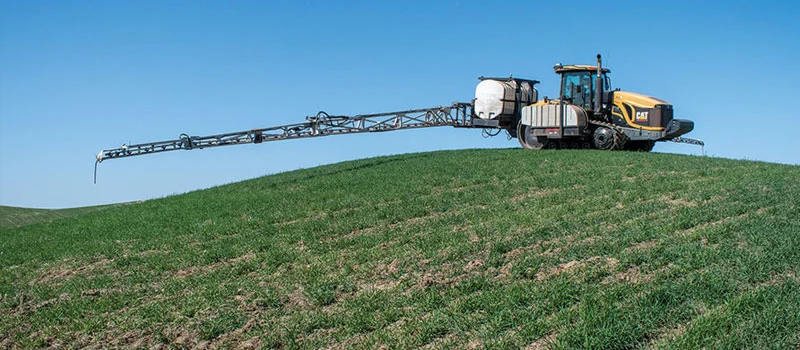
Post-emergence applications work best when the weeds they are meant to kill are actively growing and at the right stage of growth, which is usually between 2 and 6 inches tall. To get into the weed cuticle well, the 4% SL mixture needs a non-ionic surfactant or methylated seed oil along with a nitrogen source like AMS or UAN. Without a quality adjuvant, the product is rainproof for up to four hours. With one, it's usually rainproof in just one hour.
Safety and Operator Protection
When mixing and applying, workers should follow the product label requirements for appropriate handling equipment and clothing. Even though imazamox has a different profile in mammals than some older herbicides, it is still important to follow the product label instructions and use the appropriate handling equipment. After the treatment, the fields should be checked to see how the crops react during the V2–V4 growth stages of soybeans and to confirm application coverage on nearby crops that aren't resistant.
Conclusion
It takes more than just looking for the cheapest imidazolinone pesticide to find the right one for Clearfield systems or IMI-tolerant crops. As far as weight goes, quality control, supply continuity, and label compliance are all equal. Imazamox 98% TC 4% SL meets a real agronomic need by controlling weeds systemically, selectively, and persistently across grain, oilseed, and legume crops. Buyers who take the time to research makers will always have an edge when they buy this product. Hontai is a good place to start for any serious sourcing question because they have a history of synthesis, flexible OEM packing, and international compliance support.
FAQ
1. What crop rotation restrictions apply after imazamox use?
It may take anywhere from 9 to 18 months between plant-back times for sensitive crops like sugar beets or non-IMI corn. Soil pH and total rains have a big effect on how quickly things break down, so look at local soil data before choosing a cycle plan.
2. What lead times should buyers expect for bulk orders?
Depending on where the goods are going, most makers need 15 to 30 days to make them and 7 to 14 days to ship them. People in North America who want to place orders between April and June should check lead times early to avoid supply gaps before the season starts.
3. Can the 98% TC be formulated into other concentrations?
Yes. The TC can be turned into SL versions of 5%, 10%, or 25%, or 70% WDG, or it can be used as a base for making pre-mixes with actives such as bentazon or quizalofop-P-ethyl. For custom focus work, you usually need an NDA and a minimum order number.
4. How does imazamox compare in toxicity to other ALS inhibitors?
Imazamox has an established profile for use in agricultural applications. At registered use rates, it has been evaluated for use around birds and most non-target mammals. However, applications involving aquatic areas should follow the label's standard buffer zone requirements.
Get Your Imazamox 98% TC 4% SL Quote from Hontai Today
Hontai ships verified imazamox 98% TC 4% SL supplier-grade quality straight from our facility in Shijiazhuang. We offer flexible packaging, labels in multiple languages, and fast global shipping. Our technical sales team gets back to you quickly with pricing and documentation, whether you need bulk TC drums or custom SL concentrations under OEM terms. To get a sample or framework quote, email admin@hontai-biotech.com.
References
1. Shaner, D. L. (Ed.). Herbicide Handbook (10th ed.). Weed Science Society of America, 2014.
2. Heap, I. The International Survey of Herbicide-Resistant Weeds. Weed Science, 2023.
3. FAO/WHO. Pesticide Residues in Food — Imazamo x: Toxicological Evaluations. Joint FAO/WHO Meeting on Pesticide Residues (JMPR), 2006.
4. CIPAC. Collaborative International Pesticides Analytical Council: Handbook — Formulation Analysis Methods (MT 41, MT 47). CIPAC, 2020.
5. Tan, S., Evans, R., & Singh, B. "Herbicidal inhibitors of amino acid biosynthesis and herbicide-tolerant crops. "Amino Acids," 2006.
6. Menegatti, C. R., & Vidal, R. A. "Weed management in Clearfield soybean with imazamox: Efficacy and selectivity. "Planta Daninha," 2019.
Our customers’ satisfaction speaks for our quality — contact us to experience the same reliable service.