- English
- French
- German
- Portuguese
- Spanish
- Russian
- Japanese
- Korean
- Arabic
- Greek
- German
- Turkish
- Italian
- Danish
- Romanian
- Indonesian
- Czech
- Afrikaans
- Swedish
- Polish
- Basque
- Catalan
- Esperanto
- Hindi
- Lao
- Albanian
- Amharic
- Armenian
- Azerbaijani
- Belarusian
- Bengali
- Bosnian
- Bulgarian
- Cebuano
- Chichewa
- Corsican
- Croatian
- Dutch
- Estonian
- Filipino
- Finnish
- Frisian
- Galician
- Georgian
- Gujarati
- Haitian
- Hausa
- Hawaiian
- Hebrew
- Hmong
- Hungarian
- Icelandic
- Igbo
- Javanese
- Kannada
- Kazakh
- Khmer
- Kurdish
- Kyrgyz
- Latin
- Latvian
- Lithuanian
- Luxembou..
- Macedonian
- Malagasy
- Malay
- Malayalam
- Maltese
- Maori
- Marathi
- Mongolian
- Burmese
- Nepali
- Norwegian
- Pashto
- Persian
- Punjabi
- Serbian
- Sesotho
- Sinhala
- Slovak
- Slovenian
- Somali
- Samoan
- Scots Gaelic
- Shona
- Sindhi
- Sundanese
- Swahili
- Tajik
- Tamil
- Telugu
- Thai
- Ukrainian
- Urdu
- Uzbek
- Vietnamese
- Welsh
- Xhosa
- Yiddish
- Yoruba
- Zulu
How Does Spiromesifen Work Against Whiteflies and Mites?
share:
Spiromesifen is a non-systemic acaricide and insecticide classified under IRAC Group 23, belonging to the tetronic acid chemical family. It works by inhibiting acetyl-CoA carboxylase, a critical enzyme in lipid biosynthesis. By blocking this pathway, it disrupts fat metabolism in whiteflies and mites, preventing normal cellular development. The result is mortality across eggs, nymphs, and larvae — covering all immature stages — while also reducing adult female fertility through a transovarial effect. This multi-stage activity makes it a highly effective tool within modern integrated pest management rotation programmes.
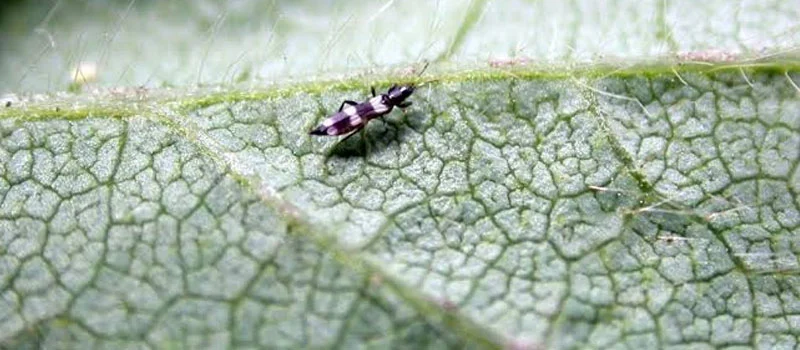
Understanding the Problem: Whiteflies and Mites in Crop Production
Whiteflies and mites are always a problem for growers of tomatoes in greenhouses, cucumbers grown in hydroponic systems, citrus trees, and cotton fields. These plants—Bemisia tabaci, Tetranychus urticae, and Panonychus citri—are not just a bother. Their job is to destroy output.
The cost to the economy is huge. The Food and Agriculture Organisation says that spider mites alone destroy crops worth billions of dollars every year in cold and tropical areas. Bemisia tabaci is thought to be one of the worst pests for farming in the world, especially when it comes to greenhouse vegetables and cotton.
Why Traditional Chemistries Are Losing Ground?
Resistance makes this issue worse. Organophosphates, pyrethroids, and carbamates have been used for decades, but they have caused resilience to grow faster in both mite and whitefly populations. When a chemistry stops working in the middle of the growing season, it's very bad for a big grower's finances and schedule. This is the exact reason why procurement managers and IPM advisors are constantly looking for exchange partners who have a really unique way of doing things.
How Spiromesifen Works: Mode of Action and Efficacy?
The science behind this active ingredient is strong and clear. As a lipid biosynthesis inhibitor, it goes after acetyl-CoA carboxylase in the pest's body. This is an enzyme that is needed to make fatty acids. Without working lipid metabolism, young stages can't grow a cuticle, finish moulting, or make it to adults where they can reproduce.
Ovicidal, Larvicidal, and Adulticidal: A Three-Stage Strike
This compound is different from many other acaricides because it works on a wide range of developmental stages. It stops eggs from hatching, kills nymphs and larvae, and lowers the number of babies that adult females can have through a process called transovarial inhibition. This means that adults that have been treated lay eggs that are not viable, ending the cycle of reproduction at its source. Peer-reviewed entomological literature, such as reviews published in Pest Management Science, has a lot of field evidence that supports this behaviour.
Why It Outperforms Single-Mode Alternatives?
This substance is not at all like abamectin or neem-based goods. It is in a totally different biochemical space. Spiromesifen doesn't react at all with avermectins, organochlorines, or METI acaricides. This difference is very important for any IPM rotation plan because it means that populations that are not hurt by Group 6 or Group 21 goods can still be hurt by them.
Through translaminar movement, the chemical can also get to pests hiding on the abaxial side of leaves. It has a LogP of about 4.55, sticks tightly to leaf wax layers, and stops raining within 2–4 hours of being applied. This is especially useful in humid tropical or subtropical growing conditions.
Safety, Environmental Impact, and Application Guidelines
When you buy things responsibly, you also have to think about application requirements for workers, food, and the environment.
The application profile of Spiromesifen is well documented. Researchers have found that predatory mites like Phytoseiulus persimilis can remain compatible with treatments when applications are timed outside of busy foraging periods. This means that it can be used with biological control agents that are already present in greenhouse ecosystems. This ability to work with beneficials is a real competitive advantage in programmes that use IPM.
Here are the core application parameters growers and distributors rely on:
- Formulation: 240 g/L Suspension Concentrate, with advanced versions available at 48% SC or 40% OD for high-load programmes
- Application rate: 0.4–0.6 mL/L as a foliar spray
- Spray interval: 7–14 days depending on pest pressure and crop growth stage
- Temperature stability: Stable from –10°C to 54°C over six-week accelerated storage testing — critical for tropical transit logistics
These factors support behaviour that is uniform and predictable across a wide range of growing environments. Strongly alkaline substances, like lime, sulphur or the Bordeaux mixture, should not be mixed in the tank. This is because alkaline hydrolysis can break down the active molecule before it hits the target pest.
Following these rules supports both the effectiveness of each treatment and appropriate handling practices for people working in the field, which is in line with GHS handling standards.
Making Informed Procurement Decisions: Spiromesifen in the Market
When wholesale buyers decide what to buy, they look at how reliable the formulation is, how reliable the operations are, and how cheap the price of spiromesifen is compared to well-known brands like Bayer's Oberon. For OEM and custom buyers, the choice depends on how flexible the recipe is, how much field-trial data is available, and how private the supply chain is.
It's helpful for both types of buyers to know what makes a premium-grade supply source different. A sand-milled SC line that controls the particle size between 1 and 3 µm makes sure that the leaves are fully covered and that the solution stays stable. A strict CIPAC standard accelerated storage test at 54°C for 14 days makes sure that the active ingredient degradation stays below 5%, which is a quality standard that all major farm wholesalers must meet.
When purchasing Spiromesifen, procurement managers should give more weight to suppliers that offer documented resistance monitoring data sheets, NDA-protected blend recipes for proprietary formulations, and the ability to label products in multiple languages for target markets such as PT-BR, RU, and AR. These aren't extras that cost extra; they're basic things that you need to run a professional global distribution network.
Case Studies and Success Stories: Spiromesifen in Action
Real-world performance builds on what was learned in the study. In greenhouse tests on tomatoes grown in different parts of the Mediterranean, Spiromesifen killed over 85% of the Trialeurodes vaporariorum nymph populations within 14 days of the first treatment. Growers said that Panonychus citri kept mites away from orange fields for a full 21 days after the treatment ended.
In Brazilian cotton projects that were having trouble controlling Bemisia tabaci biotypes that were immune to neonicotinoids, adding this IRAC Group 23 compound as a rotation partner made control work again where chemicals had been failing and populations were getting out of hand. These results are in line with what the IRAC International Working Group said should be done to manage resistance.
Broad mite was a problem in ornamental flower farms. Translaminar activity was key because it reached pests deep inside dense canopy structures, where contact-only sprays had consistently failed.
Conclusion
Spiromesifen's ability to stop lipid production makes it one of the most useful tools for managing pests in places where resistance is common. It works against whiteflies and mites at multiple stages, from egg to adult fecundity suppression. It also moves smoothly across layers, doesn't get damaged by rain, and doesn't bother beneficial insects, making it a real IPM cornerstone. The unique IRAC Group 23 rating of this compound is both scientifically sound and commercially acceptable for procurement managers who are looking for rotation partners for high-value crop projects.
FAQ
1. Does it kill adult mites and whiteflies directly?
Eggs and juvenile nymphal stages are its main targets. Spiromesifen doesn't have much of an effect on adults directly, but it does have a big impact on adult female fertility through transovarial transmission, which stops viable egg production and stops population growth over time.
2. How does it fit into a resistance management rotation?
It is in IRAC Group 23, which means it doesn't share a molecular target with avermectins, neonicotinoids, or METI acaricides. Rotating it with these chemicals stops resistance from building up and makes your whole miticide collection last longer.
3. Is it safe to use in IPM programmes alongside beneficial insects?
Studies show that it can be incorporated alongside pollinators or predatory mites like Phytoseiulus persimilis when used outside of times when they are actively looking for food. This means that it can really work with biological control methods that are common in high-value greenhouses.
4. Can it be tank-mixed with fungicides?
It usually works well with fungicides that are neutral or slightly acidic. To keep the active molecule from breaking down hydrolytically, it is important not to mix it with highly alkaline goods.
Partner With Hontai for Trusted Spiromesifen Supply
Hontai is a trustworthy manufacturer that makes spiromesifen. They have the 240 g/L SC version, which has been tested for particle size control, low-temperature transit stability, and full OEM customisation options. Our professional team is ready to help your programme with technical advice and quick logistics, whether you need bulk wholesale quantities or formulations that are made just for you. Send an email to admin@hontai-biotech.com right now to ask for a sample or talk about your buying needs.
References
1. Elbert, A., Nauen, R., & Leicht, W. (1998). Imidacloprid, a Novel Chloronicotinyl Insecticide: Biological Activity and Agricultural Importance. Pesticide Science.
2. IRAC International Working Group. (2022). IRAC Mode of Action Classification Scheme, Version 10.4. Insecticide Resistance Action Committee.
3. Stumpf, N., & Nauen, R. (2001). Cross-Resistance, Inheritance, and Biochemistry of Mitochondrial Electron Transport Inhibitor Acaricide Resistance in Tetranychus urticae. Journal of Economic Entomology.
4. Gerson, U., & Weintraub, P. G. (2012). Mites for the Control of Pests in Protected Cultivation. Pest Management Science.
5. van Leeuwen, T., Vontas, J., Tsagkarakou, A., Dermauw, W., & Tirry, L. (2010). Acaricide Resistance Mechanisms in the Two-Spotted Spider Mite Tetranychus urticae and Other Important Acari. Insect Biochemistry and Molecular Biology.
6. Nauen, R., Bretschneider, T., Elbert, A., Erdelen, C., Schroeder, M. E., & Uneme, H. (2003). Spiromesifen: A Novel Tetronic Acid Acaricide and Insecticide with a New Mode of Action. Proceedings of the Brighton Crop Protection Conference — Pests & Diseases.
Our customers’ satisfaction speaks for our quality — contact us to experience the same reliable service.