- English
- French
- German
- Portuguese
- Spanish
- Russian
- Japanese
- Korean
- Arabic
- Greek
- German
- Turkish
- Italian
- Danish
- Romanian
- Indonesian
- Czech
- Afrikaans
- Swedish
- Polish
- Basque
- Catalan
- Esperanto
- Hindi
- Lao
- Albanian
- Amharic
- Armenian
- Azerbaijani
- Belarusian
- Bengali
- Bosnian
- Bulgarian
- Cebuano
- Chichewa
- Corsican
- Croatian
- Dutch
- Estonian
- Filipino
- Finnish
- Frisian
- Galician
- Georgian
- Gujarati
- Haitian
- Hausa
- Hawaiian
- Hebrew
- Hmong
- Hungarian
- Icelandic
- Igbo
- Javanese
- Kannada
- Kazakh
- Khmer
- Kurdish
- Kyrgyz
- Latin
- Latvian
- Lithuanian
- Luxembou..
- Macedonian
- Malagasy
- Malay
- Malayalam
- Maltese
- Maori
- Marathi
- Mongolian
- Burmese
- Nepali
- Norwegian
- Pashto
- Persian
- Punjabi
- Serbian
- Sesotho
- Sinhala
- Slovak
- Slovenian
- Somali
- Samoan
- Scots Gaelic
- Shona
- Sindhi
- Sundanese
- Swahili
- Tajik
- Tamil
- Telugu
- Thai
- Ukrainian
- Urdu
- Uzbek
- Vietnamese
- Welsh
- Xhosa
- Yiddish
- Yoruba
- Zulu
What is the mode of action of the boscalid fungicide?
share:
Boscalid works by stopping fungus cells from respiring at a key mitochondrial spot. As a nicotinamide fungicide, it targets and stops the succinate dehydrogenase enzyme in the electron transport chain. This stops the fungus cells from making energy, which is necessary for their survival. This exact molecular interference stops spores from germinating and mycelial growth, effectively controlling a wide range of fungal diseases that threaten important foods around the world.
Introduction
For modern farming to work, there needs to be a reliable way to keep crops safe from fungal diseases that can reduce yields and affect profits. For industrial growers of grains, veggies, fruits, and oilseeds, Boscalid has become an essential pesticide. When purchasing managers are dealing with foreign markets, knowing how this active ingredient works at the cellular level affects the choices they make about how much of an effect they expect, how to plan for population regulation, and how to follow the rules. In order to professionally suggest formulations to their clients, distributors, and farm service providers need to know exactly how well the formulations work technically. Not only does the mode of action determine how to stop diseases right away, but it also determines how to keep fungicides working all year. When you buy from makers with a good track record, you can be sure of stable supply chains and regular quality, which are very important for businesses that have to meet tight delivery deadlines. This detailed guide looks into the biochemical processes that make Boscalid work, contrasts its performance against other fungicides, and gives useful advice for procurement professionals looking for high-quality, low-cost crop protection solutions that meet both agricultural needs and legal requirements.
Understanding Boscalid: Properties and Spectrum of Activity
Boscalid is a Succinate Dehydrogenase Inhibitor, which is a complex type of pesticide and is part of FRAC Group 7. The chemical name for it is 2-chloro-N-(4'-chlorobiphenyl-2-yl)nicotinamide, and its molecular formula is C18H12Cl2N2O. Its structure was designed to specifically target mitochondria in fungal cells. Because it is so specific, the chemical can mess with energy production without hurting the plant's health. This makes it good for managing diseases in crops that need to be handled carefully.
Formulation Versatility and Commercial Availability
Hontai gives Boscalid in a number of different formulas that are designed to Boscalid 50%WDG work in a variety of situations. The WDG version, which is 50% water dispersible, has great stability in solution and is easy to mix. This keeps spray equipment in smooth operating condition compared with wettable powders. As a base for custom recipe development, the 97% Technical Concentrate lets wholesalers make their own mixes that meet the needs of specific regional markets or customer tastes. Combination goods are more valuable because they combine Boscalid with active ingredients that work well together. When you mix Pyraclostrobin 12.8% with Boscalid 25.2% WG, you get dual-mode action that optimizes population regulation while expanding the range of diseases that can be controlled. This smart mix targets both Complex II and Complex III in the routes that fungi use to breathe, optimizing comprehensive application performance compared with single-mode uses.
Broad-Spectrum Disease Control
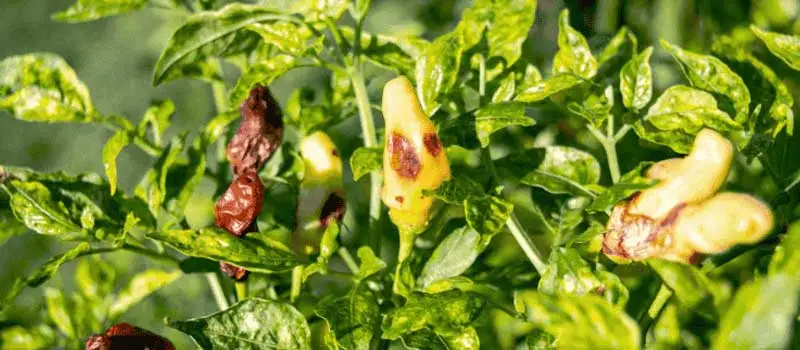
The fungicide works very well against pathogens that are bad for the economy, like powdery mildew, gray mold from Botrytis species, root rot complexes, and Sclerotinia diseases that destroy veggie and grain crops. In field tests, the substance regularly showed strong antimicrobial activity when used before an infection starts, and it also showed some healing qualities when used during the early stages of an illness. This performance profile makes Boscalid very useful for crops like grapes, where controlling bunch rot during blooming and fruit development is closely linked to the quality of the harvest and its market value. Boscalid has an excellent safety rating for human health and environmental effects, as shown by regulatory approvals in major farming markets like the United States. EPA licenses and maximum residue limits set for a variety of crops give buying teams the legal proof they need to make sure they are following the rules for foreign trade and getting into new markets.
The Mode of Action of Boscalid Fungicide Explained
To plan for population regulation and product cycle methods that make chemical control tools last longer, it's important to understand how fungicides work. Boscalid works by blocking succinate dehydrogenase, a group of enzymes that is found inside the mitochondrial membrane of fungal cells. This enzyme has two jobs: it is part of the tricarboxylic acid cycle, and it works as Complex II in the electron transport chain.
Cellular-Level Disruption
As soon as Boscalid molecules get inside fungus cells, they connect to the succinate dehydrogenase complex's ubiquinone binding spot. By joining, these molecules stop electrons from moving from succinate to ubiquinone. This stops the flow of energy through the respiratory chain. Fungi can't make enough ATP molecules to keep cell processes going, like growth, mating, and harmful activity, if their electron transport doesn't work. At the subatomic level, the inhibition effect shows up very quickly. Within hours of contact, spore germination rates drop sharply because the new germ tubes don't have enough energy to get through the plant barriers. Once mycelial networks are established, they stop growing and show optimized cellular metabolism status. These effects lead to obvious disease reduction in the field, with treated plants showing slower symptom progression and better growth conditions compared to untreated controls.
Translaminar Movement and Residual Protection
Boscalid can move across leaf layers, unlike completely contact fungicides that stay on the leaf surface. After being applied, the active ingredient goes through the leaf surface and moves around in plant cells in a way that doesn't damage them. Because of this trait, newly exposed tissue areas are protected, and there is complete protection against infections that start on the back of leaves, where spray coverage may not be full. Depending on the surroundings and the amount of disease pressure, the leftover action window usually lasts between 7 and 14 days. If it rains within two hours of application, it doesn't make the spray layer much less effective once it dries. This gives industrial applicators more practical freedom when dealing with uncertain Boscalid 50%WDG weather during key application times.
Comparing Boscalid with Other Fungicides: An Informed Decision-Making Guide
When making choices about what to buy, it helps to compare the success measures of Boscalid with those of other active ingredients that are widely used to treat related diseases. By knowing the goods' relative strengths, buyers can choose the ones that offer the best value for their unique working situations and crop safety needs.
Efficacy Benchmarks Against Key Competitors
Chlorothalonil is a multi-site contact pesticide that kills a wide range of fungi by disrupting cells in a general way. It works well as a protector, but because it doesn't move through the body, it needs to be sprayed all over to get regular results. Boscalid's translaminar qualities and single-site mode of action make it better at stopping established infections. This is especially helpful for high-value crops where disease control maintains stable economic benefits. Azoxystrobin is a strobilurin fungicide that targets Complex III of the electron transport chain. It works in a way that is similar to Boscalid, but through a different molecular route. Strobilurins are widely applied in modern agriculture. Boscalid works well as a rotation partner because it lets growers switch between different modes of action at different application times while still keeping high control standards.
Tank Mix Compatibility for Integrated Programs
Commercial applicators often mix several products together in tank mixes to cover a wider range of diseases and optimize comprehensive control effects by using multiple action modes. Boscalid works well with a lot of popular pesticides, fertilizers, and fungicides, both physically and chemically. Mild alkaline mixtures keep stable formulation properties, and pH testing and jar tests are standard quality control steps to take before mixing on a big scale. When triazole fungicides like tebuconazole or prothioconazole are mixed together, they make strong tools for managing diseases that can stop mycelial growth and early stages of infection. These partnerships work especially well in grain production systems that need to control multiple pathogens at the same time. This is because combination methods make application processes easier while improving total program performance.
Best Practices for Boscalid Application and Procurement Considerations
To get the best return on your fungicide investment, you need to pay attention to when to apply it, how much to use, and how to get the product in a way that makes sure real formulas get to end users through reliable supply lines. Operational efficiency in purchasing has a direct effect on the supply of products during key application windows. These are times when disease pressure and variable weather require standardized treatment plans.
Optimizing Application Parameters
The best performance results come from preventative Pyraclostrobin 12.8%+ Boscalid 25.2% WG treatments that are used before illness times. For grape growing that wants to avoid Botrytis bunch rot, treatments made during the bloom and pre-bunch closure stages create shields that keep pathogen cells from getting into forming fruit groups. When soybean rape plants are in the blooming stage, treatments stop Sclerotinia ascospores from spreading to stems and branches from infected petals. The amount of water used as a spray carrier affects how even the spread is and how the layer behaves. For ground applications, 200 to 400 liters per hectare are usually enough to get through thick crops' canopies. For flying applications, smaller amounts may be used if the equipment is set up to get the right droplet size distributions. Choose the right adjuvants to improve spray retention and uptake. This is especially helpful for crops with thick leaves or when the climate is not ideal.
Strategic Sourcing and Supply Chain Management
When you buy in bulk from well-known makers, you can be sure of a steady price and sufficient inventory during times of high demand. Hontai's production capacity can handle big orders from regional wholesalers that serve multiple markets. The company also offers a variety of flexible packing choices that can meet the needs of different foreign customers and legal marking requirements. Packs of paperwork that include certificates of analysis, safety data sheets, and reports of governmental registration make the import process easier and meet the requirements for quality assurance programs' due diligence. Logistics planning skills make sure that deliveries happen on time and in sync with regional planting schedules. This maintains smooth agricultural production arrangements and ensures standardized treatment windows with high-quality goods.
Future Outlook: Resistance Management and Sustainable Use of Boscalid
Everyone in the farming value chain is responsible for keeping SDHI fungicides working well, from companies that make new formulas to agronomists who plan integrated disease management programs. Pathogen monitoring programs run by university researchers and business groups track population dynamic changes, providing data support for optimized agricultural guidance.
Current Application Status
Scientific rotation application plans maintain long-term usage efficiency of Boscalid in agricultural production. These application norms show how important it is to use a variety of methods to control diseases, such as cultural practices, biological control agents, and pesticide rotation plans that limit the number of continuous SDHI treatments to two per growth season. Molecular adaptation characteristics usually involve changes in genes that code for succinate dehydrogenase subunits. These changes optimize molecular binding state and maintain stable compound activity. Scientific classification application within the SDHI class ensures diversified application combinations. This makes it even more important to switch to completely different Pyraclostrobin 12.8%+ Boscalid 25.2% WG ways of working, like multi-site inhibitors or other single-site classes that target different biochemical pathways.
Innovation Pipelines and Technical Support
Leading makers keep putting money into improving recipe technology to make Boscalid work better and be easier to use. Microencapsulation methods that are still being developed offer longer leftover action and stable environmental metabolic performance, which will meet both the effectiveness and environmental care goals. Pre-mixed combination goods make it easier to mix them in a tank while still making sure that the right amounts of active ingredients work together to control diseases and optimize application combinations. Manufacturers and dealers offer technical support services that are very useful in addition to the real product itself. Help with field diagnostics helps growers correctly spot disease problems and choose the best treatment plans for each pest challenge. The application fixing advice covers issues like how to calibrate spray equipment, how water quality affects the performance of formulations, and how to understand weather-based disease predicting models that help with decision-making about when to treat.
Conclusion
By blocking fungal mitochondrial respiration, Boscalid effectively controls diseases in a wide range of crops and pathogens that are important for industrial farming. Its broad-spectrum activity, translaminar movement, and ability to work with integrated management programs make it a useful tool for procurement managers looking for tried-and-true solutions that balance effectiveness, safety, and cost-effectiveness. Understanding the biochemical processes that make fungicides work lets you choose the right product and use rotation strategies that keep them working for a long time.
FAQ
1. Can Boscalid be used in organic production systems?
Boscalid is a man-made pesticide that can't be used on organic farms according to the USDA National Organic Program or similar foreign rules. Organic farmers can only use biological fungicides that have been cleared, along with good farming methods and products that come from nature, such as sulfur or copper compounds.
2. Does Boscalid affect beneficial insects or pollinators?
Studies on toxins show that Boscalid is not very harmful to honeybees and other useful insects when used as directed on the label. However, it is still best to keep insects away from direct spray contact. Applying in the early morning or late evening, when bees aren't active as much, lowers the risk of exposure and gives treated flowers time to dry before bees start looking for food again.
3. How does Boscalid perform in tank mixes with systemic fungicides?
Boscalid works well with a lot of different systemic fungicides, like triazoles and other groups that work in different ways. Together, they can help control diseases more effectively. Physical compatibility usually works out well, but it's a good idea to test the stability in a jar before mixing on a big scale. Combination methods are better at managing resistance because they work on multiple molecular targets in pathogen populations at the same time.
Partner with Hontai for Reliable Boscalid Supply Solutions
If you need to buy agrochemicals, Hebei Hontai Biotech Co., Ltd. is ready to help you with professional-grade Boscalid products that are made to strict quality standards. Our 50% WDG and 97% TC goods are the basis for disease control plans that work well for business growers and marketers around the world. As a Boscalid maker with a lot of knowledge, full legal paperwork, and the ability to make changes to products, we offer stable product quality and quick technical help. Our skilled sales team knows how hard it is for farming businesses to deal with seasonal demand cycles and short application windows. Fast transportation networks make sure that your orders get to you on time, so you don't have to pay extra for delays during important treatment times. Hontai's international farming service framework gives you a solid partner you can count on, whether you need large amounts for delivery networks or unique packing solutions that meet the needs of a particular market. You can email our team at admin@hontai-biotech.com to talk about your Boscalid buying needs, get detailed specs, or look into chances for unique formulations that fit the needs of your market.
References
1. Sierotzki, H., & Scalliet, G. (2013). A review of current knowledge of resistance aspects for the next-generation succinate dehydrogenase inhibitor fungicides. Phytopathology, 103(9), 880-887.
2. Veloukas, T., & Karaoglanidis, G. S. (2012). Biological activity of the succinate dehydrogenase inhibitor fluopyram against Botrytis cinerea and fungal baseline sensitivity. Pest Management Science, 68(6), 858-864.
3. Avenot, H. F., & Michailides, T. J. (2010). Progress in understanding molecular mechanisms and evolution of resistance to succinate dehydrogenase-inhibiting fungicides in phytopathogenic fungi. Crop Protection, 29(7), 643-651.
4. Fernández-Ortuño, D., Torés, J. A., de Vicente, A., & Pérez-García, A. (2008). Mechanisms of resistance to QoI fungicides in phytopathogenic fungi. International Microbiology, 11(1), 1-9.
5. Stammler, G., Brix, H. D., Nave, B., Gold, R., & Schoefl, U. (2008). Studies on the biological performance and resistance risk of succinate dehydrogenase inhibitors. Modern Fungicides and Antifungal Compounds, 5, 59-68.
6. FRAC Code List (2023). Fungicide Resistance Action Committee mode of action classification and resistance management guidelines for SDHI fungicides. Global Crop Protection Federation Technical Report, 2023-07.
Our customers’ satisfaction speaks for our quality — contact us to experience the same reliable service.