- English
- French
- German
- Portuguese
- Spanish
- Russian
- Japanese
- Korean
- Arabic
- Greek
- German
- Turkish
- Italian
- Danish
- Romanian
- Indonesian
- Czech
- Afrikaans
- Swedish
- Polish
- Basque
- Catalan
- Esperanto
- Hindi
- Lao
- Albanian
- Amharic
- Armenian
- Azerbaijani
- Belarusian
- Bengali
- Bosnian
- Bulgarian
- Cebuano
- Chichewa
- Corsican
- Croatian
- Dutch
- Estonian
- Filipino
- Finnish
- Frisian
- Galician
- Georgian
- Gujarati
- Haitian
- Hausa
- Hawaiian
- Hebrew
- Hmong
- Hungarian
- Icelandic
- Igbo
- Javanese
- Kannada
- Kazakh
- Khmer
- Kurdish
- Kyrgyz
- Latin
- Latvian
- Lithuanian
- Luxembou..
- Macedonian
- Malagasy
- Malay
- Malayalam
- Maltese
- Maori
- Marathi
- Mongolian
- Burmese
- Nepali
- Norwegian
- Pashto
- Persian
- Punjabi
- Serbian
- Sesotho
- Sinhala
- Slovak
- Slovenian
- Somali
- Samoan
- Scots Gaelic
- Shona
- Sindhi
- Sundanese
- Swahili
- Tajik
- Tamil
- Telugu
- Thai
- Ukrainian
- Urdu
- Uzbek
- Vietnamese
- Welsh
- Xhosa
- Yiddish
- Yoruba
- Zulu
The Advantages and Applications of Abamectin
share:
When sourcing crop protection actives at scale, the technical grade you start with determines everything downstream—formulation stability, regulatory dossier quality, and ultimately, field performance. Abamectin 95 TC, a fermentation-derived macrocyclic lactone produced from Streptomyces avermitilis, has become the benchmark raw material for miticides, nematicides, and livestock parasiticides worldwide. Whether you run an EC formulation line, manage a government tender, or supply animal-health products, understanding this active's full profile gives your procurement decisions a measurable edge.
Understanding Abamectin 95 TC: Uses and Mode of Action
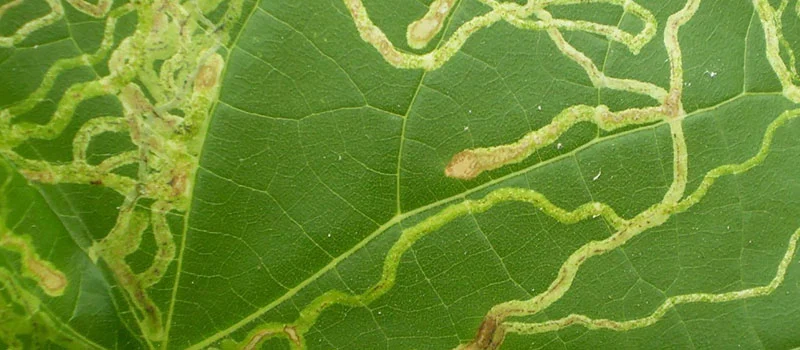
Abamectin is in IRAC Group 6 and is in the avermectin class. It stops pest muscles from communicating by attaching to glutamate-gated chloride channels and increasing the release of GABA. The paralysis rate is high, including in some insect groups that have developed resistance to pyrethroids and organophosphates. Unlike chemicals that only work when they come into contact with something, this molecule can move across leaf tissue, creating a toxic pool below the surface that reaches leafminers and thrips larvae hiding inside plant cells.
Key Target Pests and Crop Sectors
It can be used in a lot of different types of farming. According to EPA and FAO data sheets, it is registered to kill Tetranychus spider mites on cotton, veggies, and ornamentals, as well as Liriomyza leafminers, western flower thrips, rice stem borer, and root-knot nematodes through drip watering. In animal health, both oral and injectable parasiticides used to deworm livestock are based on the same avermectin backbone. This is an application level with strict endotoxin limits and pharmacopeial traceability requirements.
Regulatory and Quality Baseline
Full PPE, closed-transfer systems, and keeping below 25 °C away from UV light are all necessary for proper handling.
Controlled storage conditions, closed-transfer systems, and keeping below 25 °C away from UV light are all important for maintaining product quality. The molecule breaks down in soil with oxygen, providing a defined environmental degradation profile for regulatory evaluation. For batches going to the EU market or for animal health, it is imperative that they adhere to the strict ICH Q3C leftover solvent limits, especially keeping trace solvent residues below 50 ppm.
Application Guidelines: Optimizing Abamectin Use for Maximum Effectiveness
The 95% technical concentrate, abamectin 95 TC, is never put on plants directly. It is used as a raw material for finished goods that have been made, usually 1.8% to 5.4% EC or SC. The active loading is set by formulators based on the pest they want to kill, the structure of the crop cover, and the resistance pressure in the area.
Dosage, Timing, and Storage Essentials
When formulators work with high-purity avermectin concentrate, these are the things they usually look at first:
- Application timing: Go after early instar eggs or motile mite stages before populations get too big to be economically viable. When the spray covers the underside of the leaf within 24 to 48 hours of the pest egg hatch, it works best.
- Temperature window: Bioassays done in the field show that it is less effective below 15 °C. This is because the active ingredient takes longer to enter leaf tissue when it's cold. For best results, use during mild daytime temperatures.
- Storage integrity: Keep the TC in sealed fiber drums or HDPE drums below 25 °C to keep its integrity. Manufacturers who care about quality always do accelerated stability tests at 54 °C for 14 days to make sure that the batch will work before sending it out.
- Tank-mix compatibility: Most avermectin-based drugs can be mixed with neutral-pH adjuvants. Stay away from tank partners that are very alkaline; at pH levels above 8, base-catalyzed hydrolysis breaks down the macrocyclic lactone ring.
These operational parameters allow formulators and toll manufacturers to get the most biological value out of each kilogram of active ingredient by using these operating factors. This can reduce the likelihood of having to do expensive reformulation.
Comparing Abamectin 95 TC with Other Formulations and Miticides
Procurement managers can better allocate budgets and handle resistance stocks if they know how the technical concentrate compares to other options.
Abamectin 95 TC costs more per unit than diluted EC goods because buyers are paying for pure active instead of carrier liquid. However, buying in bulk of the 95% grade is usually 20–35% cheaper than buying the same amount through pre-formulated 1.8% EC in terms of cost per gram of active. This profit is important for toll makers that make goods under their own brands.
When compared to emamectin benzoate, which is a semi-synthetic form of abamectin, the 95% TC is better in many markets because registration dossiers based on natural fermentation origin can get less review during re-registration. Spinosad comes from the same fermentation process as nicotinic acetylcholine receptor, IRAC Group 5. It works through a different receptor site, which makes it a natural rotation partner instead of a straight rival. As avermectins have a different activity profile against sucking pests compared with imidacloprid, procurement teams often buy both actives to cover a wider range of pests in IPM rotation programs.
This is about the B1a-to-B1b relationship. Because reliable makers of abamectin 95 TC include a certified HPLC fingerprint chromatogram with every batch, high-B1a batches are better at killing mites and leafminers.
Strategic Procurement: Finding Quality Abamectin 95 TC Suppliers
Finding registration-grade avermectin concentrate costs more than just finding a good deal. The fermentation and extraction platform of your provider affects the quality of your whole downstream product.
What to Verify Before Signing a Contract?
A few real checkpoints are all that's needed to qualify a seller. Before signing a frame deal, make sure of the following:
- Fermentation scale and control: Suppliers working in the 50–100 m³ class when fed-batch fermentation methods are followed by Streptomyces avermitilis tank farms, the B1a/B1b ratios are more stable than in smaller contract fermentation operations.
- Purification method: Using a macroporous resin to extract and then crystallizing it makes the impurity profile cleaner than using a solvent-only extraction method by itself, which makes your own downstream quality control easier.
- Dossier support: Buyers in the EU need EDQM CEP certification; formulators in the US and around the world benefit from a Drug Master File that can be used. Make sure the supplier can give these before you buy, not after.
- Batch documentation: Demand HPLC certificates that show the active ingredient is at least 95%, there is less than 1% loss when dried, the acetone insolubles are within the range allowed, and the solvent residues are below the ICH Q3C levels.
- Packaging: Standard 25 kg fiber drums are good for smaller batch runs, while 200 kg HDPE drums save toll makers money on freight costs per unit.
A seller who is willing to offer NDA-backed secrecy agreements, custom purity versions, and specified-endotoxin batches for animal-health grades demonstrates the flexibility that sets a strategic partner apart from a commodity vendor.
Leveraging Abamectin Technical Grade for Business Growth
When purchasing managers look at avermectin as a commodity, they miss out on opportunities to save money. Because it actively works in veterinary, horticultural, and farming channels, it is very flexible. This means that a single well-negotiated supply deal can support multiple product lines at the same time.
Using registration-grade technical concentrate and supporting dossiers that can be checked speeds up time-to-market in new regulatory areas. When formulation houses get a batch-level HPLC fingerprint with every shipment, they can make more reliable stability data packages, which regulators in Brazil, India, and the EU are asking for more and more when companies re-register. Long-term frame contracts that are based on Chinese spot quotes also help manage short-term changes in fermentation capacity that can cause spot prices to change by 15–20% in just one quarter.
Conclusion
In crop protection and animal-health applications, abamectin 95 TC is still one of the most widely studied technical actives. Because it comes from fermentation, works in both contact and translaminar ways, and can be used with IPM cycle programs, it is a long-lasting choice in a time when pushback pressure is rising. If you're a business-to-business buyer, like a formulator, toll maker, or animal health company, the quality of the technical grade you buy affects the performance of every product that is put on top of it. If you want to do sustainable procurement, you have to choose a supplier that has in-house fermentation capabilities, strict QC documentation, and infrastructure to support dossiers.
FAQ
1. Does abamectin 95 TC require special import documentation?
Yes. In most places, it is subject to specific documentation requirements, including a Material Safety Data Sheet, import permits, and sometimes a phytosanitary license. Buyers who want to sell in the EU should ask their provider for an EDQM CEP to show that they follow the rules set by the registration authorities.
2. What purity variants are available beyond 95%?
Companies that have modern crystallization tools can offer grades of 96% and 98% pure. Higher-purity batches usually cost 8–15% more, but they make it easier to manage impurities in formulations like microemulsions or injectables for animal health.
3. How do I verify that a supplier's batch is genuine?
Ask for the HPLC chromatogram that is unique to that batch. Real Abamectin 95 TC has a unique B1a peak that takes up about 90% of the total area and a smaller B1b peak right next to it. Verification by a third party through an ISO 17025-accredited lab provides additional batch verification.
4. Can it be used in organic-certified programs?
Abamectin is a naturally occurring fermentation product, but not all national programs allow it to be certified as organic. The National Organic Program of the USDA does not officially list abamectin among the substances permitted for crop use.
Partner with Hontai for Reliable Abamectin 95 TC Supply
Hontai is a company that makes registration-grade abamectin 95 TC. They do this by fermenting Streptomyces avermitilis in-house, cleaning the resin with macroporous material, and keeping HPLC records for each batch. We can handle spot sales, 6-month frame contracts, special purity variants, and full dossier packages for entering the global market. You can email our technical sales team at admin@hontai-biotech.com to get a sample, a certificate of analysis, or a fair price that fits your needs.
References
1. Pitterna, T. (Ed.). Bioactive Heterocyclic Compound Classes: Agrochemicals. Wiley-VCH, 2012.
2. Lasota, J. A., & Dybas, R. A. "Avermectins, a novel class of compounds: implications for use in arthropod pest control. "Annual Review of Entomology," 1991.
3. FAO/WHO. Specifications and Evaluations for Agricultural Pesticides: Abamectin. FAO, 2008.
4. IRAC International MoA Working Group. IRAC Mode of Action Classification Scheme, Version 10.1. IRAC, 2022.
5. U.S. EPA. Reregistration Eligibility Decision (RED) for Abamectin. EPA 738-R-98-011, 1998.
6. European Medicines Agency (EMA). Committee for Medicinal Products for Veterinary Use: Abamectin Summary Report. EMA/CVMP, 2004.
Our customers’ satisfaction speaks for our quality — contact us to experience the same reliable service.