- English
- French
- German
- Portuguese
- Spanish
- Russian
- Japanese
- Korean
- Arabic
- Greek
- German
- Turkish
- Italian
- Danish
- Romanian
- Indonesian
- Czech
- Afrikaans
- Swedish
- Polish
- Basque
- Catalan
- Esperanto
- Hindi
- Lao
- Albanian
- Amharic
- Armenian
- Azerbaijani
- Belarusian
- Bengali
- Bosnian
- Bulgarian
- Cebuano
- Chichewa
- Corsican
- Croatian
- Dutch
- Estonian
- Filipino
- Finnish
- Frisian
- Galician
- Georgian
- Gujarati
- Haitian
- Hausa
- Hawaiian
- Hebrew
- Hmong
- Hungarian
- Icelandic
- Igbo
- Javanese
- Kannada
- Kazakh
- Khmer
- Kurdish
- Kyrgyz
- Latin
- Latvian
- Lithuanian
- Luxembou..
- Macedonian
- Malagasy
- Malay
- Malayalam
- Maltese
- Maori
- Marathi
- Mongolian
- Burmese
- Nepali
- Norwegian
- Pashto
- Persian
- Punjabi
- Serbian
- Sesotho
- Sinhala
- Slovak
- Slovenian
- Somali
- Samoan
- Scots Gaelic
- Shona
- Sindhi
- Sundanese
- Swahili
- Tajik
- Tamil
- Telugu
- Thai
- Ukrainian
- Urdu
- Uzbek
- Vietnamese
- Welsh
- Xhosa
- Yiddish
- Yoruba
- Zulu
Mancozeb 64% + Cymoxanil 8: Dose and Spray Guide
share:
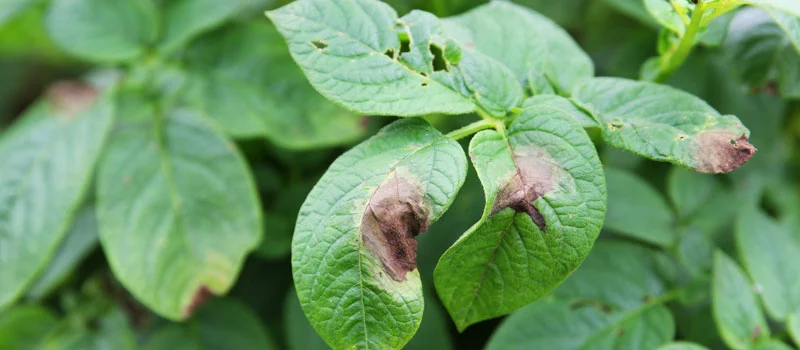
When growers face aggressive outbreaks of late blight or downy mildew, choosing the right fungicide combination can determine whether a harvest survives or collapses. This guide covers the practical essentials of mancozeb 64% + cymoxanil 8—a dual-action formulation that pairs a broad-spectrum protectant with a curative, translaminar partner. Whether you manage potato fields in the Andes, vineyards in the Mediterranean, or tomato programs across North Africa, understanding correct dosing, spray timing, and resistance management will help you get the most from every application and protect your procurement investment.
Understanding Composition and Mode of Action
Two Active Ingredients, One Cohesive Strategy
You can use mancozeb to protect against touch. It targets sulfhydryl groups involved in lipid metabolism and cellular respiration, which stops several enzyme systems in fungal cells from working at the same time. Pathogens have a hard time becoming resistant to it on their own because it hits so many molecular sites at once. Cymoxanil adds to this by having healing effects across laminar barriers. It stops fungus growth in its tracks once it gets into leaf tissue, stopping mycelial growth within 24 to 48 hours. Together, they provide both a shield for the surface and a backup for the whole system, which is very important when rain or fast canopy growth blocks the spray windows.
Physical Formulation Properties That Matter
Both the 64+8 WG and WP formulations meet the standards set by FAO and WHO. Key features include a stable pH range of 5.0 to 9.0, wettability in less than 60 seconds, and suspensibility of at least 80% after 30 minutes. ETU impurity levels should stay below 0.1%. Hontai checks this level in-house during production. Because of this, buying teams should ask for sieve analysis and COA paperwork with every batch order because these physical factors have a direct effect on tank-mix uniformity and spray coverage.
Dose and Spray Application Guidelines for Optimal Results
Crop-Specific Dosage Rates
Rates of practical application depend on the crop's yield, foliage density, and the disease pressure that is currently present. Here are the main dose rules that are used for all major target crops:
- Potato and tomato: For potato and tomato late blight, use 1.5–2.5 kg/ha every 7–10 days when the humidity is above 90% and the temperature is between 15°C and 25°C. Start applying early in the canopy's growth, before the inoculum pressure peaks.
- Grapevine: Spray grapevines before and after blooming to protect the growing berries and stop oil-spot sores caused by downy mildew. This mix is useful when rain delays applications by one or two days because cymoxanil has a healing window.
- Cucumbers, onions, and tobacco: For cucumbers, onions, and tobacco, use 2 kg/ha and do it before it rains. In nursery beds for tobacco, a weak drench application can help cover the leaves where soil-borne oomycetes are present.
These quantity levels are what is usually done in the field. For products such as mancozeb 64% + cymoxanil 8, if there are a lot of diseases or you are working with crops that have a lot of leaves, you should raise the rates within the reported limit.
Mixing Sequence and Spray Timing
Always add WP or WG mixtures to water that is already moving. Do not mix mancozeb with alkaline products like Bordeaux mixture in the tank. At high pH, mancozeb breaks down quickly, making it much less effective. Spray in the early morning or late afternoon to keep the color from evaporating and make it last longer in the rain. Within 30 to 60 minutes, the cymoxanil part is absorbed into the body's systems, and after that, it stays safe from rain. The mancozeb layer, on the other hand, needs the leaf surface to be completely dry before it worries about rain wash-off. This is an important feature for programs that run during the wet season.
Comparing This Combination with Other Fungicide Options
Copper-based fungicides kill a wide range of fungi, but they can affect plants, especially sensitive types. If single-mode systemics like metalaxyl-M are used without a multi-site partner, Phytophthora populations will put real resistance pressure on them. Azoxystrobin and other QiI chemicals are useful in cycles, but they should not be used for front-line defense. Instead, they should be saved for later program spots.
The mancozeb 64% + cymoxanil 8 fills a unique need: it works as well as more expensive systemics at curing while also helping to control resistance because mancozeb is harmful on multiple sites. Field data from potato projects in Turkey and Egypt regularly show that this combination, along with CAA fungicides applied at different times during the season, stops late blight for the whole season. The cost per kilogram of this combination is lower than that of newer carboxylic acid amide premixes, which is good for procurement teams that are trying to meet cost-per-hectare goals.
Procurement and Supply Chain Insights for Bulk Buyers
To find a trustworthy provider of mancozeb 64% + cymoxanil 8, you need to look at more than just the price per kilogram. Consistency in batches, verified paperwork, and flexible packing all have a direct effect on how well the downstream field works and how well it follows the rules.
Here are the main things that make a supply relationship reliable:
- Documentation standards: Buyers should ask for an FAO-spec COA with ETU and HBC impurity panels, sieve analysis for each batch, and, for EU-market programs, an MRL compliance letter that matches the current limits set by Regulation No. 396/2005.
- Packaging flexibility: There are many ways to package things: standard business packs range from 1 kg and 5 kg retail units to 25 kg bags and 20 kg WP bulk bags. OEM buyers can talk about custom ratios and triple-mode additions like mandipropamid or dimethomorph.
- Storage conditions: Conditions for storage: Keep away from direct sunlight and in a cool, dry place that is preferably below 35°C. Anti-caking masterbatch in the formulation makes it last longer on the shelf, but it is still the buyer's responsibility to store it properly.
These things work together to protect both the effectiveness of the product and the legality of importing it. These are two things that define the requirements of large-scale procurement.
Resistance Management and Sustainable Use
Cymoxanil, like other single-site fungicides, requires resistance management if it is used over and over again without a multi-site partner. This is directly addressed by mancozeb, which kills isolates that survive contact with cymoxanil. This lowers selection pressure and makes the systemic component work for longer. It has been shown that Phytophthora infestans populations are resistant to cymoxanil when single-site products are used without a multi-site anchor. This shows how important this combination format is for farming.
Change this mix with QiI products and CAA fungicides during the spraying process. You shouldn't use the same FRAC group more than twice in a row. When applying on a big scale, make sure to follow the local PPE rules, wait between 7 and 21 days before harvesting, and follow buffer zone rules near water bodies according to local requirements. This is a normal requirement under both EPA and EU regulations.
Conclusion
To make fungicide programs work well on a large scale, the chemicals used need to be able to consistently work with changing weather, different crops, and disease populations that are always changing. Mancozeb 64% + cymoxanil 8 is reliable because it has two modes of action that work together and a strong formulation profile, and it has been used in high-stakes projects in places like the Andes potato fields and the Mediterranean vineyards. Correct dosing, the right way to spray, and planned rotation are what turn a good product into measured crop protection. This guide's information comes from real-life application data and accepted agronomic practice. This is because buying decisions based on accurate technical information have a direct effect on results in the field.
FAQ
1. What is the recommended dose for late blight control?
Every 7–10 days, apply 1.5–2.5 kg/ha, and raise the amount if there is a lot of disease pressure and high humidity.
2. Can this formulation be mixed with copper-based fungicides?
Do not mix your tank with alkaline products, like Bordeaux mixture. At high pH, mancozeb breaks down, which makes it much less effective at protecting.
3. What is the rainfastness window?
Within 30 to 60 minutes of being absorbed, cymoxanil stops being affected by rain. Mancozeb needs to fully dry on the leaf surface before it can effectively resist being washed off.
4. Does this combination help manage fungicide resistance?
Because it works on multiple sites, mancozeb stops resistant survivors from multiplying after being exposed to cymoxanil. This is how it works to fight resistance.
Get a Quote from Hontai — Trusted Mancozeb 64% + Cymoxanil 8 Manufacturer
Hontai sells mancozeb 64% + cymoxanil 8 to business-to-business customers all over the world. They offer flexible packaging, OEM labels, and paperwork that meets FAO standards. Our wet-milling WG line and in-house ETU tracking below 0.1% set a standard for quality that stays the same. You can email our technical sales team at admin@hontai-biotech.com to get a sample, a certificate of analysis, or a forward-contract price before the next rainy season window.
References
1. FRAC Code List. Fungicide Resistance Action Committee Annual Report, 2023.
2. Cooke, L.R. et al. "Sensitivity of Phytophthora infestans to cymoxanil." Crop Protection, 2006.
3. FAO/WHO. Specifications and Evaluations for Agricultural Pesticides: Mancozeb. FAO, 2019.
4. Gisi, U. & Sierotzki, H. "Oomycete fungicides: Phenylamides, query outside inhibitors, and carboxylic acid amides. "Pesticide Biochemistry and Physiology," 2015.
5. EPPO. "Guidelines for the Efficacy Evaluation of Fungicides: Plasmopara viticola. "EPPO Bulletin, 2012.
6. Bartlett, D.W. et al. "The strobilurin fungicides." Pest Management Science, 2002.
Our customers’ satisfaction speaks for our quality — contact us to experience the same reliable service.