- English
- French
- German
- Portuguese
- Spanish
- Russian
- Japanese
- Korean
- Arabic
- Greek
- German
- Turkish
- Italian
- Danish
- Romanian
- Indonesian
- Czech
- Afrikaans
- Swedish
- Polish
- Basque
- Catalan
- Esperanto
- Hindi
- Lao
- Albanian
- Amharic
- Armenian
- Azerbaijani
- Belarusian
- Bengali
- Bosnian
- Bulgarian
- Cebuano
- Chichewa
- Corsican
- Croatian
- Dutch
- Estonian
- Filipino
- Finnish
- Frisian
- Galician
- Georgian
- Gujarati
- Haitian
- Hausa
- Hawaiian
- Hebrew
- Hmong
- Hungarian
- Icelandic
- Igbo
- Javanese
- Kannada
- Kazakh
- Khmer
- Kurdish
- Kyrgyz
- Latin
- Latvian
- Lithuanian
- Luxembou..
- Macedonian
- Malagasy
- Malay
- Malayalam
- Maltese
- Maori
- Marathi
- Mongolian
- Burmese
- Nepali
- Norwegian
- Pashto
- Persian
- Punjabi
- Serbian
- Sesotho
- Sinhala
- Slovak
- Slovenian
- Somali
- Samoan
- Scots Gaelic
- Shona
- Sindhi
- Sundanese
- Swahili
- Tajik
- Tamil
- Telugu
- Thai
- Ukrainian
- Urdu
- Uzbek
- Vietnamese
- Welsh
- Xhosa
- Yiddish
- Yoruba
- Zulu
Is Insecticide Triazophos 85 TC Effective for Rice Pests?
share:
Yes — insecticide triazophos 85 TC is genuinely effective against rice pests, and the evidence from field use and formulation science supports this clearly. As a technical concentrate carrying a minimum of 85% active ingredient, it targets the nervous systems of harmful insects through acetylcholinesterase inhibition, disrupting signal transmission until the pest dies. Its translaminar penetration reaches borers hidden inside stems and leaf folders sheltered within rolled tissue — precisely where contact-only products fail. For agrochemical distributors, OEM brand owners, and large-scale rice operations, this makes Triazophos 85 TC a strategically valuable raw material worth understanding in depth.
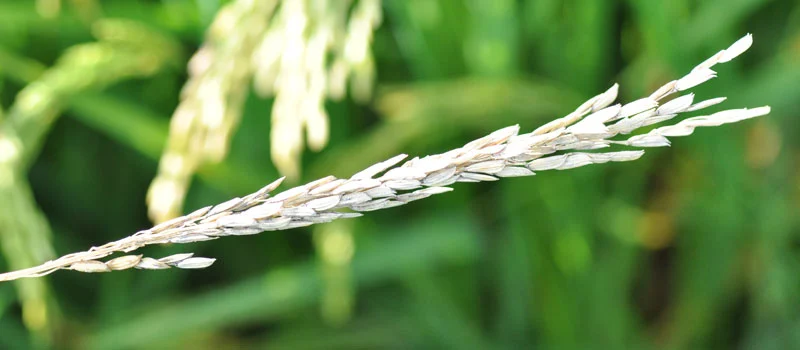
Understanding Triazophos 85 TC and Its Role in Rice Pest Control
The chemical triazophos is an organophosphorus. The 85 TC grade is for a technical concentrate that is a yellowish to dark brown liquid and has at least 85% active ingredient content. This is very different from finished formulas like Triazophos 400 g/L EC, which are made later on by formulators using the TC as their starting material.
What Pests Does It Actually Control?
It has been shown that the main ingredient works against a wide range of pests. It especially goes after leaf folders, leafhoppers, thrips, and rice stem borers. Registering uses for more than just rice include aphids, beetles, leaf-feeding larvae, fruit flies, leafminers, free-living nematodes, scales, soil insects, mites, and whiteflies that attack fruits, veggies, and ornamentals. Because it works on more than one target, it is a cost-effective active ingredient for formulators who are making a wide range of products.
Mode of Action and Resistance Management
Acetylcholinesterase is an enzyme that breaks down the neurotransmitter acetylcholine at nerve synapses. Triazophos stops AChE from doing its job. Pests become paralysed and die when their nerves keep firing. Its ovicidal properties add another level of lifecycle disruption; they work against pest eggs, which lowers the population growth between spray cycles. Triazophos is in IRAC Group 1B, which is rotated with pyrethroids or neonicotinoids in structured IPM programmes. This is because resistance control plans in rice-growing areas are changing chemical classes more and more.
Safely and Effectively Applying Triazophos 85 TC in Rice Pest Management
How and when you apply something has a big impact on how well it works. Broad-spectrum action can't make up for spraying that isn't timed or done correctly.
Dosage Guidelines and Application Timing
During the early stages of pest populations, when they are most vulnerable, products made from insecticide triazophos 85 TC are used. If you use it on rice stem borers when the eggs are hatching or when the larvae are in their early first instar, you can kill the most of them before they tunnel into the stems. Regional registration rules determine spray amounts, dilution ratios, and application intervals. Buyers should ask providers for a COA and field trial data to ensure that the dosing on the label is correct for their target market.
Worker Safety and Regulatory Compliance
As an organophosphate, it doesn't work with alkaline co-formulants—mixing it with lime sulphur or the Bordeaux mixture breaks it down quickly and stops it from working. When purchasing this material, purchasing managers should make sure that the supplier's paperwork includes an up-to-date MSDS, GLP-compliant technical data, and stability data for keeping in hot climates, especially for markets in Africa and South-east Asia.
Comparative Analysis: Triazophos 85 TC vs Other Popular Rice Insecticides
Before committing to multi-tonne orders, procurement teams often compare Triazophos to other options. The following comparison looks at the factors that are most important for making B2B decisions.
Here are the key performance comparisons that matter for large-scale procurement:
- Triazophos 85 TC vs Chlorpyrifos: Both are organophosphates in IRAC Group 1B. However, triazophos has better translaminar entry, which makes it more effective against stem borers and leaf folders. More rules are being put on chlorpyrifos in the EU and North America, which makes it more challenging for exporters to go after those markets. Triazophos still has more entry spots open in Latin America, Africa, and Asia.
- Triazophos 85 TC vs Malathion: Malathion is more economical and costs less, but it doesn't last as long and doesn't work as well against borer pests, so it's not as good for rice protection programmes that need long-term control windows. It is usually the case that triazophos formulations work better against bugs over a longer period of time.
- Triazophos 85 TC vs Imidacloprid: Imidacloprid, a neonicotinoid, works really well against sucking pests like planthoppers and leafhoppers, but not so well against borers and worms. Because triazophos is a single active ingredient that kills a wider range of pests, it makes it easier for companies to make combination products.
These comparisons show that there isn't a single active ingredient that works best in all situations. However, Triazophos 85 TC is very flexible and can be used in both rice and multi-crop pest control plans. When procurement managers know about these differences, they can put their money towards the right active ingredients for their registration portfolios and distribution markets.
Procuring Triazophos 85 TC: A Guide for Global B2B Buyers
To get technical-grade pesticides such as insecticide triazophos 85 TC in large quantities for business use, you need more than just low FOB prices. If a procurement relationship lasts through multiple registration rounds, it depends on how well the documentation is kept, how consistent the batches are, and how reliable the seller is.
What to Priorise When Selecting a Supplier?
When evaluating a triazophos 85 TC supplier, procurement managers should request and scrutinise the following before placing initial orders:
- COA with GLC-verified active ingredient content — The certificate of analysis must show that the active ingredient content is at least 85%. Gas-liquid chromatography certification is the standard for verifying TC purity.
- Acidity profile — Too much acidity damages storage drums and speeds up the breakdown of water during storage.
- Moisture content — Important for the stability of organophosphates over time; moisture causes them to break down hydrolytically.
- Acetone insolubles measurement — Makes sure that the TC won't block downstream filtration while the EC formulation is being made.
- 2-year accelerated stability data — Needed for registration dossiers in most countries; sellers who don't have this data slow down the regulatory process.
These factors directly affect whether the TC you get turns into stable, registrable goods in the market you want to reach. Skipping any of these steps of proof is a usual way for downstream composition to go wrong.
Pricing, MOQ, and Logistics Considerations
The price of TC at the wholesale level is given FOB and is affected by changes in the raw materials used upstream. As of now, buyers from South-east Asia, Africa, and Latin America usually buy between 1 and 5 MT of TC per package. Lead times are between 15 and 30 days from the time an order is approved. Standard terms for payment are a 30% T/T deposit and the remaining 70% due before the shipment. For government contracts, L/C at sight is acceptable. Flexible MOQ structures, such as 100g–5kg samples for registration trials, let buyers who are entering new markets test how well a product works before committing to large orders.
Conclusion
Triazophos 85 TC is used to control pests in rice because it works against AChE, can get into the tissue layers, kills ovipositae, and has been shown to work on a wide range of pests, including borers, leaffolders, leafhoppers, worms, and mites. As an insecticide triazophos 85 TC, it can be used to make both 20% and 40% EC formulations, making it a flexible raw material that is a smart choice for formulators, distributors, and OEM brand owners who work with a wide range of crops and regions. Careful source selection, strict batch quality checks, and compliance with regional registration requirements are still the things that separate good buying outcomes from supply disruptions that cost a lot of money.
FAQ
1. Can this TC be mixed with fungicides during formulation?
It doesn't work with alkaline things like Bordeaux mixture, lime, sulphur, or sulphur. When conditions are alkaline, the active ingredient breaks down quickly through hydrolysis. After stability testing, it can be mixed with active ingredients that work with its pH.
2. What is the standard shelf life of unformulated TC?
As long as it is kept in epoxy-lined, sealed steel drums that are kept cool, dry, and well-ventilated below 40°C, it should last for two years. Moisture and heat are the main things that cause degradation.
3. Does it control mites as well as insects?
Yes, triazophos has been shown to control mites, including red spider mites. This makes it a useful active ingredient for goods that target both bug pests and mite populations at the same time.
Get a Competitive Quote on Triazophos 85 TC from Hontai
Hebei Hontai Biotech Co., Ltd. is a verified maker of the insecticide triazophos 85 TC. They give GMP-compliant paperwork, a variable minimum order quantity that can range from samples to bulk, and fast global shipping from Shijiazhuang, China. Our expert team is ready to help you meet your buying deadline, whether you need TC for OEM formulation, registration trials, or large-scale marketing. To get a COA, product catalogue, or custom quote right away, email us at admin@hontai-biotech.com.
References
1. Food and Agriculture Organisation of the United Nations (FAO). FAO Specifications and Evaluations for Agricultural Pesticides: Triazophos. FAO, 2010.
2. World Health Organisation (WHO). The WHO Recommended Classification of Pesticides by Hazard and Guidelines to Classification. WHO, 2019.
3. Tomlin, C.D.S. (Ed.). The Pesticide Manual: A World Compendium. 17th ed. British Crop Production Council, 2015.
4. Insecticide Resistance Action Committee (IRAC). IRAC Mode of Action Classification Scheme. IRAC International MoA Working Group, 2022.
5. Rao, C.N., et al. "Organophosphorus Insecticides in Rice Pest Management: Efficacy and Resistance Dynamics." Pest Management Science, 2017.
6. CIPAC (Collaborative International Pesticides Analytical Council). CIPAC Handbook: Methods for the Analysis of Pesticide Formulations. CIPAC, 2018.
Our customers’ satisfaction speaks for our quality — contact us to experience the same reliable service.