- English
- French
- German
- Portuguese
- Spanish
- Russian
- Japanese
- Korean
- Arabic
- Greek
- German
- Turkish
- Italian
- Danish
- Romanian
- Indonesian
- Czech
- Afrikaans
- Swedish
- Polish
- Basque
- Catalan
- Esperanto
- Hindi
- Lao
- Albanian
- Amharic
- Armenian
- Azerbaijani
- Belarusian
- Bengali
- Bosnian
- Bulgarian
- Cebuano
- Chichewa
- Corsican
- Croatian
- Dutch
- Estonian
- Filipino
- Finnish
- Frisian
- Galician
- Georgian
- Gujarati
- Haitian
- Hausa
- Hawaiian
- Hebrew
- Hmong
- Hungarian
- Icelandic
- Igbo
- Javanese
- Kannada
- Kazakh
- Khmer
- Kurdish
- Kyrgyz
- Latin
- Latvian
- Lithuanian
- Luxembou..
- Macedonian
- Malagasy
- Malay
- Malayalam
- Maltese
- Maori
- Marathi
- Mongolian
- Burmese
- Nepali
- Norwegian
- Pashto
- Persian
- Punjabi
- Serbian
- Sesotho
- Sinhala
- Slovak
- Slovenian
- Somali
- Samoan
- Scots Gaelic
- Shona
- Sindhi
- Sundanese
- Swahili
- Tajik
- Tamil
- Telugu
- Thai
- Ukrainian
- Urdu
- Uzbek
- Vietnamese
- Welsh
- Xhosa
- Yiddish
- Yoruba
- Zulu
Imazamox 98% Tc 4% SL Dosage and Crop Safety Guide
share:
If you work in agricultural procurement or crop protection, you already know that choosing the right herbicide is never just about price. Efficacy, crop compatibility, residual activity, and regulatory compliance all weigh into the decision. This guide covers everything you need to know about imazamox 98% TC 4% SL—from how it works at the biochemical level to practical dosage tables, resistance stewardship, and how to source it reliably for large-scale operations.
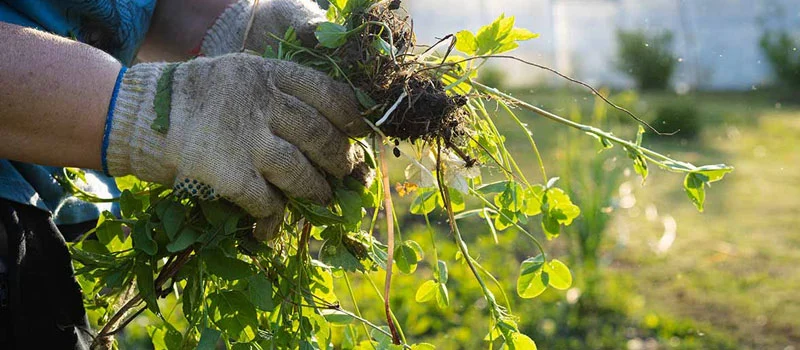
What Is Imazamox 98% TC 4% SL?
Imazamox 98% Tc 4% SL is made up of two different but related types of products. It is an off-white to brown powder that has ≥98.0% pure active ingredient, a freezing point close to 166°C, and a low water solubility at acidic pH that rises sharply at neutral or alkaline pH. The industrial form is the 4% SL, which has 40 g/L of imazamox as an ammonium salt in a clear, amber-colored liquid that is balanced between pH 6.0 and 7.5 to keep it stable on the shelf.
Because it is a WSSA/HRAC Group 2 ALS/AHAS inhibitor, imazamox stops the production of valine, leucine, and isoleucine, which kills the weed from the growing point outward. Within hours of foliar uptake, growth stops, but chlorosis and necrosis usually show up one to two weeks later, and the plant is completely dead after three to four weeks. The fact that it works slowly and across a system is what makes it so thorough.
Understanding Mode of Action, Crop Selectivity, and Safety
How Selectivity Works in IMI-Tolerant Crops?
When this chemical is used on plants, their safety rests on how quickly their metabolism can break down imazamox before it builds up to levels that are harmful to plants. This detoxification trait is found in non-GMO Clearfield® and Clearfield Plus® varieties of soybean, canola, sunflower, rice, and wheat. Different types of wheat and peas that are not Clearfield also have natural tolerance. When given the right amount, legumes like alfalfa and chickpeas can handle the molecule. The main reason for differences in crop response is using it on plants that aren't supposed to be there without first confirming their tolerance.
Handling and Environmental Considerations
The 4% SL mix will stay stable for at least two years when stored normally. It can withstand low temperatures of 0°C for 7 days and high temperatures of 54°C for 14 days, which means it can be used for world logistics. When it comes to the environment, imazamox doesn't stay in the soil for very long. It breaks down more slowly in high-pH soils because the molecule doesn't stick to organic matter as well. Handlers should wear gloves that can handle chemicals, stay away from fields that are sensitive to spray drift, and follow the label's re-entry times.
Optimizing Dosage and Application Rates
The most useful thing a sprayer can do to protect yield and reduce weeds is to use the right rate. For imazamox 98% TC 4% SL, the normal field rate is between 0.75 and 1.25 L/ha, which is about 30 to 50 g of active ingredient per hectare, based on how many weeds there are and what stage the crop is in.
Here are the core rate and timing guidelines by crop:
- Clearfield Soybean: When the weeds are small, apply 1.0–1.25 L/ha after they have come up. Mix imazethapyr or bentazon in the tank to get better control over velvetleaf, cocklebur, and foxtails. To get the best entry through the skin, you should always add a non-ionic surfactant at 0.25% v/v or methylated seed oil plus ammonium sulfate.
- Clearfield Plus Canola: Use 0.75 to 1 L/ha when the crop has 2 to 6 leaves. Keeps volunteer cereals and cleavers under control. If a good adjuvant is used, it will stay waterproof in one hour. If it's not used, it will need 4 hours of dry time.
- Spring Wheat: Use 1.0 L/ha when the plants start to sprout. Keeps some types of grass, wild mustard, and shepherd's purse in check. Check the variety's tolerance before using it.
- Alfalfa Establishment: Imazamox is one of the few pesticides that can be used on young alfalfa, which makes it very useful in high-value hay systems. When the alfalfa reaches the first trifoliate stage, use 0.75 L/ha.
These guidelines reflect label-registered rates; always check the label for your particular country before applying. You have to switch to the right adjuvant system because it affects how much of the active ingredient gets to the weed meristem.
Imazamox vs. Alternative ALS Herbicides: Making the Right Choice
Imazamox is often compared to imazapyr, imazethapyr, and more common choices like glyphosate or 2,4-D by procurement teams. Spectrum, residual, and crop fit are the comparisons that mean the most from a practical point of view.
Imazethapyr works in the same way, but it only works on a smaller range of grasses and doesn't last as long. Imazapyr leaves a greater residue in the soil, but it can only be used in non-crop and Clearfield systems because it has a different crop tolerance profile. Fast, broad-spectrum control is possible with glyphosate, but crops that are genetically modified need to be able to handle it, and resistance is growing in many important markets. 2,4-D doesn't work on grass, and drift management is important near green crops.
Imazamox at 4% SL has some benefits that the others don't have, such as post-emergence grass and broadleaf control and compatibility with non-GMO. Clearfield systems provide a useful soil residual that stops late-germinating weeds, and a low treatment rate per acre. The cost-per-treated-acre value of this mix is often better than that of buying Clearfield soybean, canola, or specialty legume programs over the course of a full season.
Procurement Guide for B2B Buyers
To get this chemistry on a large scale, you need more than a good price. Quality control starts at the TC level: the 98% TC must be checked by HPLC to make sure it is ≥98.0% pure, with acetone insolubles below 0.5% to keep the nozzles from getting clogged during the next steps in the process. Before it leaves the factory, the 4% SL has to pass the CIPAC MT 41 dilution stability test and the MT 47.2 foam test. Reliable Imazamox 98% TC 4% SL suppliers you can trust will give you a full technical dossier with stability test reports, a Certificate of Analysis, and a Safety Data Sheet. They will also make sure the dossier meets FAO/WHO requirements.
For buyers in North America, EPA registration data matching is very important. For buyers in Latin America, stickers that are bilingual are required by law. Standard containers for TC are 25 kg fiber drums, and HDPE containers for 4% SL come in 5 L, 20 L, and 200 L sizes. OEM buyers who want 5%, 10%, or 25% SL versions or pre-mix formulations should make sure that the manufacturer has a dedicated SL concentration line with anti-crystallization additives. This is a technical detail that has a direct effect on how stable the product will be in cold storage over time.
Crop Safety and Resistance Management
ALS drug resistance has been found all over the world. In the Midwest of the US and the soy belt in South America, populations of common waterhemp, Palmer amaranth, and Italian ryegrass have been found to have target-site ALS mutations. Using the same ALS chemistry over and over again in different seasons speeds up selection pressure.
Using imazamox and pesticides from WSSA Groups 4, 14, or 27 alternately in the same field cycle is an important part of good care. It's also important to keep accurate records of what was applied and when and to look for early signs of resistance, like weeds dying unevenly or in groups at normal rates. When making a Clearfield system program, using a contact-mode PRE herbicide as a base layer along with imazamox's residual activity lowers the number of weeds that reach the POST window and makes it easier for any one mode of action to be chosen for each application.
Conclusion
Imazamox 98% TC 4% SL herbicide has a good mix of systemic action, crop selectivity, and residual weed suppression that not many other herbicides can match in Clearfield and IMI-tolerant crop systems. Three things directly affect a grower's ability to get the most out of this chemistry: the right dose, the choice of additive, and the care taken during rotation. Before signing a supply deal, procurement teams should check the TC purity and SL stability data. This saves both the performance of the product and the relationships with other companies that use it.
FAQ
1. What crops are registered for imazamox 4% SL use?
Clearfield Plus canola, Clearfield sunflower, Clearfield rice, young and established alfalfa, chickpea, lentil, and IMI-tolerant spring wheat are all registered crops. There is also native resistance in peas and wheat that are not Clearfield. Before buying, you should always check the local registrations.
2. What crop rotation restrictions apply after application?
Because of the leftover activity in the soil, sensitive rotational crops like sugar beets, non-IMI corn, and many veggies may need to be planted every 9 to 18 months. Soils with a high pH level slow down molecular breakdown and usually need longer breaks.
3. Does the 4% SL require an adjuvant?
Yes. For good skin penetration and rainfastness, you need a non-ionic surfactant at 0.25% v/v, which is made up of modified seed oil plus ammonium sulfate. Without an adjuvant, it needs to be dry for at least 4 hours after application.
4. Can the 98% TC be formulated into other concentrations?
Of course. Based on the 98% TC, different types of SL, 70% WDG formulations, and pre-mix products like imazamox + bentazon are made.
Partner with Hontai for Reliable Imazamox Supply
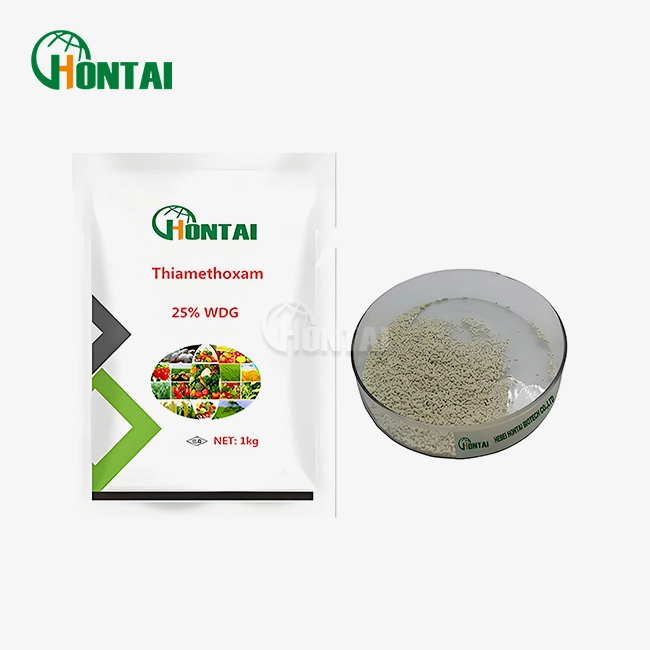
Hebei Hontai Biotech Co., Ltd. makes and sells imazamox 98% TC 4% SL. Their products have been tested for purity using HPLC, have stability data that meet CIPAC standards, and come with multilingual labels ready for markets in the US, Latin America, and around the world. As a reliable Imazamox 98% Tc 4% SL producer, we can help with OEM custom ratios, tank-mix co-packs, and yearly framework agreements. To get a sample, datasheet, or quote, email our team at admin@hontai-biotech.com.
References
1. Shaner, D. L. (Ed.). Herbicide Handbook (10th ed.). Weed Science Society of America, 2014.
2. Tan, S., Evans, R., & Singh, B. "Herbicidal inhibitors of amino acid biosynthesis and herbicide-tolerant crops. "Amino Acids," 2006.
3. Heap, I. The International Survey of Herbicide-Resistant Weeds. Weed Science Society of America, 2023.
4. FAO/WHO. Pesticide Residues in Food: Imazamox. Joint FAO/WHO Meeting on Pesticide Residues (JMPR), 2004.
5. BASF Corporation. Clearfield Production System Agronomic Guide. BASF Agricultural Solutions, 2019.
6. Kraehmer, H., & Laber, B. "Modes of Action of Herbicides. "Weed Science, 2013.
Our customers’ satisfaction speaks for our quality — contact us to experience the same reliable service.