- English
- French
- German
- Portuguese
- Spanish
- Russian
- Japanese
- Korean
- Arabic
- Greek
- German
- Turkish
- Italian
- Danish
- Romanian
- Indonesian
- Czech
- Afrikaans
- Swedish
- Polish
- Basque
- Catalan
- Esperanto
- Hindi
- Lao
- Albanian
- Amharic
- Armenian
- Azerbaijani
- Belarusian
- Bengali
- Bosnian
- Bulgarian
- Cebuano
- Chichewa
- Corsican
- Croatian
- Dutch
- Estonian
- Filipino
- Finnish
- Frisian
- Galician
- Georgian
- Gujarati
- Haitian
- Hausa
- Hawaiian
- Hebrew
- Hmong
- Hungarian
- Icelandic
- Igbo
- Javanese
- Kannada
- Kazakh
- Khmer
- Kurdish
- Kyrgyz
- Latin
- Latvian
- Lithuanian
- Luxembou..
- Macedonian
- Malagasy
- Malay
- Malayalam
- Maltese
- Maori
- Marathi
- Mongolian
- Burmese
- Nepali
- Norwegian
- Pashto
- Persian
- Punjabi
- Serbian
- Sesotho
- Sinhala
- Slovak
- Slovenian
- Somali
- Samoan
- Scots Gaelic
- Shona
- Sindhi
- Sundanese
- Swahili
- Tajik
- Tamil
- Telugu
- Thai
- Ukrainian
- Urdu
- Uzbek
- Vietnamese
- Welsh
- Xhosa
- Yiddish
- Yoruba
- Zulu
How Does Insecticide Triazophos 85 TC Control Pests?
share:
Insecticide triazophos 85 TC controls pests by inhibiting acetylcholinesterase, a critical enzyme in the nervous systems of insects and mites. When this enzyme is blocked, nerve signals accumulate uncontrollably, causing paralysis and rapid death. As a technical concentrate containing a minimum of 85% active ingredient, it delivers broad-spectrum control against aphids, borers, leafhoppers, leafminers, thrips, mites, whiteflies, fruit flies, soil insects, free-living nematodes, and more—across fruits, vegetables, and ornamentals. Its translaminar penetration reaches hidden pests inside plant tissues, where contact-only insecticides routinely fail.
Understanding Triazophos 85 TC: What It Is and How It Works?
Insecticide triazophos 85 TC is an organophosphorus compound that is both an insecticide and an acaricide. Formulators all over the world value this dual-use active ingredient. The insecticide triazophos 85 TC grade is the technical concentrate form, which has at least 85% active ingredient by weight. This is the raw material that agrochemical companies use to make finished products like 400 g/L EC or special EC/SC mixes.
Chemical Profile and Specifications
Depending on the temperature, the result looks like a yellowish to dark brown liquid or a semi-solid. Acidity (as H₂SO₄) ≤ 0.2%, moisture ≤ 0.2%, and acetone insolubles within acceptable CIPAC limits are some of the most important quality parameters. It dissolves very easily in organic solvents like acetone and ethyl acetate but not at all in water. This property affects the stability of emulsification during formulation development.
Mechanism of Action: AChE Inhibition
If you use triazophos on bug neuron synapses, it stops AChE from working forever. Without working AChE, acetylcholine builds up over time, which overstimulates nerve receptors and causes muscles to contract without control. This process quickly kills a wide range of pests, such as sucking pests, eating insects, and phytophagous mites. Its ovicidal qualities are very important because they destroy pest eggs, stopping the reproduction cycle before populations grow too large. This is a big advantage over alternatives that only work by touch.
Translaminar Activity and Hidden Pest Control
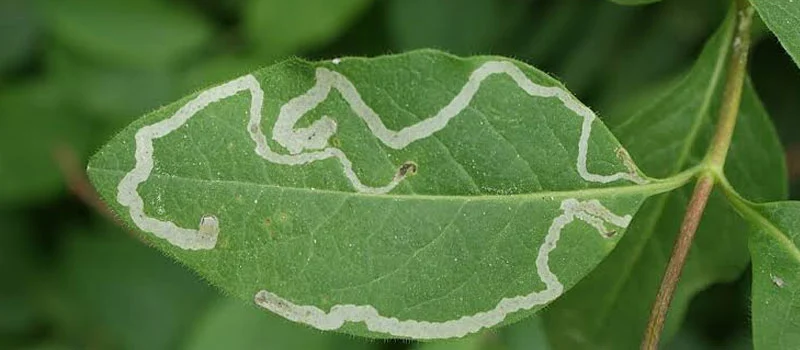
The translaminar action of this active ingredient is one of its most useful features; it goes through leaf tissue and moves around inside plant cells. This reaches stem borers inside rice culms, leafminers that tunnel between layers of epidermis, and leaf-eating larvae that hide on the undersides of leaves. Because contact-only pesticides can't get to these spaces, triazophos is theoretically better for crops with thick canopies or a lot of bugs that are hiding.
Application Guidelines and Best Practices for Effective Pest Control
The difference between dependable bug control and inconsistent field results is how the chemicals are used. Application factors, like the amount used, application timing, and tank mix selection, affect product performance and resistance management. Here are the main rules for application that buying clients and field agronomists should follow for insecticide triazophos 85 TC:
- Timing relative to pest life cycle: for larvae and adults, apply it when the cuticle is thinnest and AChE sensitivity is greatest. Spraying during egg-hatching windows can cut damage from stem borers in rice by up to 60–70% compared to spraying based on the calendar.
- Compatibility restrictions: Triazophos can be broken down by alkaline solutions, which affects its compatibility. Alkaline materials like Bordeaux mixture or lime sulfur can affect formulation performance in the tank; before mixing, make sure that any co-formulation adjuvants are pH-compatible. Before mixing, make sure that any co-formulation adjuvants are pH-compatible.
- Resistance management through rotation: Rotating triazophos with insecticides from different groups that work in different ways every two to three spray cycles is one way to manage resistance. This is especially relevant in Southeast Asia and South Asia, where rice pest management programs commonly consider resistance to organophosphates.
These ideas are in line with FAO/WHO integrated pest management standards, which say that AChE inhibitors should be used with other chemicals instead of being the only ones used in places where tolerance is a problem. When handling and applying chemicals, operators should follow the product label and local application requirements.
Comparing Triazophos 85 TC with Other Insecticides: Making the Right Choice
Three things are most important to procurement managers when they look at active ingredients: the range of their effectiveness, the cost per hectare, and how well they fit with legal systems. There is a unique role for triazophos in all three.
Chlorpyrifos has a similar AChE process, but it is being regulated more and more in the EU, the USA, and more and more in Africa and Southeast Asia. Triazophos, on the other hand, is still listed in India, Vietnam, Nigeria, and Turkey, all of which are important growth areas. Malathion isn't thought to be as effective against pests that are harder to kill, like stem borers and soil nematodes. Triazophos works much better in these situations. Imidacloprid is a neonicotinoid that works well against sucking bugs but doesn't have the same range of effects against acaricides and nematodes as triazophos.
One thing that makes triazophos so appealing to formulators is that the insecticide triazophos 85 TC concentration makes it easy to make standard 20% EC or 40% EC products that are stable when they emulsify. This makes the recipe simpler and cuts the cost of making one unit. These straight cost savings help OEM clients enter new markets like Africa or the CIS, keeping retail prices low without losing effectiveness.
Triazophos, on the other hand, has specific regulatory and formulation requirements that should be considered during procurement. When comparing the total cost of use of different active ingredients for sensitive markets, procurement teams should take into account formulation requirements and the registration status of the substance with local authorities.
Procurement Insights: How to Source Quality Triazophos 85 TC Efficiently?
In foreign business-to-business deals, finding high-quality technical concentrate takes more than just offering low FOB prices. Long-term procurement success depends on consistency from batch to batch, full paperwork, and a reliable source when evaluating an insecticide triazophos 85 TC supplier:
Active Ingredient Certification: For active ingredient approval, ask for a GLC test to prove that the ingredient is at least 85% pure. This is the main quality measure in quality control protocols that are compliant with CIPAC.
Documentation completeness: A reliable seller provides COA, MSDS, formulation stability data, and bioefficacy reports, which are needed for registration dossiers in countries like India, Indonesia, and Brazil.
Flexible MOQ and packaging: Reliable makers can handle small samples for registration trials and can easily handle business packages of 1 to 20 tons in HDPE or epoxy-lined steel drums with custom labels in any target language.
Procurement timelines typically run 15–30 days for established buyers. Payment terms of T/T 30% deposit and the remaining 70% before shipment are standard. For government contracts, L/C at sight is also an option. Buyers in Africa, Southeast Asia, the CIS, and Latin America do better when they work with manufacturers who know how to handle regional registration processes and can offer dedicated technical support during registration cycles that last more than one year.
Conclusion
Insecticide triazophos 85 TC is still one of the most useful and affordable active ingredients for getting rid of a wide range of pests and mites that attack plants, fruits, and vegetables. Its ability to stop AChE, cross-layer entry, and dual insecticide-acaricide profile make it really better for farming than narrower-spectrum options. For business-to-business buyers, like resellers, OEM brand owners, or government procurement experts, knowing these technical basics helps them choose suitable suppliers and improve supply chain consistency. A good product can become an asset for long-term buying if it comes from a manufacturer with regular purity standards, full registration paperwork, and helpful technical support.
FAQ
1. Is triazophos 85 TC harmful to beneficial insects?
Triazophos has activity against a broad range of insect species, including beneficial insects. Application timing can be adjusted according to crop conditions, pest activity, and local product requirements. Spraying early in the morning or late at night can be incorporated into an application schedule based on local agricultural practices.
2. Can triazophos TC be mixed with alkaline pesticides?
Alkaline conditions can cause the active ingredient to break down quickly, which can affect formulation performance. Tank mixes containing Bordeaux mixture, lime sulfur, or other alkaline materials should be evaluated for compatibility. Check the pH of the tank before adding adjuvants.
3. What is the shelf life of the technical concentrate?
The product can be kept for two years in sealed, epoxy-lined steel drums in a cool, dry, well-ventilated warehouse below 40°C. To stop hydrolytic degradation, the moisture content must stay below 0.2%.
4. How does 85 TC compare to 90 TC or 92 TC grades?
The insecticide triazophos 85 TC grade is the standard for EC product formulations because it has the best cost-performance mix. South Korea and Japan, which care a lot about quality, prefer 92 TC because it has fewer impurities. However, insecticide triazophos 85 TC is better for most industrial preparation operations in Africa, Southeast Asia, and Latin America.
Partner With Hontai for Reliable Triazophos 85 TC Supply
Hontai provides a steady supply of insecticide triazophos 85 TC that meets GMP standards. They also offer full paperwork support, including COAs, MSDSs, stable data, and OEM registration packages. We have a dedicated technical team and flexible MOQs that range from trial samples to 20-ton commercial shipments. We also have fast global logistics. To get your quote right away, email us at admin@hontai-biotech.com.
References
1. Food and Agriculture Organization of the United Nations (FAO). FAO Specifications and Evaluations for Agricultural Pesticides: Triazophos. FAO, 2009.
2. World Health Organization (WHO). The WHO Recommended Classification of Pesticides by Hazard. WHO Press, 2019.
3. Collaborative International Pesticides Analytical Council (CIPAC). CIPAC Handbook: Methods for the Analysis of Pesticide Technical and Formulated Products. CIPAC, 2010.
4. Tomlin, C.D.S. (Ed.). The Pesticide Manual: A World Compendium. 17th ed. British Crop Production Council, 2015.
5. Yadav, I.C., and Devi, N.L. "Pesticide Classification, Uses, and Hazards." Environmental Science & Engineering, Springer, 2017.
6. Casida, J.E., and Durkin, K.A. "Anticholinesterase Insecticide Retrospective. "Chemical-Biological Interactions," Elsevier, 2013.
Our customers’ satisfaction speaks for our quality — contact us to experience the same reliable service.