- English
- French
- German
- Portuguese
- Spanish
- Russian
- Japanese
- Korean
- Arabic
- Greek
- German
- Turkish
- Italian
- Danish
- Romanian
- Indonesian
- Czech
- Afrikaans
- Swedish
- Polish
- Basque
- Catalan
- Esperanto
- Hindi
- Lao
- Albanian
- Amharic
- Armenian
- Azerbaijani
- Belarusian
- Bengali
- Bosnian
- Bulgarian
- Cebuano
- Chichewa
- Corsican
- Croatian
- Dutch
- Estonian
- Filipino
- Finnish
- Frisian
- Galician
- Georgian
- Gujarati
- Haitian
- Hausa
- Hawaiian
- Hebrew
- Hmong
- Hungarian
- Icelandic
- Igbo
- Javanese
- Kannada
- Kazakh
- Khmer
- Kurdish
- Kyrgyz
- Latin
- Latvian
- Lithuanian
- Luxembou..
- Macedonian
- Malagasy
- Malay
- Malayalam
- Maltese
- Maori
- Marathi
- Mongolian
- Burmese
- Nepali
- Norwegian
- Pashto
- Persian
- Punjabi
- Serbian
- Sesotho
- Sinhala
- Slovak
- Slovenian
- Somali
- Samoan
- Scots Gaelic
- Shona
- Sindhi
- Sundanese
- Swahili
- Tajik
- Tamil
- Telugu
- Thai
- Ukrainian
- Urdu
- Uzbek
- Vietnamese
- Welsh
- Xhosa
- Yiddish
- Yoruba
- Zulu
How to use the fungicide dimethomorph?
share:
To use dimethomorph 50% WP effectively, mix 1.0–1.5 kg of product per hectare in clean water, agitating the tank continuously during application. Apply as a foliar spray at 7–10 day intervals, targeting leaf undersides where oomycete spores germinate. Begin applications preventively before disease pressure peaks—ideally when humidity exceeds 80% for extended periods. Rotate with multi-site protectants such as mancozeb or chlorothalonil to manage resistance development. Always wear appropriate PPE during mixing and application. This active ingredient belongs to FRAC Group 40 and works specifically against downy mildews and Phytophthora late blight.
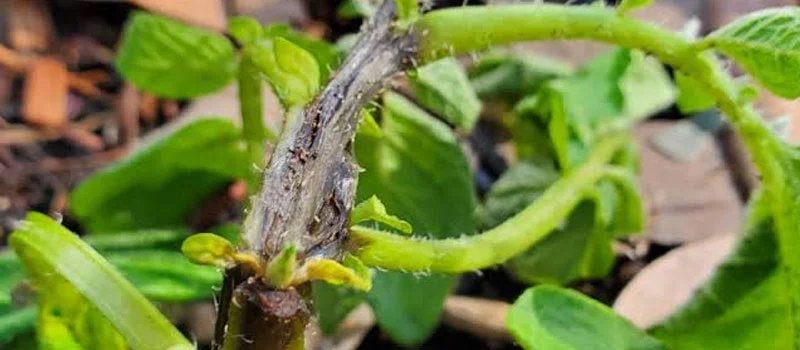
What Is Dimethomorph, and How Does It Work?
Mode of Action: Cellulose Synthase Inhibition
Dimethomorph is a chemical that is in FRAC Group 40 and is a carboxylic acid amide. It stops oomycete cell walls from making cellulose, which stops sporulation, mycelial growth, and the creation of cell walls in diseases such as Phytophthora infestans and Plasmopara viticola. It moves across layers of leaf tissue, so it can reach pathogen colonies on the underside of the leaf, which is usually where infections start.
Crop Targets and Disease Spectrum
This pesticide kills a small but important group of pathogens for business. Among the registered use cases are
- Grape downy mildew—a major problem for both wine and table grape farms.
- Potato and tomato late blight—a disease that can hurt yields in wet seasons.
- Cucurbit downy mildew—affecting watermelon, cucumber, and melons.
- Onion and brassica downy mildew—important for vegetable co-ops that take care of crops that grow close together.
You can't kill real fungi with it because it only works on oomycetes. This makes it perfect for targeted rotation programs instead of broad-spectrum use.
Application Instructions and Dosage Guidelines
How to Calibrate Your Spray Program?
The right dose must be taken. According to a study published in Crop Protection, not using enough CAA fungicides speeds up the selection of resistance, while using too many WP raises the cost of application without increasing its effectiveness. When using dimethomorph 50% WP, it is recommended that you use 1.0 to 1.5 kg of dimethomorph wettable powder per hectare, which is equal to 500 to 750 g of active ingredient per hectare. This is well within the useful range of 100 to 200 g a.i./ha that is mentioned in agricultural literature.
Here is a useful list of examples grouped by crop type:
- Potato/tomato: Apply 1.0–1.5 kg/ha every 7 days when there are a lot of infections. Tank-mix with mancozeb at the recommended amount for better resistance control and application performance. The 250 SC version works well with automatic boom sprayers.
- Grapes: Use a compressor or air-blast sprayers to apply 1.0–1.2 kg/ha, aiming for the inside of the canopy. It's very important to time things right for the "10 cm shoot" growth stage. In vineyards, the 50% WDG version is preferred because it spreads out quickly without making dust.
- Cucurbits: Apply 1.0–1.5 kg/ha every 7–10 days, making sure to cover the undersides of the leaves. The 50% WP is a good deal for protected agriculture programs that need to hand-spray or drench a lot of plants.
These rates are based on what is usually done in business, but you should always follow the directions on the label and the rules for approved use in your area.
Spray Timing and Logic for Intervals
Dimethomorph works best as a preventive and early curative tool. Waiting until lesions can be seen makes the treatment much less effective. Applications should happen when weather predictions say that leaves will stay wet for a long time or when the relative humidity is above 80%. A 7–10 day gap is in line with how oomycete growth cycles usually work in temperate and subtropical climates. Never use more than three or four treatments of any CAA fungicide in a row before switching to a different FRAC group.
Safety Precautions and Environmental Considerations
PPE and Handling Protocols
During the mixing phase, dimethomorph 50% WP makes fine dust, so you have to wear a respirator. At every step of the handling process, operators should wear gloves that can fight chemicals, eye protection, and protective clothes. Due to its granulated, low-dust form, the WDG variant greatly reduces dust generation during handling. If it gets on your skin, wash the area with water and soap. If you get eye contact, rinse your eyes with clean water for 15 minutes.
Keep the item in a cool, dry place out of direct sunlight, preferably somewhere between 5°C and 30°C. Accelerated stability tests at 54°C show that material that has been kept correctly will last for a long time. Do not store things near food, feed, or things that will oxidize.
Environmental Profile
For birds and mammals, dimethomorph has a defined environmental profile in short-term studies. For marine ecosystems, follow the label requirements for use near bodies of water and observe the specified application zones. For vegetables, the pre-harvest interval rules are usually between 7 and 14 days, and for grapes, they are between 21 and 28 days. This helps producers meet EU MRL limits and U.S. EPA tolerance levels.
Dimethomorph 50% WP vs. Other Fungicide Options
Procurement teams need to compare oomycete management tools by looking at how they work, how much they cost, and how resistant they are. Metalaxyl is a phenylamide class drug in FRAC Group 4. It works throughout the body, but P. infestans groups around the world have shown a history of tolerance. Fosetyl-Al boosts plant defenses but needs to be applied in larger amounts. Azoxystrobin works against a completely different group of pathogens and doesn't do anything useful against downy mildew in most field populations that are prone to resistance.
Dimethomorph is better than phenylamides because it has a clean resistance profile, works well across laminar barriers at low dose rates, and can be mixed with multi-site protectants. For large-scale operations, the 50% WP format saves money on procurement costs. The WDG and SC formats are better for specialized application systems. Picking the right formula depends on your spray equipment, the application requirements of the operator, and the rules in your area.
Procurement Insights: What B2B Buyers Should Evaluate?
As important as the agronomic choice itself is finding Dimethomorph 50% WP products through trustworthy outlets. You should ask any seller for HPLC-confirmed active ingredient content, suspensibility results that meet CIPAC MT 15 standards, and data on how stable the product is at 25°C, 35°C, and 54°C. On a 75 µm sieve, wet sieve residue should stay below 0.5% to keep the tip from wearing down.
For packages going to the EU, ask for MRL document support and the ability to use labels in more than one language. For markets in the CIS, GOST certification paperwork is the norm. Framework contracts that are set to coincide with the rainy season let purchasing teams lock in prices that are based on known market standards.
Conclusion
For controlling oomycete diseases in potatoes, tomatoes, grapes, and cucurbits, dimethomorph 50% WP is still one of the best and most targeted options. Its ability to stop cellulose synthase, low effective amount, and ability to work with multiple site protectants make it a long-lasting part of any program for managing resistance. It is very important to match the formulation to the delivery system, whether you choose the wettable powder for cost-effective bulk programs or the suspension concentrate for precise boom application. Check the quality requirements before placing large orders, and follow tight rotation rules to keep the product working well in the long run.
FAQ
1. What is the difference between the WP and WDG formulations?
The 50% WP is a fine powder that needs to be stirred around in the tank all the time. When it is mixed, dust is made, so it is important to wear a mask. The WDG granulates dissolve naturally in water with >90% susceptibility and make almost no dust, which greatly reduces dust generation during handling.
2. Can dimethomorph be tank-mixed with copper fungicides?
Yes, dimethomorph usually works with copper-based goods. However, it is best to do a jar compatibility test before putting a lot of them together. To keep the SC mixture from flocculating, add it to the water before adding the copper powders.
3. How many applications per season are recommended before resistance pressure increases?
According to FRAC guidelines, any CAA fungicide should not be used more than three to four times in a row per season. When you switch between Dimethomorph 50% WP treatment dates, you should always use fungicides from a different FRAC group, like cymoxanil or fluopicolide.
4. What PPE is required when handling the 50% WP?
During weighing, mixing, and filling, operators should wear a particulate mask, gloves that can handle chemicals, eye protection, and a protective coverall.
Source Dimethomorph 50% WP from Hontai—Request a Sample Today
Hontai Biotech helps buyers who are looking for a reliable dimethomorph 50% WP source with high quality standards and the ability to work with different OEMs. Our multi-formulation lines include WP, WDG, SC, and WDG combos. They come with full stability data, label support in multiple languages, and fast shipping around the world. You can email our team at admin@hontai-biotech.com to ask for samples, prices, or technical information.
References
1. Cohen, Y., Gisi, U., & Niderman, T. Pesticidal Activity of Carboxylic Acid Amide Fungicides Against Oomycetes. Pest Management Science, 2006.
2. Gisi, U., & Sierotzki, H. Fungicide Modes of Action and Resistance in Downy Mildews. EPPO Bulletin, 2008.
3. Leroux, P., & Walker, A. Multiple Mechanisms Account for Resistance to Fungicides in Phytophthora infestans Isolates from French Potato Fields. Pest Management Science, 2011.
4. FRAC. CAA Fungicides: Resistance Risk and Anti-Resistance Recommendations. Fungicide Resistance Action Committee, 2022.
5. European Food Safety Authority (EFSA). Peer Review of the Pesticide Risk Assessment of Dimethomorph. EFSA Journal, 2018.
6. Toffolatti, S. L., et al. Resistance Management of Plasmopara viticola to CAA Fungicides in Italian Vineyards. Crop Protection, 2011.
Our customers’ satisfaction speaks for our quality — contact us to experience the same reliable service.