- English
- French
- German
- Portuguese
- Spanish
- Russian
- Japanese
- Korean
- Arabic
- Greek
- German
- Turkish
- Italian
- Danish
- Romanian
- Indonesian
- Czech
- Afrikaans
- Swedish
- Polish
- Basque
- Catalan
- Esperanto
- Hindi
- Lao
- Albanian
- Amharic
- Armenian
- Azerbaijani
- Belarusian
- Bengali
- Bosnian
- Bulgarian
- Cebuano
- Chichewa
- Corsican
- Croatian
- Dutch
- Estonian
- Filipino
- Finnish
- Frisian
- Galician
- Georgian
- Gujarati
- Haitian
- Hausa
- Hawaiian
- Hebrew
- Hmong
- Hungarian
- Icelandic
- Igbo
- Javanese
- Kannada
- Kazakh
- Khmer
- Kurdish
- Kyrgyz
- Latin
- Latvian
- Lithuanian
- Luxembou..
- Macedonian
- Malagasy
- Malay
- Malayalam
- Maltese
- Maori
- Marathi
- Mongolian
- Burmese
- Nepali
- Norwegian
- Pashto
- Persian
- Punjabi
- Serbian
- Sesotho
- Sinhala
- Slovak
- Slovenian
- Somali
- Samoan
- Scots Gaelic
- Shona
- Sindhi
- Sundanese
- Swahili
- Tajik
- Tamil
- Telugu
- Thai
- Ukrainian
- Urdu
- Uzbek
- Vietnamese
- Welsh
- Xhosa
- Yiddish
- Yoruba
- Zulu
What Is Spiromesifen and How Does It Control Mites?
share:
Spiromesifen is a selective acaricide and insecticide belonging to the tetronic acid chemical class. Classified under IRAC Group 23, it works by inhibiting acetyl-CoA carboxylase, a key enzyme in lipid biosynthesis. This mechanism disrupts fat production in mites and whiteflies, halting development across egg, larval, and nymphal stages. Unlike older chemistry groups, it delivers ovicidal, larvicidal, and adulticidal activity in a single application. Its translaminar movement allows it to reach pests sheltering on leaf undersides, making it a dependable solution for greenhouse crops, orchards, and field settings.
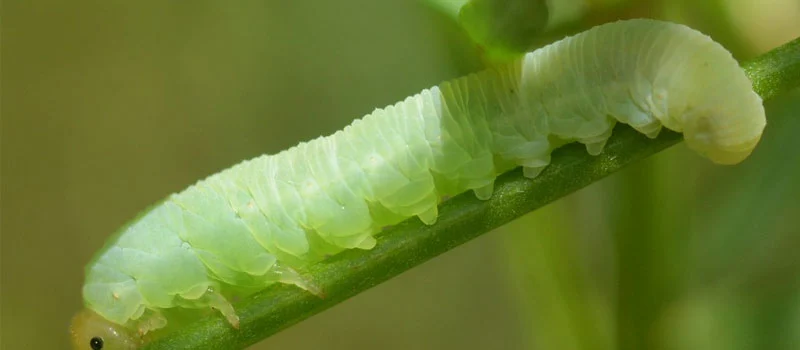
Understanding Spiromesifen: Chemical Properties and Mode of Action
What Makes Its Chemistry Distinctive?
Spiromesifen is a white to light-brown solid powder that has a melting point close to 98°C and a LogP value of about 4.55, which shows that it is very lipophilic. It quickly sticks to the sticky skin layer on leaf surfaces because it is lipophilic. Within 2–4 hours of application, it stops raining. Technical-grade materials must be at least 96% pure and have less than 0.5% wetness to keep them from breaking down during storage.
The 240 g/L suspension concentrate recipe uses sand-milled particles with a size range of 1–3 µm to make sure that the active ingredients are evenly distributed in the water and reach all spray drops. This level of particle control is very important for high-volume foliar programs because sprayer clogging or uneven coverage makes the program less effective.
How Does It Disrupt Pest Biology?
Spiromesifen doesn't work on the nervous system as organophosphates or pyrethroids do; instead, it targets the production of fatty acids. Acetyl-CoA carboxylase activity drops when young mites or whitefly nymphs take in the compound. Without working lipid creation, the building of the cuticle and molting cannot happen properly. Eggs that are left out in the spray fail to hatch. When adult females touch treated surfaces, their ability to reproduce drops significantly. This is called a transovarial effect, and it cuts the time it takes for the population to recover by a large amount. Field residual activity usually lasts for three to four weeks after application, which makes it easier for growers to spray less often.
Since it doesn't work in the same way as mitochondrial electron transport inhibitors or avermectins, it doesn't cross-resist those groups. This means that it can be used as a rotation anchor in programs to control resistance.
Efficacy of Spiromesifen in Mite and Pest Control
Performance Across Key Pest Complexes
Trials that were reviewed by experts and commercial field data show that spiromesifen works very well against Tetranychus urticae in greenhouses with tomatoes and cucumbers, Bemisia tabaci biotypes that are resistant to neonicotinoids in cotton, Panonychus citri on citrus, Panonychus ulmi on apple, and Polyphagotarsonemus latus on ornamentals and tea. The recommended rates for treatment are between 0.4 and 0.6 mL per liter of water, and they should be done every 7 to 14 days, based on the number of pests and the stage of growth of the crop.
These findings come from more than one study. Several separate tests in gardens in the Mediterranean, cotton projects in Latin America, and ornamental plants in Southeast Asia have confirmed that knockdown and long-lasting control work.
Resistance Management and Tank Mix Strategy
IPM programs work better when Spiromesifen is switched out for IRAC Group 6 or Group 25 to keep the pests susceptible from one generation to the next. It usually works with fungicides that are neutral to slightly acidic. However, it should not be mixed with highly alkaline mixtures like lime, sulfur, or the Bordeaux mixture because the active molecule could be broken down by water.
Comparing Spiromesifen with Other Miticides
A few differences become commercially important when procurement managers compare different options. Here's how the main options stack up in terms of useful factors for Spiromesifen:
- Abamectin: It quickly kills adults, but it has a different mammalian interaction profile and doesn't work as well on oviducts as spiromesifen. Great as a partner in the cycle instead of a straight replacement.
- Bifenthrin: It is a broad-spectrum pyrethroid that has strong contact action. However, it is highly resistant in populations of Tetranychus urticae, and its broader activity can influence arthropod populations.
- Fenpyroximate: It is a METI acaricide that kills adults quickly, but it doesn't work as well in highly sprayed programs because it crosses-reacts with other METI chemicals.
- Etoxazole: It kills both eggs and larvae. It works against the same developmental target as Spiromesifen, but only against mites and not whiteflies, which limits its use in IPM situations with other pests.
These similarities show that Spiromesifen fills a unique need—it works on a wide range of pests, at different stages, and it works well with integrated pest management. No other product can fully replicate this. For programs that deal with both spider mites and whiteflies at the same time, this dual coverage gives a measurable return on investment through fewer product SKUs and easier spray scheduling.
Procurement and Supply Chain Insights
Formulation Options and Packaging Standards
The basic commercial product is 240 g/L SC, which comes in 1 L, 5 L, and 20 L co-extruded HDPE containers that are made to be stable during transportation through tropical areas. Testing the product's stability over six weeks at temperatures ranging from –10°C to 54°C shows that Spiromesifen can withstand the heat that comes with shipping goods by sea through tropical trade lanes.
OEM and custom buyers can get formulas with 48% SC or 40% OD, and abamectin, bifenazate, or etoxazole can be mixed in as needed for cross-spectrum rotation plans. There are NDA-protected mix recipes and OEM label artwork in many languages, such as PT-BR, Russian, and Arabic, to help with regional registration and making sure products are legal on store shelves.
When wholesale buyers compare prices to the Oberon® standard, they will find that the 240 g/L SC is priced fairly every three months. You can get technical data packages, resistance tracking sheets, and field-trial datasets that cover more than 20 crop-pest complexes to help with internal regulatory dossiers and purchase reasoning.
Conclusion
Spiromesifen has proven to be a reliable multi-stage miticide and whitefly control agent that really fills a need in today's IPM chemistry. Because it works against lipid production in a unique way, can be used on a wide range of crops, and works with biological control programs, it is a smart investment for greenhouse owners, orchard managers, and cotton IPM services. Hontai's manufacturing infrastructure, which includes particle-controlled SC lines, thermally stable packaging, and flexible OEM services, makes sure that buyers around the world get consistent product quality and quick technical support. Spiromesifen is a crop protection product that growers and dealers looking for a stable rotation partner with field performance can consider for their product portfolio.
FAQ
1. Does spiromesifen kill adult mites immediately?
For the most part, Spiromesifen works on eggs and nymphs. Direct interaction isn't very harmful to fully grown adults, but adult females that have been treated have a lot less fertility, which means that the biological cycle breaks down after one or two generations. Suppressing a population can be measured in days and is finished in two to three weeks.
2. How does Spiromesifen perform with beneficial insects in IPM programs?
Studies that have been published show that treatments made outside of busy foraging hours have limited effects on predatory mites like Phytoseiulus persimilis and limited effects on pollinators. Because it is selective, it can be incorporated into projects that use biological control agents.
3. Can it be tank-mixed with common fungicides?
Most neutral or acidic fungicides can be used with it. Mixing alkaline compounds, especially the Bordeaux mixture of lime, sulfur, and copper, is not a good idea because it could break down the active molecule through hydrolysis.
4. What is its regulatory status in the United States?
Under the brand name Oberon®, Spiromesifen has received EPA approval in the United States. Before putting the product on the market, buyers who are looking for generic or OEM versions should make sure that the label meets the EPA's standards for registration data.
Connect with Hontai for Your Spiromesifen Supply Needs
With sand-milled SC formulations, stable global logistics, and full OEM customization, Hontai is a verified spiromesifen supplier that can meet all of your needs. Our technical team is ready to help you with your program, whether you need standard 240 g/L SC in bulk or a mixture that is made just for you and has your own label. You can get product examples, detailed datasheets, or a custom quote by emailing admin@hontai-biotech.com.
References
1. Nauen, R., Bretschneider, T., & Unger, C. — Pest Management Science, 2003.
2. Dermauw, W., & Van Leeuwen, T. — Insect Biochemistry and Molecular Biology, 2014.
3. Van Leeuwen, T., Vontas, J., & Tsagkarakou, A. — Pesticide Biochemistry and Physiology, 2010.
4. Stumpf, N., & Nauen, R. — Journal of Economic Entomology, 2002.
5. IRAC International MoA Working Group — IRAC Mode of Action Classification Scheme, 2023.
6. Hossain, M. S., et al. — Crop Protection, 2020.
Our customers’ satisfaction speaks for our quality — contact us to experience the same reliable service.