- English
- French
- German
- Portuguese
- Spanish
- Russian
- Japanese
- Korean
- Arabic
- Greek
- German
- Turkish
- Italian
- Danish
- Romanian
- Indonesian
- Czech
- Afrikaans
- Swedish
- Polish
- Basque
- Catalan
- Esperanto
- Hindi
- Lao
- Albanian
- Amharic
- Armenian
- Azerbaijani
- Belarusian
- Bengali
- Bosnian
- Bulgarian
- Cebuano
- Chichewa
- Corsican
- Croatian
- Dutch
- Estonian
- Filipino
- Finnish
- Frisian
- Galician
- Georgian
- Gujarati
- Haitian
- Hausa
- Hawaiian
- Hebrew
- Hmong
- Hungarian
- Icelandic
- Igbo
- Javanese
- Kannada
- Kazakh
- Khmer
- Kurdish
- Kyrgyz
- Latin
- Latvian
- Lithuanian
- Luxembou..
- Macedonian
- Malagasy
- Malay
- Malayalam
- Maltese
- Maori
- Marathi
- Mongolian
- Burmese
- Nepali
- Norwegian
- Pashto
- Persian
- Punjabi
- Serbian
- Sesotho
- Sinhala
- Slovak
- Slovenian
- Somali
- Samoan
- Scots Gaelic
- Shona
- Sindhi
- Sundanese
- Swahili
- Tajik
- Tamil
- Telugu
- Thai
- Ukrainian
- Urdu
- Uzbek
- Vietnamese
- Welsh
- Xhosa
- Yiddish
- Yoruba
- Zulu
What Is Propiconazole 95%TC Used For in Crop Protection?
share:
Propiconazole 95% TC is a high-purity technical concentrate used as the foundational raw material for manufacturing systemic triazole fungicide formulations. At the B2B level, it serves agrochemical manufacturers, OEM brand owners, and distributors who convert it into end-use products—primarily EC and EW formulations—for deployment across cereals, turf, rice, maize, and banana plantations. Applied at 100–150 g active ingredient per hectare, it delivers both protective and curative control against a broad pathogen spectrum. For procurement professionals evaluating triazole fungicide inputs, understanding how this technical-grade material performs at the molecular and field level is critical to making sound sourcing decisions.

Understanding Propiconazole 95% TC and Its Uses in Crop Protection
What Makes the 95% TC Grade Distinct?
Propiconazole 95% TC is a demethylation inhibitor in the triazole class. It stops the CYP51 enzyme that is in charge of sterol 14α-demethylation from doing its job, which stops ergosterol biosynthesis in fungal cell membranes. Without whole ergosterol, the cell walls of fungi become less stable, and the disease can't grow. The fact that this process can both stop and manage infections means that crops can receive effective disease management even after early infections have started.
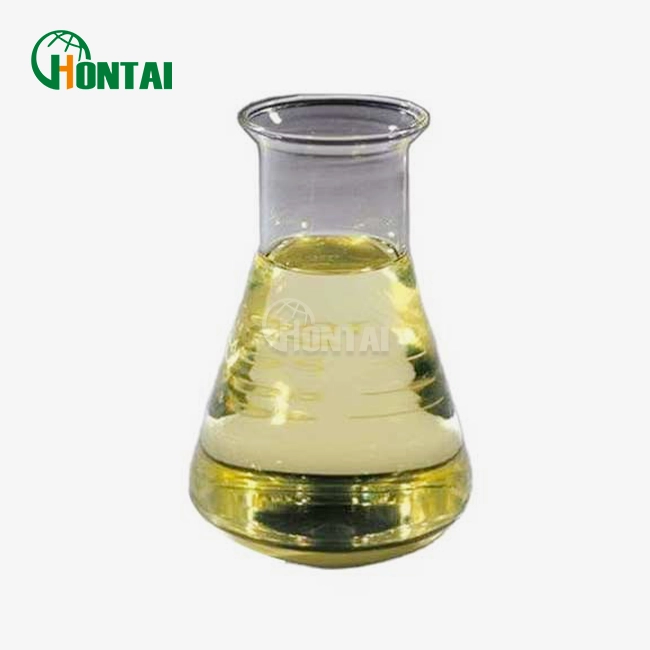
The 95% TC grade is a thick, yellow to light brown liquid that doesn't dissolve well in water but does mix well with organic solvents like acetone, methanol, and xylene. Because of these physical traits, it works perfectly for EC preparation, which is the best way for this active ingredient to get into the body. The cis/trans isomer ratio is an important quality factor that procurement teams often forget about. For stable biological performance in the field, it is important to keep the number the same from batch to batch.
Target Crops and Pathogens
Propiconazole 95% TC has been shown to work against a wide range of diseases and crops. These are the main application goals:
- Cereals: Controls Septoria spp., Cochliobolus sativus, Erysiphe graminis, Leptosphaeria nodorum, and Rhynchosporium secalis, which are diseases that cause big output losses in places like the CIS, Latin America, and South Asia that grow a lot of grains.
- Bananas: Propiconazole 95% TC works against Mycosphaerella musicola and Mycosphaerella fijiensis var. difformis, two of the most damaging leaf diseases in tropical banana farming in terms of cost.
- Turf: Takes care of Sclerotinia homoeocarpa, Rhizoctonia solani, Puccinia spp., and Erysiphe graminis well; these are pathogens that golf courses and professional sod farms are worried about.
- Rice and Maize: In warm and subtropical cropping settings, it can be used to control Helminthosporium spp. in corn and Rhizoctonia solani in rice.
Together, these pathogens damage hundreds of millions of hectares around the world. Due to the active ingredient's systemic nature and its acropetal translocation, even newly emerging leaf tissue is protected after just one application.
Application Methods and Effective Dosage Guidelines
How to Apply and Combine Propiconazole Formulations?
Propiconazole 95% TC-based products are mostly used as foliar sprays with 100–150 g of active ingredient per hectare. These sprays are timed to hit the plant at the start of a disease or at key stages of growth, like when wheat flag leaves start to show. Specific FS or WS formulations developed from the TC can be used to treat seeds, protecting the whole plant during early crop establishment.
One great thing about this triazole is that it can be mixed with strobilurin fungicides like azoxystrobin and trifloxystrobin without any problems. When used together, they make a program with two different ways of working: the DMI targets ergosterol biosynthesis, and the strobilurin targets mitochondrial respiration. This program actively lowers the pressure for resistance to selection. Integrated disease management protocols recommend this two-step process for large-scale distributors and crop protection programs that need to manage resistance across rotation cycles.
Resistance control advice is important. Propiconazole 95% TC is in FRAC Group 3, and it is best to rotate it with drugs from FRAC Group 11 or FRAC Group 7 when disease pressure stays high over several seasons.
Safety, Environmental Impact, and Regulatory Compliance
Handling, Storage, and Regulatory Frameworks
Propiconazole 95% TC is a thick liquid that is much harder to pump when the temperature drops below 15°C. People who handle the substance should use drum heaters or warm storage rooms to lower the viscosity before decanting. When handling chemicals, standard handling procedures include the use of equipment like chemical-resistant gloves, eye protection, and enclosed-cab applicator equipment.
At least two years can be stored in original HDPE or lined steel drums that have not been opened and are kept out of direct sunlight and high temperatures. Buyers should keep an eye on the acidity levels and water content. Too much acidity breaks down emulsifiers in formulated goods, and too much water causes hydrolysis in co-formulated partners.
When it comes to rules, Propiconazole 95% TC is registered under EPA rules in the US and has to follow REACH rules in the EU. In Brazil, buyers need to be registered for ANVISA/MAPA, and in Indonesia, buyers need to be registered for TPP. In controlled markets, you have to provide GLP-compliant paperwork packages that include crop performance data and residue studies. Doing so ahead of time cuts registration times by a large amount.
Comparing Propiconazole 95% TC with Other Fungicides
Where It Stands Against Tebuconazole and Strobilurins?
Propiconazole 95% TC and tebuconazole are the two most commonly bought DMI fungicides in the triazole class. Tebuconazole works better against Fusarium head blight in grains and has a wider lingering effect on some pulse crops. Propiconazole 95% TC, on the other hand, works better at controlling turf diseases and consistently kills Septoria and Rhynchosporium in barley, which is why it is the first choice for grain programs in northern Europe and the CIS.
If you compare propiconazole 95% TC to strobilurins like azoxystrobin, it has better healing properties. Mostly, strobilurins stop spores from germinating, but they don't get rid of diseases that are already there. Because it moves through the body, Propiconazole 95% TC can stop fungus growth after it has already penetrated—this is a key difference when weather delays application timing.
Propiconazole 95% TC is usually priced 20–30% less than finished formulas from Syngenta or BASF, which makes it a more cost-effective choice. OEM brand owners and distributors who are building competitive product lines will benefit from this cost structure, which helps them keep their profit margins healthy and delivers proven bioefficacy.
Procuring Propiconazole 95% TC—A Buyer's Guide for B2B Clients
What to Evaluate Before Placing a Bulk Order?
Choosing where to get Propiconazole 95% TC should be based on quality data that has been checked, not just claims of purity that have been written down. Buyers should ask for HPLC-verified data on the active ingredient content, the acetone insolubles data, and the uniformity of the isomer ratio across recent production runs. These factors directly affect how your prepared product will act when it's in suspension, when it's on the shelf, and when it's used in the field.
For TC shipments, the order volume is usually between 1 and 3 metric tons per lot. For formulated products, it's between 3 and 15 metric tons per shipment. Combination premixes like Propiconazole 95% TC+trifloxystrobin or Propiconazole 95% TC+azoxystrobin are ordered in lots of 2–8 metric tons more and more by brand owners who want to make their product lines stand out.
The standard way to pay for agrochemicals is with a 30% T/T deposit and the remaining 70% due before the shipment. L/C is usually used by government and institutional buyers. Distributor accounts that have been open for at least two years may be able to get 60-day credit terms from approved providers.
Conclusion
Propiconazole 95% TC is a tried-and-true triazole fungicide input that has been shown to be effective against economically important pathogens at 100–150 g/ha on cereals, turf, rice, maize, and bananas. It can move through the body easily, heal, and work with dual-mode-of-action premixes, which makes it an important part of resistance control programs around the world. When a business wants to buy something, they should base their choice on how pure it is, how consistent each batch is, and how much paperwork the seller can provide. This is especially important for regulated markets that need full GLP data packages.
FAQ
1. What crops benefit most from propiconazole-based fungicides?
The main foods that are being targeted are cereals, grass, rice, corn, and bananas. It is especially useful for controlling Septoria leaf blotch and powdery mildew in cereal programs.
2. Is propiconazole 95% TC suitable for seed treatment formulations?
There is a liquid called Propiconazole 95% TC that is mostly made into EC or EW goods. To make seed treatment mixtures, you need to use advanced adsorption or co-formulation methods with solid carriers. This is possible with the help of experienced formulation support.
3. How should I verify the quality of a TC shipment?
You should ask for HPLC purity certificates, Karl Fischer water content reports, acidity readings, and proof of the isomer ratio. These are the four main quality control factors that are in line with FAO and WHO guidelines.
4. What is the recommended resistance management strategy?
Switch Propiconazole 95% TC with strobilurins or SDH. Is every other day. During high-pressure disease seasons, don't use solo DMI treatments right after each other.
Partner with Hontai—Your Reliable Propiconazole 95% TC Manufacturer
Hontai ships verified propiconazole 95% TC from Hebei, China, with fast global logistics and purity that has been certified by HPLC. The isomer ratios are always the same, and Hontai provides full GLP documentation support. Our expert team is ready to help your program whether you need bulk TC supply, custom EC premix development, or goods that are ready for registration. To get a sample or bulk price right away, email us at admin@hontai-biotech.com.
References
1. Tomlin, C. D. S. (Ed.). The Pesticide Manual: A World Compendium (17th ed.). British Crop Production Council, 2015.
2. FAO/WHO. Pesticide Residues in Food—Propiconazole: Toxicological Evaluations. Joint FAO/WHO Meeting on Pesticide Residues (JMPR), 2004.
3. FRAC. FRAC Code List: Fungicides Sorted by Mode of Action. Fungicide Resistance Action Committee, 2023.
4. Brent, K. J., & Hollomon, D. W. Fungicide Resistance in Crop Pathogens: How Can It Be Managed? FRAC Monograph No. 1 (2nd ed.), 2007.
5. US EPA. Reregistration Eligibility Decision (RED) for Propiconazole. United States Environmental Protection Agency, 2006.
6. Hewitt, H. G. Fungicides in Crop Protection (2nd ed.). CAB International, 2009.
Our customers’ satisfaction speaks for our quality — contact us to experience the same reliable service.