- English
- French
- German
- Portuguese
- Spanish
- Russian
- Japanese
- Korean
- Arabic
- Greek
- German
- Turkish
- Italian
- Danish
- Romanian
- Indonesian
- Czech
- Afrikaans
- Swedish
- Polish
- Basque
- Catalan
- Esperanto
- Hindi
- Lao
- Albanian
- Amharic
- Armenian
- Azerbaijani
- Belarusian
- Bengali
- Bosnian
- Bulgarian
- Cebuano
- Chichewa
- Corsican
- Croatian
- Dutch
- Estonian
- Filipino
- Finnish
- Frisian
- Galician
- Georgian
- Gujarati
- Haitian
- Hausa
- Hawaiian
- Hebrew
- Hmong
- Hungarian
- Icelandic
- Igbo
- Javanese
- Kannada
- Kazakh
- Khmer
- Kurdish
- Kyrgyz
- Latin
- Latvian
- Lithuanian
- Luxembou..
- Macedonian
- Malagasy
- Malay
- Malayalam
- Maltese
- Maori
- Marathi
- Mongolian
- Burmese
- Nepali
- Norwegian
- Pashto
- Persian
- Punjabi
- Serbian
- Sesotho
- Sinhala
- Slovak
- Slovenian
- Somali
- Samoan
- Scots Gaelic
- Shona
- Sindhi
- Sundanese
- Swahili
- Tajik
- Tamil
- Telugu
- Thai
- Ukrainian
- Urdu
- Uzbek
- Vietnamese
- Welsh
- Xhosa
- Yiddish
- Yoruba
- Zulu
How Dimethoate Provides Effective Systemic Control Against Crop Pests
share:
Dimethoate pesticides are among the most cost-efficient organophosphate alternatives for large-scale agricultural customers today, and dimethoate insecticides are commonly considered when buyers need a formulation suited to broad pest-management programs. Dimethoate is a systemic and contact cholinesterase inhibitor that is absorbed by plant leaves and roots and is then translocated via the xylem to protect even freshly developing plants. This dual-mode chemistry—systemic absorption plus direct contact and gastrointestinal action—makes it especially powerful against pests hiding within leaf tissue or on the lower side of leaves where surface-only sprays can't reach. It makes sense for procurement experts looking at broad-spectrum pest management across the cotton, grain, citrus, and vegetable sectors to begin by knowing how this active ingredient works.
Understanding Dimethoate and Its Mode of Action
What Makes Dimethoate Systemic?
It prevents acetylcholinesterase from accomplishing its purpose, which is to prevent nerve impulses in insects. Dimethoate: Once within the plant, it circulates and feeds where contact-only chemicals cannot reach. It can also penetrate fruit cuticles thanks to its lipophilic nature, which is a huge advantage for citrus companies who seek to trap Bactrocera and Ceratitis fruit fly larvae that feed in the pulp.
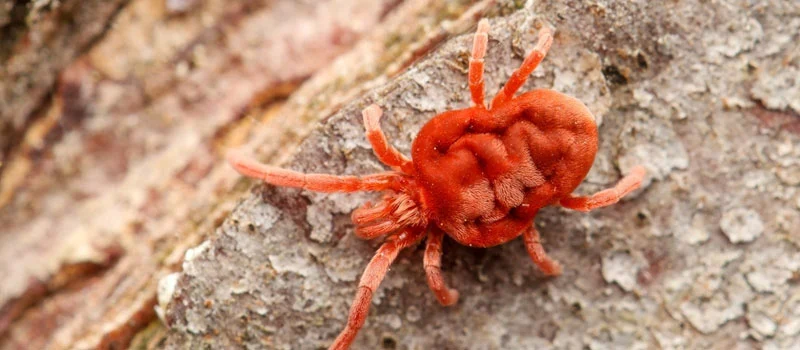
The list of recognized pests includes Acari, Aphididae, Aleyrodidae, Coccidae, Coleoptera, Collembola, Diptera, Lepidoptera, Pseudococcidae, and Thysanoptera. Not a lot of single active substances can cover this much at this pricing.
Real-World Crop Applications
One prevalent concern in large-scale cereal and cotton systems is uneven spray coverage due to the proximity of the plants. This is remedied immediately by the systemic movement of dimethoate; the active ingredient is translocated throughout the plant even if spray application is less than ideal. In greenhouse ornamental production, it halts life phases of leaf miners and thrips entrenched in leaf tissue, maintaining the market quality of the produce. This is where the contact-only solutions always fail.
Comparative Analysis: Dimethoate vs. Alternative Insecticides
Procurement decisions are seldom made in isolation. Dimethoate insecticides are compared with other pesticides like malathion, chlorpyrifos, neonicotinoids, and biological alternatives on a variety of practical factors, including the range of pests it targets, the cost per treated acre, its legal status, and how well it works for resistance management.
Malathion is an organophosphate; however, it does not circulate throughout the body as efficiently as certain other organophosphates, which restricts its capacity to kill concealed eaters. Chlorpyrifos is particularly effective in controlling soil pests but is increasingly restricted by regulators in the EU and other African nations. Neonicotinoids are all throughout the environment; however, they hurt bees and are being restricted more and more, making it tougher for purchasers supplying regulated export markets.
Note that dimethoate is an IPM rotation partner. Pyrethroids and neonicotinoids have been reported to be resistant against aphids and whiteflies in sub-Saharan Africa, Southeast Asia, and Latin America. Rotating with an organophosphate, such as dimethoate, helps position dimethoate insecticides as part of a resistance-management strategy, preventing the build-up of resistance and extending the market life of all your insecticides. This gives it a strategic importance that goes beyond the temporal period in which it operates.
There are practical considerations. Dimethoate has specific application requirements described by the WHO classification, and the operator has to follow the appropriate application procedures. If used during blooming, it also requires specific application considerations for pollinators, something that sourcing teams need to make explicit on product labelling.
Optimizing Application: Dosage, Methods, and Best Practices
Recommended Application Techniques
There are three basic pathways of exposure to dimethoate. Foliar spraying remains the most frequent approach to combat aphids, whiteflies, and mites on grains and vegetables. The chemicals work by being absorbed directly via the roots and by targeting organisms that feed on roots, and therefore the action in the soil lasts longer. “Seed treatments are not used very often but can protect plants early in the season in high-pressure situations.
The normal rate of foliar application of dimethoate insecticides is between 300 and 500 g of active ingredient per hectare, depending on the crop and pest pressure. But consumers should examine the label to make sure the prices are right for registered usage in the nation they have selected. In the field, residual activity often is from 7 to 14 days.
Reading Crop Response Signals
Some attractive plants, for example, ferns and chrysanthemums, may show a different response to exposure to dimethoate. Visual responses include changes in leaf tips, margins, and overall leaf appearance. “Different plants need to be monitored for 48 to 72 hours before a full-scale rollout.” Observing crop responses early, rather than insect activity, supports appropriate reapplication decisions and consistent crop management.
These application characteristics convert directly into needs for purchasing products. For bulk purchase, the buyer should get a certificate of analysis that verifies the concentration of the active ingredient, pH range, and emulsion stability. All of these are elements that influence the uniformity of performance on the field.
Sourcing and Procurement of Dimethoate for B2B Clients
What Reliable Supply Chains Look Like?
The majority of the world's dimethoate insecticides supply chain is based in China, specifically in the provinces of Hebei, Jiangsu, and Anhui. For wholesale importers and OEM brand owners, price is not the only thing that sets one supplier apart from another. What sets reliable partners apart from transactional ones are the consistency of the active ingredients from batch to batch, the completeness of the documentation, and the supplier's ability to support registration dossiers in target markets.
Here are the buying factors that always lead to long-term ties with suppliers:
- Technical concentrate purity: South Asian markets need at least 97% purity, while top Asian markets like South Korea and Japan need at least 98% purity. Before placing a large order, make sure you know the analysis method and reference standard.
- Formulation flexibility: EC is still the most common market form of dimethoate, but OEM buyers are asking for custom adjuvant systems and different types of packing.
- Registration documentation: In markets where registration is required, like ANVISA in Brazil, ECOWAS/MRAG in West Africa, and CIB&RC in India, GLP toxicology data, formulation stability results at 50°C/75% RH, and bioefficacy trial records are needed. Suppliers who cannot handle this kind of paperwork cause registering delays further down the line, which cost buyers whole selling seasons.
- Lead time and logistics: Vietnamese buyers and distributors in Southeast Asia usually need 15-day delivery windows. At scale, it is a must to confirm that an item is in stock before placing an order.
Regional agrochemical wholesalers have to deal with yearly demand cycles, and these procurement factors are a direct reflection of that. If there is a gap in paperwork or a delay in logistics, market windows are lost. Taking care of them right away determines whether a relationship with a supplier grows or stays the same.
Future Trends in Systemic Pest Control with Dimethoate
Organophosphates are coming under more and more regulatory pressure around the world. The EU has gradually limited the use of dimethoate on some crops, mostly cherries, because of changing residue requirements. Teams that buy things for European re-export chains need to keep an eye on MRL updates. On the other hand, growth markets in Africa and Southeast Asia are continuing to increase registration and use of dimethoate insecticides. This is because it protects key crops at a low cost.
The use of bulk insecticides is changing because of the integration of precision agriculture. Variable-rate spraying technology lowers the amount of active ingredient used each season while keeping effectiveness levels the same. This is good for both growers' budgets and the time it takes to meet regulatory requirements. In future-looking procurement systems, suppliers who can provide bioefficacy data that is matched with precise dose goals will have an edge over other suppliers.
Combination formulas are also becoming a more popular way to make new products. When dimethoate is mixed with pyrethroids or biological agents, it has a multi-mode effect that slows the development of resistance. This is a key request from IPM-focused cooperative buyers who are handling resistance over multiple years of contracts.
Conclusion
Because it works both systemically and directly on the plant, dimethoate insecticides containing dimethoate can be a reliable and cost-effective choice for professional pest control programs in cotton, cereals, citrus, and vegetables. Even though regulations are changing, these products are still useful for procurement because they cover a wide range of pests, can be moved, and have IPM rotation value. When buyers get their goods from makers who can provide documentation and consistently high quality, they get operating reliability and market registration support, which are two important factors for large-scale business success.
FAQ
1. Is dimethoate safe to use near pollinators?
When used during busy blooming, dimethoate has specific application considerations for honeybees. Applying chemicals outside of peak feeding times and following application requirements during bloom supports appropriate pollinator management. This scheduling rule should be written on all labels for business products and in training tools for distributors.
2. How do I identify crop responses to dimethoate?
Within 48 to 72 hours of application, crop responses can usually be observed through changes in leaf appearance or localized coloration. It happens most often on decorative plants that have different responses to high application rates. Before full deployment, doing a small-scale test on cultivars that have not been used before helps maintain consistent performance across commercial crops.
3. What documentation should I request when sourcing dimethoate in bulk?
Ask for a recent COA that confirms the consistency of the emulsification, pH, and active ingredient test. Ask for an MSDS, formulation stability data, and GLP bioefficacy trial reports as well if the market you are trying to reach needs you to submit a registration dossier. Complete documentation helps streamline the process of entering a market.
4. What is the standard TC purity for dimethoate imports?
For normal marketing, most markets accept purity of 95% or more. South Asian buyers usually want 97% or more, and premium markets like Japan and South Korea want 98% or more with the analytical certificates to back it up.
Partner with Hontai for Reliable Dimethoate Insecticide Supply
Hontai is a reliable dimethoate insecticide company based in Shijiazhuang, Hebei, offering GMP-compliant TC and formulated EC products with full paperwork packages suited to your target market. These packages include COA, MSDS, stability data, and support for your registration application. For buyers sourcing dimethoate insecticides, Hontai is a reliable long-term partner because they offer custom packing, a flexible MOQ ranging from small samples to 20-ton bulk orders, and dedicated expert account support. You can email us at admin@hontai-biotech.com to get samples or a business quote.
References
1. Tomlin, C. D. S. (Ed.). The Pesticide Manual: A World Compendium (17th ed.). British Crop Production Council, 2015.
2. FAO/WHO. Pesticide Residues in Food: Dimethoate Evaluations. Joint FAO/WHO Meeting on Pesticide Residues (JMPR), 2016.
3. Sparks, T. C., & Nauen, R. IRAC: Mode of Action Classification and Insecticide Resistance Management. Pesticide Biochemistry and Physiology, 2015.
4. Bass, C., Denholm, I., Williamson, M. S., & Nauen, R. The Global Status of Insect Resistance to Neonicotinoid Insecticides. Pesticide Biochemistry and Physiology, 2015.
5. European Food Safety Authority (EFSA). Conclusion on the Peer Review of the Pesticide Risk Assessment of the Active Substance Dimethoate. EFSA Journal, 2006.
6. Yadav, I. C., & Devi, N. L. Pesticides Classification and Its Impact on Human and Environment. Environmental Science and Engineering, 2017.

Our customers’ satisfaction speaks for our quality — contact us to experience the same reliable service.