- English
- French
- German
- Portuguese
- Spanish
- Russian
- Japanese
- Korean
- Arabic
- Greek
- German
- Turkish
- Italian
- Danish
- Romanian
- Indonesian
- Czech
- Afrikaans
- Swedish
- Polish
- Basque
- Catalan
- Esperanto
- Hindi
- Lao
- Albanian
- Amharic
- Armenian
- Azerbaijani
- Belarusian
- Bengali
- Bosnian
- Bulgarian
- Cebuano
- Chichewa
- Corsican
- Croatian
- Dutch
- Estonian
- Filipino
- Finnish
- Frisian
- Galician
- Georgian
- Gujarati
- Haitian
- Hausa
- Hawaiian
- Hebrew
- Hmong
- Hungarian
- Icelandic
- Igbo
- Javanese
- Kannada
- Kazakh
- Khmer
- Kurdish
- Kyrgyz
- Latin
- Latvian
- Lithuanian
- Luxembou..
- Macedonian
- Malagasy
- Malay
- Malayalam
- Maltese
- Maori
- Marathi
- Mongolian
- Burmese
- Nepali
- Norwegian
- Pashto
- Persian
- Punjabi
- Serbian
- Sesotho
- Sinhala
- Slovak
- Slovenian
- Somali
- Samoan
- Scots Gaelic
- Shona
- Sindhi
- Sundanese
- Swahili
- Tajik
- Tamil
- Telugu
- Thai
- Ukrainian
- Urdu
- Uzbek
- Vietnamese
- Welsh
- Xhosa
- Yiddish
- Yoruba
- Zulu
Is Acetamiprid 20% SP Effective Against Aphids and Whiteflies?
share:
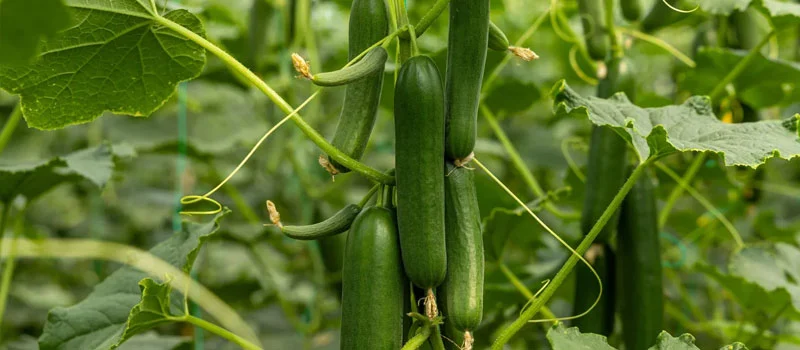
Acetamiprid 20% SP offers reliable and measurable control of aphids and whiteflies in a broad range of crops. It is a second-generation neonicotinoid in the IRAC Group 4A, a nicotinic acetylcholine receptor agonist that inhibits insect nerve transmission at low application rates. Field tests with apple, citrus, tomato, and cucumber have shown consistent 85-95% bug reduction within 48-72 hours following foliar spraying. It is translaminar and precisely absorbed and may get through pests on the undersides of leaves or within curled foliage where contact-only pesticides fail.
Understanding Acetamiprid 20% SP and Its Mode of Action
The chemical name of acetamiprid is (E)-N1-[(6-chloro-3-pyridyl)methyl]-N2-cyano-N1-methylacetamidine. Acetamiprid 20% SP is water-soluble and generates a clear spray solution that is rainfast after 4 to 6 hours when dissolved in water.
How Does It Work Inside the Plant?
Acetamiprid absorbed by leaf tissue translocates across the plant via the phloem and xylem. Insects like aphids, whiteflies, leafhoppers, and thrips, etc., feed on treated plant tissue, and the active chemical binds permanently to nAChR sites in the central nervous system of insects. It stops their nerves from working, and this kills them. It provides a unique method of action but controls numerous pest populations resistant to organophosphates and pyrethroids.
Bee Safety and IPM Compatibility
Acetamiprid has a different profile for bees than imidacloprid in the short term. The European Food Safety Authority stated that acetamiprid provides a different exposure profile for beekeepers than other neonicotinoids. However, direct contact with spray during the peak foraging hours remains an important application consideration. Apply at twilight. Use during appropriate crop growth stages. Mix with beneficial insect release programs. After a certain length of time has passed It is a good fit, since it is compatible with organized IPM systems.
Evaluating the Effectiveness of Acetamiprid 20% SP Against Aphids and Whiteflies
Documented Field Performance
Several peer-reviewed studies have shown that it is quite effective. In a study in Pest Management Science, acetamiprid 20% SP remained effective against neonicotinoid-resistant populations of green peach aphid at field use rates. When sprayed when the insects were still young, treatments of 200–300 g/ha in greenhouse experiments with whiteflies on tomato and cucumber plants decreased populations by more than 90%.
This translaminar nature is important for operations. When using acetamiprid 20% SP in citrus and apple orchards, woolly aphid colonies are found in bark cracks and on the undersides of leaves. These sites can't be accessed by a surface spray. Systemic absorption makes up the difference, giving you another 14 to 21 days of protection at room temperature.
Dosage and Application Windows
Application rate should be 200-400 g/ha depending on the crop and the number of pests. The rates normally will offer the best benefits and yet comply with crop safety criteria and the pre-harvest interval:
- Apple & pear orchards: 250–300 g/ha when early instar aphids are present. Repeat if pressure is the same after 14 days.
- Greenhouse tomatoes and cucumbers. 200-250 g/ha. For whitefly nymphs. Apply before the rise of the adult population.
- Citrus: 300-400 g/ha in combination with horticultural mineral oil when pest levels are high.
- Rice: 200 g/ha as a foliar spray at the time of initial budding of plants.
These parameters for major agricultural systems ensure that veggies are normally 3 to 7 days old for the PHI, depending on the area where they are cultivated.
Resistance Management
Rotation with pesticides of different modes of action should be practiced to avoid the development of resistance over time. When tank-mixed with spinosad, abamectin, or pyriproxyfen in a yearly spray program, it greatly decreases selection pressure. Group 4A chemicals should not be applied more than twice consecutively in a crop rotation.
Comparative Analysis: Acetamiprid 20% SP vs. Other Insecticides
Before buying in large numbers, procurement teams often evaluate acetamiprid vs. imidacloprid and thiamethoxam. Knowing where the disparities are provides the ability to adapt the chemical to the crop and pest profile. Imidacloprid has strong systemic action in the soil but has a different profile for bees and is under tighter limitations in the EU. Thiamethoxam is promptly and well absorbed but breaks down more quickly at higher temperatures. Whereas, Acetamiprid 20% SP has a wider temperature range and is more beneficial in terms of regulation in EU and ASEAN markets.
For practical reasons, this combination is easier to handle than liquid concentrations. Complete water solubility implies no settling of suspensions, less tip wear, and easier tank mixing. Easier labor handling due to less dust generation on dissolution. Hontai’s production line is capable of meeting this demand with new low-dust manufacturing processes. It may be used in novel combinations with imidacloprid or pyriproxyfen that provide two different ways for the active ingredient to work in one application. This is very beneficial for whitefly control in greenhouses, especially for IPM-based programs.
Practical Usage Tips and Best Practices for Acetamiprid 20% SP
Paying attention to the mixing protocol and application timing is needed to get consistent results. When the pH is neutral to acidic, acetamiprid 20% SP stays steady, but it breaks down quickly above pH 8. You should never mix Bordeaux mixture or other alkaline fungicides in a tank without first testing to see if they will work together.
Mixing and Application Protocol
Before adding it to the spray tank, dissolve the measured amount in a small amount of clean water. Fill the tank halfway, add the solution that has already been dissolved, and then fill it all the way up while stirring it. Set up the spray equipment so that it delivers 300–500 L/ha of water, which is enough to reach the ceiling. For drip applications in greenhouse systems, make sure the injectors and filters are compatible.
Timing and Frequency
Use to find pests, like early instar nymphs for whiteflies and first colonies of aphids. Stomatal absorption is better when the temperature in the morning is below 25°C. Because the product works throughout the body, rain that falls more than 4–6 hours after application usually doesn't make it less effective. You should only use two sprays in a row before switching to a different mode of action.
Procurement Guide: Buying Acetamiprid 20% SP for B2B Clients
When making large-scale sourcing choices, it's important to put certified HPLC purity, consistent batch paperwork, and formulation compliance with destination-market rules at the top of the list. Important things to ask any acetamiprid 20% SP supplier are a Certificate of Analysis, a Material Safety Data Sheet, and CIPAC method test reports that cover suspensibility, wettability, and moisture content.
Hontai sells standard 20% SP in 100 g, 500 g, and 1 kg foil packs, as well as 25 kg drums for bulk buyers. A monthly container-load supply of consistent amounts that have been HPLC-verified helps wholesalers and co-ops plan their purchases. Custom OEM buyers can ask for 70% WG, 25% WP, or 35% SC versions with their own brand on the packaging and labels in multiple languages. For markets that need emergency use approvals, EU Article-53 dossier help and MRL advice are offered.
Conclusion
In conclusion, acetamiprid 20% SP has earned its place in professional pest control because it has been shown to work across the whole system, has a reasonable resistance profile, and works well with IPM systems. It works well against aphids and whiteflies in fruit gardens, greenhouse veggies, and specialty crops, according to data from the field. Its stable formulation, wide range of doses, and established bee profile compared to older neonicotinoids make it a practical and financially sound choice for procurement professionals who are in charge of a variety of crop portfolios.
FAQ
1. Can it be mixed with alkaline fungicides like Bordeaux mixture?
No, acetamiprid 20% SP breaks down quickly above pH 8, which means the active ingredient is lost and the drug is less effective. Before mixing with any alkaline product, you should always do a jar test.
2. Is it safe for bees?
It has a different profile for bees than imidacloprid, but direct contact with it while foraging remains an important consideration. Apply at dusk and don't do it when the plant is in bloom.
3. What is the pre-harvest interval for vegetables?
PHI can take anywhere from 3 to 7 days, depending on the type of crop and where it is registered. Studies of residue breakdown show that the amount quickly decreases after application.
4. What is the shelf life and storage requirement?
Most foods can be kept for two years if they are kept in a cool, dry place below 35°C and out of direct sunlight and water. Active ingredients stay intact in sealed foil packaging.
Partner with Hontai for Reliable Acetamiprid 20% SP Supply
Hontai is a reliable company based in Shijiazhuang, Hebei, that makes acetamiprid 20% SP. They offer stable product quality, OEM customization options, and fast global logistics to meet your buying needs. Whether you need normal foil packs or 25 kg drums, our team can help you with technical questions and offer full support after the sale. You can email admin@hontai-biotech.com right now to ask for a sample, a COA, or a price for a large order.
References
1. Bass, C., Denholm, I., Williamson, M. S., & Nauen, R. (2015). The global status of insect resistance to neonicotinoid insecticides. Pest Management Science, 71(4), 493–502.
2. European Food Safety Authority (EFSA). (2013). Conclusion on the peer review of the pesticide risk assessment for bees for the active substance acetamiprid. EFSA Journal, 11(4), 3181.
3. Elbert, A., Haas, M., Springer, B., Thielert, W., & Nauen, R. (2008). Applied aspects of neonicotinoid uses in crop protection. Pest Management Science, 64(11), 1099–1105.
4. Nauen, R., & Denholm, I. (2005). Resistance of insect pests to neonicotinoid insecticides: Current status and future prospects. Archives of Insect Biochemistry and Physiology, 58(4), 200–215.
5. Tomizawa, M., & Casida, J. E. (2005). Neonicotinoid insecticide toxicology: Mechanisms of selective action. Annual Review of Pharmacology and Toxicology, 45, 247–268.
6. Grafton-Cardwell, E. E., Stelinski, L. L., & Stansly, P. A. (2013). Biology and management of Asian citrus psyllid, vector of the Huanglongbing pathogens. Annual Review of Entomology, 58, 413–432.
Our customers’ satisfaction speaks for our quality — contact us to experience the same reliable service.