- English
- French
- German
- Portuguese
- Spanish
- Russian
- Japanese
- Korean
- Arabic
- Greek
- German
- Turkish
- Italian
- Danish
- Romanian
- Indonesian
- Czech
- Afrikaans
- Swedish
- Polish
- Basque
- Catalan
- Esperanto
- Hindi
- Lao
- Albanian
- Amharic
- Armenian
- Azerbaijani
- Belarusian
- Bengali
- Bosnian
- Bulgarian
- Cebuano
- Chichewa
- Corsican
- Croatian
- Dutch
- Estonian
- Filipino
- Finnish
- Frisian
- Galician
- Georgian
- Gujarati
- Haitian
- Hausa
- Hawaiian
- Hebrew
- Hmong
- Hungarian
- Icelandic
- Igbo
- Javanese
- Kannada
- Kazakh
- Khmer
- Kurdish
- Kyrgyz
- Latin
- Latvian
- Lithuanian
- Luxembou..
- Macedonian
- Malagasy
- Malay
- Malayalam
- Maltese
- Maori
- Marathi
- Mongolian
- Burmese
- Nepali
- Norwegian
- Pashto
- Persian
- Punjabi
- Serbian
- Sesotho
- Sinhala
- Slovak
- Slovenian
- Somali
- Samoan
- Scots Gaelic
- Shona
- Sindhi
- Sundanese
- Swahili
- Tajik
- Tamil
- Telugu
- Thai
- Ukrainian
- Urdu
- Uzbek
- Vietnamese
- Welsh
- Xhosa
- Yiddish
- Yoruba
- Zulu
Dimethomorph: a specific drug for the prevention and treatment of downy mildew
share:
When downy mildew strikes, growers need more than a generic broad-spectrum spray — they need a targeted solution. Dimethomorph 50% WP is precisely that. As a carboxylic acid amide fungicide classified under FRAC Group 40, it works by inhibiting cellulose synthase in oomycete pathogens, effectively shutting down cell wall formation in organisms like Plasmopara viticola and Phytophthora infestans. Active at just 100–200 g a.i./ha, it delivers high-precision disease control with efficient application characteristics — making it a strategic asset for potato, tomato, grape, and cucurbit crop protection programmes across the United States and beyond.
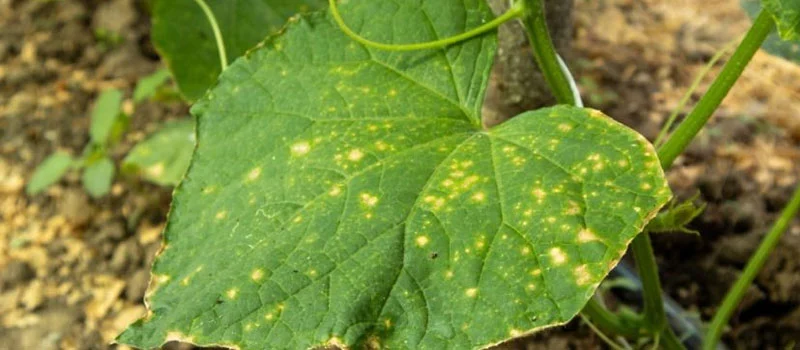
Understanding Dimethomorph and Its Role in Downy Mildew Control
What Makes This Formulation Different?
A single-site mode of action lets Dimethomorph work only on oomycetes, which are the pathogens that cause downy mildews and late blight. It doesn't bother non-target organisms like broad-spectrum fungicides do, which makes it much better for integrated pest management programmes. The wettable powder mixture gets through a 325-mesh sieve with 98% of it, making a stable solution that coats leaf surfaces evenly when mixed properly during tank preparation.
Crop-Specific Applications and Dosage
It is suggested that 1.0 to 1.5 kg/ha be sprayed on the leaves every 7 to 10 days, based on the level of infection and the weather. Most business demand is driven by three main use cases:
- Potato and tomato late blight: The wettable powder formulation works well with high-volume boom sprayers and hand-spray systems in greenhouse tomato operations, creating a barrier that protects and moves water around when it's humid.
- Grape downy mildew: Vineyards use it in rotation with copper fungicides to kill sporangiophores that appear on the underside of leaves.
- Cucurbit downy mildew: Watermelon, cucumber, and melon co-ops depend on the WP formulation's low cost in large-area foliar spray programmes.
These uses show that the product can be used in a variety of climates and crop types, which is a real plus for programmes that buy more than one crop.
Effectiveness, Application, and Environmental Considerations
Performance Data vs. Traditional Fungicides
Comparative field data consistently shows that Dimethomorph is better at stopping diseases than phenylamide fungicides like metalaxyl when resistance is high. A 2019 study in the journal Pest Management Science showed that CAA fungicides kept more than 85% of the sporangiophore activity down against metalaxyl-resistant P. infestans isolates in potato trials in Europe. Because dimethomorph has translaminar action, it moves through leaf tissue and protects new growth that spray drops might not directly touch.
Crop Compatibility and Phytotoxicity Profile
When Dimethomorph is used at the standard label rate, it doesn't hurt any registered crops. When making the dimethomorph 50% WP formulation, workers should wear the right mask and gloves because breathing in fine powder is an important consideration during handling. It is important to note that the 50% WDG variant reduces dust during handling, which is something that should be thought about as operations move towards more convenient handling practices.
Resistance Management and Environmental Footprint
The FRAC CAA group has specific resistance-management requirements, which is why it must be rotated with multi-site protectants or complementary single-site chemicals. Dimethomorph breaks down slowly in the soil, with a DT50 value between 10 and 40 days dependent on the type of soil and the amount of water in it. This means it doesn't stay around for too long in the field.
Comparing Formulation Options for Downy Mildew Management
Wettable Powder vs. WDG vs. Suspension Concentrate
A different transportation method is needed for each task. This is the main formulation difference that procurement teams should think about:
- 50% WP: This is the best powder for high-volume businesses that need to save money. Needs the tank to be stirred up all the time and appropriate protective equipment to be used while mixing. It comes in 100 g, 500 g, 1 kg, and 20 kg fibre drums, which make it easy to get for yearly framework contracts.
- 50% WDG: Doesn't make dust and dissolves quickly in water in 60 to 120 seconds. Over 90% susceptibility, which lowers valve clogs. Preferred for precise field sprayers that put handling efficiency first.
- 250 SC: A liquid form with D90 particles smaller than 5 microns and added substances that make it rainproof for 1 to 2 hours. Best for automatic injection methods used to grow a lot of potatoes.
By the time it comes to procurement, these differences matter. Choosing between formulations based on how well they work with tools, how convenient the handling process is, and how much tank-mixing is needed can have a big impact on both operations costs and results.
Procurement Insights for Dimethomorph 50% WP
It takes more than looking at a price list to find a reliable source of high-purity Dimethomorph 50% WP. Professionals in charge of buying things should check that suppliers follow FAO/WHO guidelines, have access to CIPAC test data, and have proof of accelerated stability results from tests done at 25°C, 35°C, and 54°C. The most important quality control checks are an HPLC test that confirms the active ingredient content, the ability to pass the CIPAC MT 15 or MT 161 test, and a wet sieve residue below 0.5% on a 75 µm sieve.
International buyers care about how flexible the packaging is. For example, dimethomorph 50% WP paired with mancozeb for broad-spectrum resistance management or with fluopicolide for better oomycete control are common needs of OEM buyers. They may need custom label languages, exclusive-market packing, or combo formulas. The best long-term relationship value comes from suppliers who can offer NDA-protected exclusivity and label help in multiple languages.
Best Practices for Using Dimethomorph in Rotation Programmes
Timing and Rotation Strategy
Do not use Dimethomorph as a rescue treatment after the wound has already formed. Instead, use it to prevent infection or at the first sign of it. Start applying at the bud break stage for grapes, the canopy closure stage for potatoes, or the vine running stage for cucurbits. After three or four applications in a row, switch to a fungicide from a different FRAC group. When there are a lot of diseases, it is strongly suggested that you use a multi-site contact fungicide with every spray programme.
Agronomic and Compliance Considerations
Managing diseases well is more than just science. Pathogen inoculum can be lowered by managing the canopy to improve air flow, timing watering to keep leaves from getting too wet, and keeping the field clean to get rid of sick matter. To stay within MRL limits for important export markets like the EU and Japan, make sure you follow the pre-harvest times for each crop. For leafy veggies, these are usually 7–14 days, and for grapes, they are 21–28 days.
Conclusion
When it comes to controlling oomycete diseases, dimethomorph stands as one of the most precise tools available. Because it works in a certain way, doesn't need a lot of it, and works with resistance control systems, it is really important for potato, grape, and squash crop programmes. The first step to long-lasting, cost-effective disease control is to find the right formulation for your needs. This is true whether you need standard wettable powder, such as dimethomorph 50% WP, for high-volume spraying or need custom recipe variants with OEM packing. Field tests and regulatory data show that it should continue to be used as a primary CAA fungicide.
FAQ
1. Is dimethomorph compatible with copper fungicides in the spray tank?
Dimethomorph usually works with things that are made of copper. To keep the SC version from flocculating, it should always be added to the tank water before the copper powders. Even so, a jar test is still suggested when working with new formulation combinations.
2. What pre-harvest intervals apply for export crops?
EU and Japanese MRL standards say that PHIs should be between 7 and 14 days for leafy vegetables and between 21 and 28 days for grapes. Check that local registrations are still valid before using on crops that are going to be exported.
3. How many consecutive applications are recommended before rotating?
No more than three or four applications in a row per season. Next, switch to a fungicide with a different FRAC code. In CAA anti-resistance programmes, cymoxanil or fluopicolide are often used as rotation partners.
4. Does dimethomorph control Pythium or other water mould pathogens?
Only oomycetes, like Phytophthora and Plasmopara species, can do what it does. Some action has been seen against Pythium, but that isn't the main use that has been reported. Check the claims on local labels before applying to programmes that target Pythium.
Partner with Hontai for Your Dimethomorph 50% WP Supply
Hontai — Hebei Hontai Biotech Co., Ltd. — delivers certified dimethomorph 50% WP with full quality documentation, flexible OEM packaging, and fast global logistics from Shijiazhuang, China. As a trusted Dimethomorph 50% WP manufacturer, we support bulk orders, custom formulations, and technical rotation guidance. Reach our team directly at admin@hontai-biotech.com to request a sample or quote.
References
1. Gisi, U., & Sierotzki, H. — Carboxylic Acid Amide Fungicides: Mode of Action and Resistance Risk — Pest Management Science, 2008.
2. Blum, M., et al. — Resistance of Plasmopara viticola to Mandipropamid and Other Carboxylic Acid Amide Fungicides — Plant Pathology, 2010.
3. Cooke, L. R., et al. — Sensitivity of Phytophthora infestans to Dimethomorph in Northern Europe — Potato Research, 2006.
4. FRAC — FRAC Code List: Fungicides Sorted by Mode of Action — Fungicide Resistance Action Committee, 2023.
5. FAO/WHO — Dimethomorph: Pesticide Residues in Food — Toxicological Evaluations — Joint FAO/WHO Meeting on Pesticide Residues (JMPR), 2007.
6. Leroux, P., et al. — Mechanisms of Resistance to Fungicides in Field Strains of Botrytis cinerea and Plasmopara viticola — Pest Management Science, 2010.
Our customers’ satisfaction speaks for our quality — contact us to experience the same reliable service.