- English
- French
- German
- Portuguese
- Spanish
- Russian
- Japanese
- Korean
- Arabic
- Greek
- German
- Turkish
- Italian
- Danish
- Romanian
- Indonesian
- Czech
- Afrikaans
- Swedish
- Polish
- Basque
- Catalan
- Esperanto
- Hindi
- Lao
- Albanian
- Amharic
- Armenian
- Azerbaijani
- Belarusian
- Bengali
- Bosnian
- Bulgarian
- Cebuano
- Chichewa
- Corsican
- Croatian
- Dutch
- Estonian
- Filipino
- Finnish
- Frisian
- Galician
- Georgian
- Gujarati
- Haitian
- Hausa
- Hawaiian
- Hebrew
- Hmong
- Hungarian
- Icelandic
- Igbo
- Javanese
- Kannada
- Kazakh
- Khmer
- Kurdish
- Kyrgyz
- Latin
- Latvian
- Lithuanian
- Luxembou..
- Macedonian
- Malagasy
- Malay
- Malayalam
- Maltese
- Maori
- Marathi
- Mongolian
- Burmese
- Nepali
- Norwegian
- Pashto
- Persian
- Punjabi
- Serbian
- Sesotho
- Sinhala
- Slovak
- Slovenian
- Somali
- Samoan
- Scots Gaelic
- Shona
- Sindhi
- Sundanese
- Swahili
- Tajik
- Tamil
- Telugu
- Thai
- Ukrainian
- Urdu
- Uzbek
- Vietnamese
- Welsh
- Xhosa
- Yiddish
- Yoruba
- Zulu
Pyraclostrobin: A Cornerstone of Modern Fungicidal Protection in Agriculture
share:
When crop disease pressure intensifies, the fungicide you choose can determine whether a season ends in profit or loss. Pyraclostrobin has emerged as one of the most reliable active ingredients in modern disease management, and when paired with tebuconazole in a co-formulation, the result is a dual-mode solution that addresses what single-site fungicides simply cannot. The pyraclostrobin tebuconazol combination delivers both preventive and curative control across a remarkably broad pathogen spectrum—making it a strategically sound choice for distributors, OEM brand owners, and large-scale commercial operators sourcing fungicides at volume.
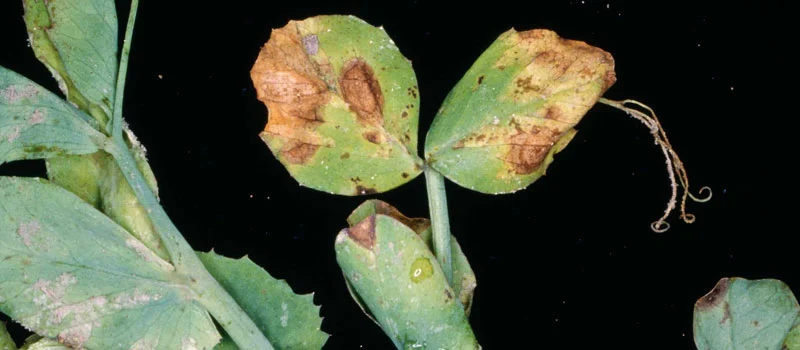
Understanding Pyraclostrobin and Its Fungicidal Properties
Pyraclostrobin is a chemical that works as a quinone outside inhibitor. It is in the strobilurin class. It stops fungus cells from doing mitochondrial respiration, which stops energy production before an attack can start. It's different from older strobilurins because it has a strong lipophilicity—it links quickly to the leaf wax layer, making a rain-fast reserve that protects for a long time without moving deeply into the system.
How Tebuconazole Complements the Mode of Action?
Tebuconazole works as a demethylation inhibitor, which means it stops the production of ergosterol and weakens the cell walls of fungi. It moves laterally through the xylem, reaching new growth and treating infections that are already present in plant tissue, unlike pyraclostrobin. The co-formulation is so useful because it works on multiple levels. One partner protects the surface, and the other goes deeper to stop established infections before they show signs.
Broad-Spectrum Efficacy Across Fungal Classes
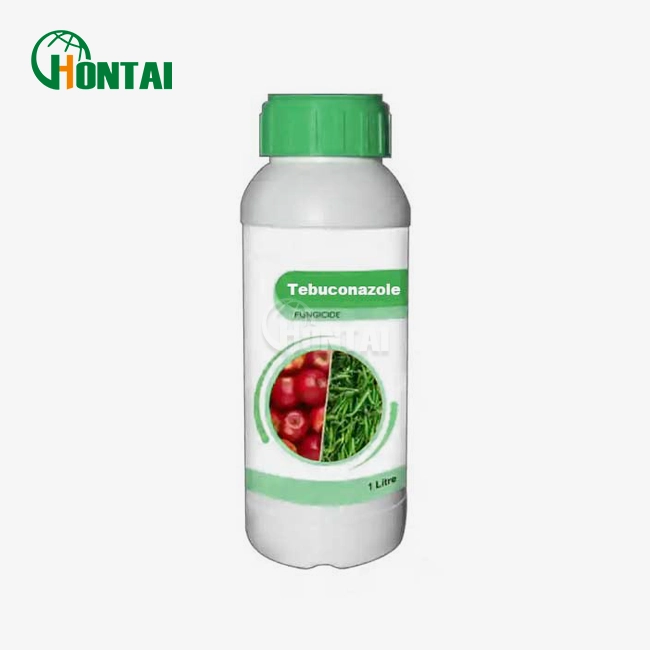
Ascomycetes, basidiomycetes, oomycetes, and deuteromycetes can all be killed by the Hontai Tebuconazole 250 g/l SC. Powdery mildew, rust, net blotch, downy mildew, rice blast, and anthracnose are some of the diseases that are being targeted. The mixture has a water-soluble SC profile and comes in two purity levels: 25% and 43%. It is a stable milk-white liquid that can be sprayed on plants, used to treat seeds, or mixed into soil. The government says it is good for fruit trees, grapes, potatoes, rice, and veggies.
Comparative Analysis: Pyraclostrobin-Tebuconazole vs. Other Fungicides
There's more to picking a fungicide program than just picking the one with the strongest label claim. The cost per hectare needs to be weighed against resistance management, the number of pathogens that will be killed, and the freedom of the application window.
When tebuconazole is used by itself, the co-formulation with pyraclostrobin tebuconazol always provides a broader application window. Tebuconazole works well as a healer when used alone, but its resistance management becomes more important when used over and over again without a partner mode of action. Another QoI fungicide, azoxystrobin, has the same Group 11 resistance considerations as pyraclostrobin, but it can't cure everything like tebuconazole can. Chlorothalonil is a broad-spectrum contact protectant that doesn't work on a systemic level and needs to be reapplied often, which isn't practical in humid places with a lot of rain.
Here is how the co-formulation holds its competitive position across key evaluation criteria used by B2B buyers:
- Resistance management value: Combining FRAC Group 11 and Group 3 provides activity at two separate metabolic sites at the same time, which supports resistance management within a season.
- Pathogen coverage depth: The dual mechanism works on both spore germination before an infection and mycelial development after an infection, which is a wider phase range than either part working alone.
- Rain-fastness advantage: Because pyraclostrobin binds to the cuticle, the formulation stays effective for 1–2 hours after it has been applied and dried. This is a real benefit for tropical and subtropical programs where rain is common and unpredictable.
- Agronomic yield benefit: The "AgCelence effect" seen with strobilurin-based combinations has been documented in soybean and wheat trials. This effect delays leaf senescence and improves stress tolerance, which leads to measurable yield gains beyond just disease control.
Because of these benefits, pyraclostrobin tebuconazol co-formulations are a more expensive but worth-it choice for buyers who are in charge of disease programs across 200 hectares or who are putting together a collection of named products for competitive markets.
Procurement Guide: Buying Pyraclostrobin-Tebuconazole for B2B Clients
To get fungal actives and formulas on a large scale, you need more than just a price quote. For skilled buyers, quality assurance, correct paperwork, and a reliable supply chain are all important.
Quality Parameters Procurement Teams Should Verify
Reliable suppliers of pyraclostrobin tebuconazol offer HPLC analysis that confirms the ratios of active ingredients are within ±5% of what is expected. Results from the suspension rate test should show that the material is more than 90% suspensible, and the wet sieve test should show that there is no residue on a 75µm screen. For SC formulas, particle size distribution with D90 < 5 microns makes sure that all leaves are covered evenly and keeps automatic spray systems from getting clogged nozzles.
Certifications, Documentation, and Regulatory Readiness
Buyers who do business in more than one regulatory area should ask for GLP-compliant effectiveness data packages, accelerated stability data at 30°C/70% RH, and product registration dossiers. Hontai's Tebuconazole 250g/l SC has PD No. PD20210607 and EINECS No. 131860-33-8, which proves that it is a registered drug. Through Hontai's customization program, OEM clients can get NDA protection and co-development help for new premix formulas. Standard business terms are T/T with a 30% deposit and the remaining 70% due before the shipment. Distributors that have been in business for at least two years and have a history of buying things can get 60-day payment terms. L/C terms are usually used by government institutions that buy things.
Practical Benefits and Application Scenarios in Agriculture
The pyraclostrobin tebuconazol system's ability to be used in a variety of ways and on different types of crops makes it truly competitive. The formula works with foliar spray, seed treatment, and soil application, so it can be used at all stages of disease entry, from before the seeds sprout to when the canopy closes.
Asian soybean rust affects whole harvest seasons in large-scale soybean farms across Latin America. Using a co-formulation during the R1–R3 growth stages has been shown to protect grain fill times in a measurable way. During the management of high-value orchards, like apple and citrus, tebuconazole stops scab and anthracnose attacks before they start, and pyraclostrobin protects new fruit surfaces from germs.
For vegetable and potato growers dealing with downy mildew or late blight in humid conditions, the formulation's ability to stay effective in the rain cuts down on the number of times that contact-only fungicides need to be applied again. Managing rice blasts in Southeast Asian paddies is helped by the same wide range of fungi, with action confirmed across both ascomycete and deuteromycete disease groups. Cross-resistance interactions with other fungicide classes have not been found. This supports rotation strategies where maintaining fungicide performance is a top priority.
Future Trends and Innovations in Fungicidal Protection
The global fungicide market is still changing because of resistance monitoring, stricter MRL rules in high-value export markets, and more and more use of precise farming technologies. Many European wheat programs have reported that Zymoseptoria tritici is resistant to strobilurin. This shows how important multi-mode co-formulations are for long-term disease management in the business world.
Formulation technology is also getting better at the same time. Micro-encapsulation and nano-emulsion systems are making active ingredients more stable in humid storage conditions. This directly addresses the crystallization and phase-separation issues that have long affected SC and EC fungicides sold in Africa and Southeast Asia. More and more, companies that can make unique adjuvant packages with UV stabilizers and anti-separation agents are seen as long-term strategic partners instead of just transactional sellers.
For B2B procurement teams, getting new branded goods to market much faster means working with makers who have both the technical know-how for co-formulation development and the regulatory paperwork infrastructure for multi-jurisdiction registration.
Conclusion
Pyraclostrobin is an important part of modern fungicidal programs, not because of one property, but because of how its properties work with other active ingredients, such as tebuconazole, to make something stronger than either compound alone. The co-formulation works against the widest range of fungal pathogens, provides complementary activity through dual mode of action, and can be used in a variety of ways on different types of crops. If distributors, OEM brand developers, and institutional buyers want a reliable, well-documented fungicide base, the pyraclostrobin tebuconazol combination is a good financial and technical choice.
FAQ
1. Why choose a premix over tank-mixing pyraclostrobin and tebuconazole separately?
Compatibility tests are done on premix formulations to make sure they are stable with colloid and have the right amount of surfactant. Physical disagreement or hostility can happen when chemicals are mixed in tanks. This can clog spray equipment and make it less effective in the field. That variable is taken care of by a good co-formulated product.
2. What crops is the Hontai Tebuconazole 250 g/l SC registered for?
It is approved for use on rice, grapes, potatoes, vegetables, fruit trees, and more. It talks about diseases caused by ascomycete, basidiomycete, and oomycete fungi, such as powdery mildew, rust, rice blast, downy mildew, and net blotch.
3. Can this formulation be used for seed treatment?
Yes. The product can be used for aerial spraying, treating seeds, and treating the soil. This makes it useful for both pre- and post-germination disease control programs.
4. How does the combination address fungicide resistance?
Group 11 and Group 3 of FRAC work on different metabolic routes in fungi. If a strain is less sensitive to strobilurins, the DMI component still works well on its own, which provides broader resistance management across the two modes of action.
Partner with Hontai for Reliable Pyraclostrobin and Tebuconazol Supply
Hontai Biotech offers verified pyraclostrobin tebuconazol supplier-grade options that come with GLP paperwork, the ability to customize for OEMs, and stable bulk supply. Our expert team is here to help you at every step, whether you need TC for testing in the lab, SC that is ready to be shipped right away, or a custom premix for brand registration. Email us at admin@hontai-biotech.com to get samples or talk about bulk pricing right now.
References
1. Bartlett, D. W., Clough, J. M., Godwin, J. R., Hall, A. A., Hamer, M., & Parr-Dobrzanski, B. (2002). The strobilurin fungicides. Pest Management Science, 58(7), 649–662.
2. Brent, K. J., & Hollomon, D. W. (2007). Fungicide Resistance in Crop Pathogens: How Can It Be Managed? FRAC Monograph No. 1. Fungicide Resistance Action Committee.
3. Karaoglanidis, G. S., & Bardas, G. A. (2006). Control of Cercospora leaf spot on sugar beet with strobilurin fungicides and mixtures with triazoles. Plant Disease, 90(6), 743–748.
4. Mueller, D. S., Hartman, G. L., & Pedersen, W. L. (2009). Efficacy of fungicide applications during the R1 to R3 growth stages against soybean rust. Plant Disease, 93(3), 243–248.
5. Sierotzki, H., & Scalliet, G. (2013). A review of current knowledge of resistance aspects for the next-generation succinate dehydrogenase inhibitor fungicides. Phytopathology, 103(9), 880–887.
6. Veloukas, T., & Karaoglanidis, G. S. (2012). Biological activity of the succinate dehydrogenase inhibitor fluopyram against Botrytis cinerea and fungal baseline sensitivity. Pest Management Science, 68(6), 858–864.
Our customers’ satisfaction speaks for our quality — contact us to experience the same reliable service.