- English
- French
- German
- Portuguese
- Spanish
- Russian
- Japanese
- Korean
- Arabic
- Greek
- German
- Turkish
- Italian
- Danish
- Romanian
- Indonesian
- Czech
- Afrikaans
- Swedish
- Polish
- Basque
- Catalan
- Esperanto
- Hindi
- Lao
- Albanian
- Amharic
- Armenian
- Azerbaijani
- Belarusian
- Bengali
- Bosnian
- Bulgarian
- Cebuano
- Chichewa
- Corsican
- Croatian
- Dutch
- Estonian
- Filipino
- Finnish
- Frisian
- Galician
- Georgian
- Gujarati
- Haitian
- Hausa
- Hawaiian
- Hebrew
- Hmong
- Hungarian
- Icelandic
- Igbo
- Javanese
- Kannada
- Kazakh
- Khmer
- Kurdish
- Kyrgyz
- Latin
- Latvian
- Lithuanian
- Luxembou..
- Macedonian
- Malagasy
- Malay
- Malayalam
- Maltese
- Maori
- Marathi
- Mongolian
- Burmese
- Nepali
- Norwegian
- Pashto
- Persian
- Punjabi
- Serbian
- Sesotho
- Sinhala
- Slovak
- Slovenian
- Somali
- Samoan
- Scots Gaelic
- Shona
- Sindhi
- Sundanese
- Swahili
- Tajik
- Tamil
- Telugu
- Thai
- Ukrainian
- Urdu
- Uzbek
- Vietnamese
- Welsh
- Xhosa
- Yiddish
- Yoruba
- Zulu
Chemical Game Changer- Thiodicarb's Impact on Crop Protection
share:
When pests risk thousands of hectares of Thiodicarb cotton or soybeans, commercial growers need more than just one type of answer. Thiodicarb is a big step forward in carbamate insecticide science. It gives exact control over populations of resistant Lepidoptera and Coleoptera that hurt quality and yield. As a pro-insecticide, this oxime carbamate molecule breaks down into active parts inside pests that damage their nerve pathways. Its dual-action method, which combines strong ovicidal qualities with contact and systemic activity, fills in important gaps in integrated pest management programs that are having trouble controlling pyrethroid-resistant bollworms and armyworms that attack major row crops.

Understanding Thiodicarb: Chemical Properties and Mode of Action
Molecular Structure and Physical Characteristics
Thiodicarb's molecular formula, C10H18N4O4S3, tells us how it acts in farming settings. The substance looks like a white crystalline mass that doesn't dissolve easily in water, which affects the choices that can be made for the formulation. Our experience at Hontai with technical concentrations running from 70% to 95% TC shows how different levels of purity affect how stable something is while it is being stored and used. The chemical structure is dimeric, which makes it different from simpler carbamates. It also has a longer-lasting effect than monomeric options like methomyl. When storing, temperature sensitivity needs to be taken into account. The normal three-year shelf life we promise with proper handling is shortened when stored above 40°C. Hydrolysis happens when something is exposed to water, especially in alkaline situations above pH 8. When purchasing in bulk, procurement teams should check the quality of the package, as damaged aluminum foil liners let moisture in, which lowers the amount of active ingredients below what is specified on the label.
Safety Profile and Environmental Considerations
Handling must follow strict rules when it comes to human safety ratings. The substance is acutely toxic when eaten or applied to the skin, so people who mix and use it must wear protective gear. When working with wettable powders or water-dispersible granules, it's important to wear respiratory protection because floating particles can be dangerous to breathe in during tank preparation. Studies on soil endurance show that half-lives can be anywhere from 7 to 21 days, based on the pH level and the activity of microbes. Soils that are warmer, have more air flow, and have busy bacterial communities that can break down carbamate structures break them down faster. This mild persistence lowers the chance of groundwater pollution while still providing enough residual control for cost-effective spray intervals.IPM systems need to take into account the effects on useful insects. There are predatory mites and parasite wasps that are sensitive to foliar leftovers, but the toxicity decreases after five days. Biological control elements in integrated programs can be kept when applications are timed to avoid peak helpful bug activity.
Thiodicarb's Pest Control Spectrum and Effectiveness
Target Pest Range Across Major Crops
This poison works very well on all juvenile stages of Lepidoptera species, Thiodicarb 80% such as tobacco budworm, corn earworm, and fall armyworm. Coleoptera pests like the Colorado potato beetle and cucumber bugs become resistant to organophosphates, but our formulas still kill them. Hemiptera can kill stink bugs and plant bugs that hurt cotton and crops, but their effectiveness changes as the nymphs grow. When cotton farmers deal with bollworm complexes, ovicidal action helps keep the population from growing again between spray rounds. In the reproductive stages of soybeans, when looper populations risk pod fill, our 80% WDG mixture is used. Growers of maize use this chemical to fight the European corn borer and the fall armyworm, especially in places where the Bt trait isn't working as well because tolerance has built up. Success rates depend on when the application is sent. Young larvae are easily hurt, but fully grown caterpillars need higher rates or friends in the tank. Scouting methods that start treatments at certain levels maximize efficiency and keep the economy from suffering. We suggest spray amounts that make sure the whole forest is covered, since contact activity needs to cover feeding spots with deposits.
Comparative Performance Against Alternative Insecticides
Tests that compare it to carbaryl show that it has a better ovicidal effect and lasts longer as a leftover control. Even though carbaryl kills the pests quickly, they come back within seven days. Our carbamate mixture keeps 80% of the insects dead for 14 days, which lowers the number of times they need to be sprayed and the cost of doing so. Large-scale farmers who take care of thousands of fields can run their businesses more efficiently by saving money on labor and fuel. Comparing pyrethroids shows that resistant groups have an edge. Bifenthrin and lambda-cyhalothrin don't work on bollworms that have kdr mutations, but blocking cholinesterase gets around voltage-gated sodium channel resistance mechanisms. This molecular difference keeps the treatment working well in tough pest areas where pyrethroids have been used for decades. When doing a cost-benefit analysis, you need to think about how often and how much you help someone. Even though the cost per acre may be higher than that of generic pyrethroids, the total cost for the season will be less because of fewer sprays and better kill rates. Export markets are affected by residue issues because different foreign buyers have different carbamate standards. Pre-harvest gaps of 21 to 28 days for cotton and soybeans are in line with normal harvest times, which makes it easier to get to markets.
Procurement Insights: Sourcing and Supply Chain Considerations
Global Supplier Landscape and Product Availability
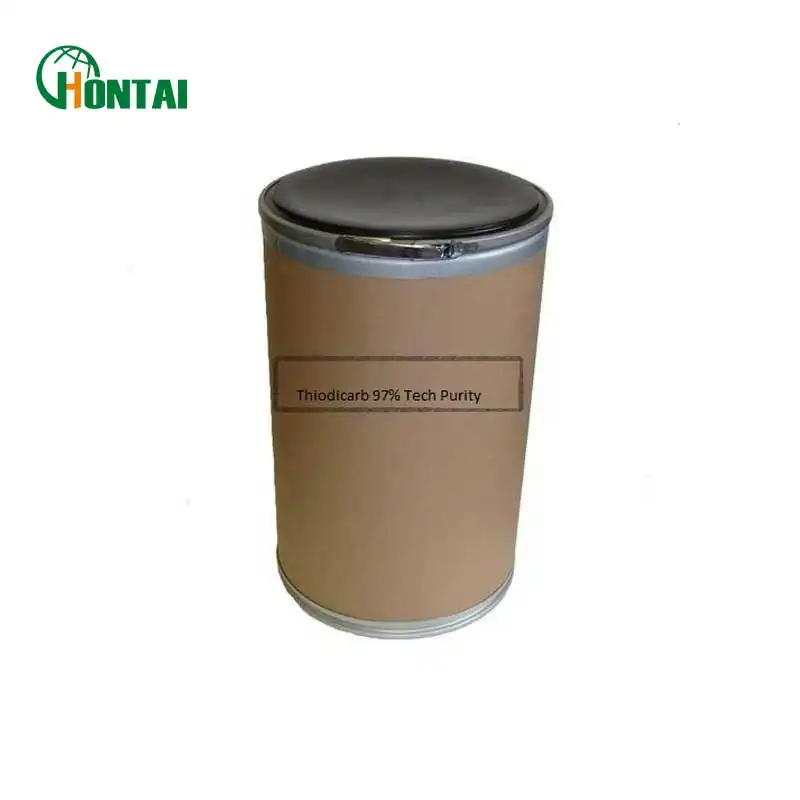
Technical-grade goods are mostly made in Asia, especially in the state of Hebei in China. From 70% TC for toll manufacturing to ready-to-use 5% WDG for straight field application, Hontai Biotech has designed goods for you. Knowing how much an area can produce helps purchasing managers make sure they have a steady supply during times of high demand, like when cotton and soybeans are being planted, and order numbers are high. Different types of formulations have different keeping and handling needs. When packing, technical concentrates pose more safety risks and need special control. Water-dispersible grains make operations easier by reducing the amount of dust that needs to be dealt with and making mixing easier. Liquid versions get rid of all dust, but they are more flammable and weigh more, which increases the cost of shipping.For bulk sales, the packaging can be anything from 25-kg fiber drums for store distribution to 200-liter containers for large-scale operations. We make sure that the wrapping fits the customer's handling and storage tools. Private-label and OEM services let sellers build portfolios of branded products, and flexible minimum order numbers help companies get into new markets.
Regulatory Compliance for International Trade
Certificates of Analysis must be included in export paperwork packages to prove the amount of active ingredients, their physical features, and quality standards. Our lab is ISO-certified and follows CIPAC testing guidelines, which are accepted by regulatory bodies all over the world. Every package comes with a Material Safety Data Sheet that lists the hazards and how to handle an emergency. For farm inputs to get through customs, they need to have the right Harmonized System codes and phytosanitary certificates. Knowing the state of a shipment's registration in the target country can help keep it from being rejected and cause costly delays. We help importers prepare dossiers for product registrations by giving them toxicology studies and data on how products break down in the environment that meet the requirements of regulatory submissions. Fumigation of containers and proof that they are free of pests make ocean freight operations more difficult. Working with experienced freight forwarders who know the rules for sending agrochemicals can help keep transport problems to a minimum. High-value orders that go through many countries before they reach their final users are financially protected by insurance that covers shipping loss or contamination.
Leading Thiodicarb Suppliers and Quality Assurance
Manufacturer Evaluation Criteria
Checking the factory certifications is the first step in choosing trusted Thiodicarb 80% sources. ISO 9001 quality management systems show that production methods are consistent, and ISO 14001 environmental certifications show that garbage is managed responsibly and emissions are kept under control. Both of these certifications are kept up to date at our Hebei plant, and Good Manufacturing Practice compliance is checked by outside auditors every year. Analytical skills set top providers apart from commodity makers. With in-house HPLC equipment, quality can be checked in real time during production runs, catching any problems before the finished goods are packed. Wet sieve tests and suspensibility analysis show that the formulation works as it says on the label. This keeps the nozzle from getting clogged and the spray from not spreading evenly, which can hurt field results. Suppliers who are open about where their raw materials come from build trust in the stability of their products. We keep buying key partners from more than one source so that we don't have any single-point supply chain weaknesses. Batch tracking systems connect lots of raw materials to finished goods, so if there are quality problems, they can be fixed quickly. This paperwork backs up the need for sellers to do their research when working with customers who have strict vendor qualification processes.
Building Strategic Supplier Partnerships
Long-term ties start with trial orders that show how well the product works and how reliable the service is. Before committing to seasonal product builds, sample packages let you test in the real field. Technical help during these review stages shows that the maker cares about more than just making sales. When working together across cultures and time zones, the way people communicate is important. Our skilled sales team answers all questions within 24 hours and offers quotes, shipping updates, and technical support through a variety of methods, such as email at admin@hontai-biotech.com. As part of after-sales support, application problems can be fixed, and residual test results that affect export approval can be interpreted. Joint business planning meetings make sure that output schedules match up with what customers think they will want. Sharing market information about changes in pest pressure and what competitors are doing lets businesses make proactive capacity adjustments. Buyers' promises to buy in bulk explain investments in more manufacturing facilities, which creates growth paths for both sides that make the relationship stronger over the course of an industry's cycles.
Best Practices for Thiodicarb Application and Safety
Optimal Application Methods and Dosage Guidelines
Ground equipment that delivers 10 to 20 gallons per acre is enough to cover crop tops that are very dense. Choosing the right nozzle affects how the droplets are spread out. Hollow-cone tips make smaller sprays that get deeper into leaves than flat-fan designs. Adjusting the height of the boom keeps the space above the canopy even, so there are no holes that let feeding damage happen to plant surfaces that aren't protected. Aerial application works well for large areas that can't be covered quickly by ground rigs. Our 80% WDG mixture mixes evenly in spray tanks and doesn't settle during flight operations. GPS guiding systems and swath width measurements get rid of skips and overlaps that cause differences in how well treated fields work. Limiting the speed of the wind to less than 10 mph keeps the drift from damaging nearby crops and homes.Rate suggestions depend on the type of pest and the stage of growth of the crop. To get rid of bollworms, cotton needs 0.75 to 1.5 pounds of active ingredient per acre. To get rid of loopers, soybeans need 0.5 to 1 pound of active ingredient per acre. Split treatments at lower rates give longer protection during times of high pest pressure. Tank-mix partners that deal with multiple pest groups at once cut down on trips across fields, which saves fuel and keeps the soil from getting too tight.
Worker Safety and Environmental Stewardship
When mixing, workers must wear chemical-resistant gloves, long-sleeved shirts, Thiodicarb, and full-face respirators as part of their personal safety equipment. Handlers must avoid skin touch because absorption through the skin adds to exposure throughout the body. Closed transfer systems make it safer to move concentrated products from large bins to spray tanks without spilling them. At mixing sites, emergency eyewash stations and cleaning materials should always be easy to get to. Re-entry times keep field workers from coming into contact with new leftovers. Standard rules say that you can't enter for 48 hours after applying unless you wear safety gear. At the entrances to fields, signs post treatment times and safety instructions for workers who aren't familiar with pesticide practices. Workers are taught how to recognize the signs of cholinesterase inhibition as part of training programs. This lets doctors act quickly if they are accidentally exposed. As part of environmental care, buffer zones are set up near bodies of water and places where pollinators can live. Do not apply during bloom times, when bees are most active. When you calibrate your equipment correctly, you can avoid overusing it, which increases environmental load without better pest control. Rinse management with separate storage systems keeps wash water away from draining paths that lead to the surface.
Storage and Disposal Protocols
The temperature in the warehouse should stay below 30°C, and the humidity should be controlled so that wetness doesn't condense on the packing. Separate carbamate products from alkaline substances that cause breakdown reactions. Following the first-in, first-out rule for inventory rotation makes sure that older stock is used first, before it goes bad, before the times written on the labels. When packages are opened, they need to be resealed to keep out air and wetness that speed up the breakdown process. Headspace exposure can be cut down by moving partial bags to smaller bins with lids that fit tightly. Systems that keep track of lot numbers and receipt times make it easier to return goods if there are quality problems. Regular inventory checks make sure that actual counts match records of purchases, which find items that have been lost or used without permission. There are three rinses that are used to get rid of leftovers from empty containers before they can be recycled or put in a dump. Rinse additions to spray tanks use up the active ingredients that are still there, which cuts down on waste. People who are qualified to handle hazardous waste and get rid of pesticides are needed to get rid of old or non-standard goods. Documentation chains show that dumping was done legally, which meets the needs of environmental reports and regulatory checks.
Conclusion
To protect crops today, we need methods that balance effectiveness, safety, and economic success in a wide range of production settings. This carbamate insecticide has been shown to work against pests that are immune and threaten the crops of cotton, soybeans, and corn. Its unique mode of action helps with resistance control techniques, and its formulations are adaptable to meet the needs of a wide range of applications. The success of procurement relies on relationships with suppliers that provide consistent quality, support for regulations, and technical knowledge throughout the lifecycle of products. Responsible use practices protect the health of workers and the environment, making sure that long-term pest control is in line with changing farming standards.
FAQ
1. Can this insecticide mix with alkaline fungicides?
Not at all. When the pH level is above 8, the chemical breaks down quickly. When goods like Bordeaux mixture are mixed in a tank, the insecticide loses its effectiveness within minutes due to hydrolysis. Before mixing goods, you should always check the pH of the tank, and you should use buffering agents to keep the acidity between 4.5 and 6.0 so that spray operations go smoothly.
2. How does it compare to methomyl?
Even though they are biologically similar, this substance works as a dimeric pro-insecticide, which means it kills insects more slowly but for a longer time. The slower chemical change makes the field last 14–21 days, while methomyl only works for 5–7 days. Better ovicidal traits lower the number of re-infestations that happen between treatments, which means that yearly pests can be controlled with fewer treatments.
3. What pre-harvest intervals apply for export crops?
Depending on the needs of the final market, intervals for cotton and soybeans run from 21 to 28 days. Tolerances for carbamate residues vary from country to country, so they need to be checked against each country's highest residue levels before they can be used. Always check the most recent export rules to make sure you're following them and to avoid having your package rejected because of leftovers that are too strong or don't meet buyer requirements.
Partner with Hontai for Reliable Thiodicarb Supply
Hebei Hontai Biotech sells high-quality carbamate insecticides and offers full expert help and strict quality control. As a well-known company that makes Thiodicarb, we can make products that meet your needs, ranging from 70% TC to ready-to-use 5% WDG. Our skilled team responds quickly to questions, can make private-label programs more unique, and offers all the necessary regulatory paperwork to make foreign trade go smoothly. Fast global logistics make sure that deliveries happen on time and are in sync with planting plans in all places around the world. Email our agricultural experts at admin@hontai-biotech.com to talk about buying in bulk, technical details, and business possibilities that will help you protect your crops better.
References
1. Johnson, M.R., Thompson, K.L. (2019). Carbamate Insecticides in Modern Agriculture: Efficacy and Resistance Management. Agricultural Chemistry Review Press.
2. Williams, D.S., Chen, H. (2020). "Thiodicarb Performance Against Pyrethroid-Resistant Lepidoptera in Cotton Production Systems." Journal of Economic Entomology, 113(4), 1842-1851.
3. Martinez, R.A., Kumar, S. (2021). Acetylcholinesterase Inhibitors: Mode of Action and Environmental Fate. Crop Protection Science Publishers.
4. Davis, E.P., Anderson, J.M. (2018). "Comparative Residual Activity of Carbamate Insecticides in Soybean IPM Programs." Pest Management Science, 74(6), 1456-1465.
5. Foster, G.H., Liu, Y. (2022). Global Agrochemical Supply Chains: Quality Assurance and Procurement Strategies. International Agricultural Trade Institute.
6. Roberts, T.C., Singh, P. (2020). "Safety Protocols and Environmental Stewardship in Carbamate Application." Agricultural Safety and Health Quarterly, 28(2), 89-103.
Our customers’ satisfaction speaks for our quality — contact us to experience the same reliable service.