- English
- French
- German
- Portuguese
- Spanish
- Russian
- Japanese
- Korean
- Arabic
- Greek
- German
- Turkish
- Italian
- Danish
- Romanian
- Indonesian
- Czech
- Afrikaans
- Swedish
- Polish
- Basque
- Catalan
- Esperanto
- Hindi
- Lao
- Albanian
- Amharic
- Armenian
- Azerbaijani
- Belarusian
- Bengali
- Bosnian
- Bulgarian
- Cebuano
- Chichewa
- Corsican
- Croatian
- Dutch
- Estonian
- Filipino
- Finnish
- Frisian
- Galician
- Georgian
- Gujarati
- Haitian
- Hausa
- Hawaiian
- Hebrew
- Hmong
- Hungarian
- Icelandic
- Igbo
- Javanese
- Kannada
- Kazakh
- Khmer
- Kurdish
- Kyrgyz
- Latin
- Latvian
- Lithuanian
- Luxembou..
- Macedonian
- Malagasy
- Malay
- Malayalam
- Maltese
- Maori
- Marathi
- Mongolian
- Burmese
- Nepali
- Norwegian
- Pashto
- Persian
- Punjabi
- Serbian
- Sesotho
- Sinhala
- Slovak
- Slovenian
- Somali
- Samoan
- Scots Gaelic
- Shona
- Sindhi
- Sundanese
- Swahili
- Tajik
- Tamil
- Telugu
- Thai
- Ukrainian
- Urdu
- Uzbek
- Vietnamese
- Welsh
- Xhosa
- Yiddish
- Yoruba
- Zulu
When thrips feed, they distort or scar leaves, flowers, or fruit.
share:
When thrips feed, they distort or scar leaves, flowers, or fruit. Healthy woody plants usually tolerate thrips, although damage can become unattractive. Herbaceous ornamentals and developing fruits and vegetables can suffer more serious injury from thrips. Manage these insects by combining good cultural care, pest exclusion, thrips-resistant plants, and less toxic insecticides.
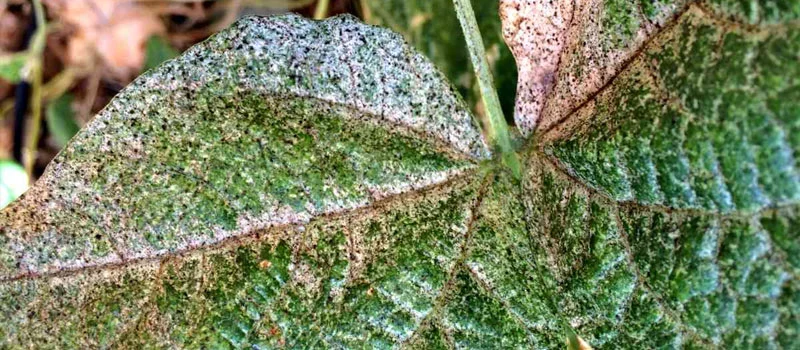
Thrips are tiny, slender insects.
- They are less than 1⁄20 inch long and their color varies depending on the species and life stage.
- Thrips hatch from eggs and develop through two feeding larval (nymphal) stages and two nonfeeding stages (prepupa and pupa) before developing into adults.
- Most pest thrips feed while hidden, often in buds and shoot tips or beneath sepals; you’ll often observe the damage before seeing the thrips.
- Thrips, order Thysanoptera, are tiny, slender insects with fringed wings. They feed by puncturing the epidermal (outer) layer of host tissue and sucking out the cell contents, which results in stippling, discolored flecking, or silvering of the leaf surface. Thrips feeding is usually accompanied by black varnishlike flecks of frass (excrement). Pest species are plant feeders that discolor and scar leaf, flower, and fruit surfaces, and distort plant parts or vector plant pathogens. Many species of thrips feed on fungal spores and pollen and are often innocuous. However, pollen feeding on plants such as orchids and African violets can leave unsightly pollen deposits and may reduce flower longevity. Certain thrips are beneficial predators that feed on other insects and mites.
-
Thrips can readily move long distances floating with the wind or transported on infested plants, and exotic species are periodically introduced. For example, myoporum thrips causes severe galling of Myoporum laetum and M. pacificum. Originally from New Zealand, this thrips was introduced into Southern California and spread to most areas of the state where its hosts are grown. See Pest Notes: Myoporum Thrips for more information.
Identification
Most adult thrips are elongate, slender, minute (less than 1/20 inch long), and have long fringes on the margins of both pairs of their long, narrow wings. Immatures (called larvae or nymphs) are oblong or slender and elongate and lack wings. Most thrips range in color from translucent white or yellowish to dark brown or black. A few species are brightly colored, such as the distinctive reddish-orange larvae of the predatory thrips, Franklinothrips orizabensis and F. vespiformis.
Feeding results in various tissue responses, including scar formation and distorted growth. Behavior, body appearance, and host plants help to distinguish among thrips species (Table 1). For example, three dark spots on each forewing distinguish the adult predaceous sixspotted thrips from pest thrips. Adults of western flower thrips and onion thrips are noticeably larger than avocado and citrus thrips adults, so mature body size helps to distinguish them when they occur together on the same host plant. Nonprofessionals may be able to identify thrips using the resources listed in References. However, thrips can be positively identified to species only by an expert. Fortunately, most thrips are susceptible to some of the same controls, such as exclusion and certain insecticides.
It is more important to distinguish among thrips species in situations where integrated pest management methods are used. For example, each species of natural enemy preys on and helps to control only certain species of thrips or other pests. Certain thrips occur on many different plants but damage only a few of the plant species on which they are found. Identifying the species of thrips may reveal that it is harmless in certain situations and no control action is needed. For example, avocado thrips and greenhouse thrips superficially scar avocado fruit skin. Citrus thrips and western flower thrips are also found in avocado but do not damage avocados. Citrus thrips occur on many species of plants but damage only blueberries and citrus.



Our customers’ satisfaction speaks for our quality — contact us to experience the same reliable service.