- English
- French
- German
- Portuguese
- Spanish
- Russian
- Japanese
- Korean
- Arabic
- Greek
- German
- Turkish
- Italian
- Danish
- Romanian
- Indonesian
- Czech
- Afrikaans
- Swedish
- Polish
- Basque
- Catalan
- Esperanto
- Hindi
- Lao
- Albanian
- Amharic
- Armenian
- Azerbaijani
- Belarusian
- Bengali
- Bosnian
- Bulgarian
- Cebuano
- Chichewa
- Corsican
- Croatian
- Dutch
- Estonian
- Filipino
- Finnish
- Frisian
- Galician
- Georgian
- Gujarati
- Haitian
- Hausa
- Hawaiian
- Hebrew
- Hmong
- Hungarian
- Icelandic
- Igbo
- Javanese
- Kannada
- Kazakh
- Khmer
- Kurdish
- Kyrgyz
- Latin
- Latvian
- Lithuanian
- Luxembou..
- Macedonian
- Malagasy
- Malay
- Malayalam
- Maltese
- Maori
- Marathi
- Mongolian
- Burmese
- Nepali
- Norwegian
- Pashto
- Persian
- Punjabi
- Serbian
- Sesotho
- Sinhala
- Slovak
- Slovenian
- Somali
- Samoan
- Scots Gaelic
- Shona
- Sindhi
- Sundanese
- Swahili
- Tajik
- Tamil
- Telugu
- Thai
- Ukrainian
- Urdu
- Uzbek
- Vietnamese
- Welsh
- Xhosa
- Yiddish
- Yoruba
- Zulu
Propiconazole Fungicide Tips for Effective Usage and
share:
It is one of the most reliable systemic fungicides for controlling fungal infections in high-value crops. This triazole-based active ingredient acts via ergosterol biosynthesis inhibition in fungal infections, affecting cell membrane development and preventing the course of infection. This chemical has been shown to provide consistent efficacy on wheat rust, cereal leaf spots, turf diseases, and even in specialized crops such as tree fruits and ornamentals. The substance is especially helpful for large-scale operations because of its dual protective and curative activity, which prevents new infections and stops existing ones in their tracks. For distributors, farm managers, and OEM brand owners looking for fungicide solutions, knowing how to get the most out of Propiconazole while still offering a quality product is critical to protecting crop production and establishing long-term market confidence.
Understanding Propiconazole: Properties, Mode of Action, and Safety Guidelines
Chemical Structure and Core Properties
Propiconazole belongs to the 1,2,4-triazole chemical family and has a molecular formula of C15H17Cl2N3O2 with a molecular weight of 342.22 g/mol. The technical concentration is usually a viscous, yellow to reddish-brown liquid with strong thermal stability and a boiling point over 180 C under decreased pressure. Its poor water solubility (∼100 mg/L at 20°C) causes it to be extremely lipophilic and allows for fast cuticular penetration and systemic absorption. With a partition coefficient (log P) of 3.72, it is highly attracted to plant tissues and can move well through the xylem to safeguard new development.
High purity Propiconazole 95%TC is the basic raw material that formulation chemists utilize to manufacture end-use products including emulsifiable concentrates (EC), suspension concentrates (SC) and wettable powders (WP). By keeping the purity level over 95%, the amount of contaminants that might cause upset of the emulsion or phytotoxicity is reduced, which helps to ensure shelf-life stability and constant field performance in a range of climatic situations.
Mechanism of Action and Disease Spectrum
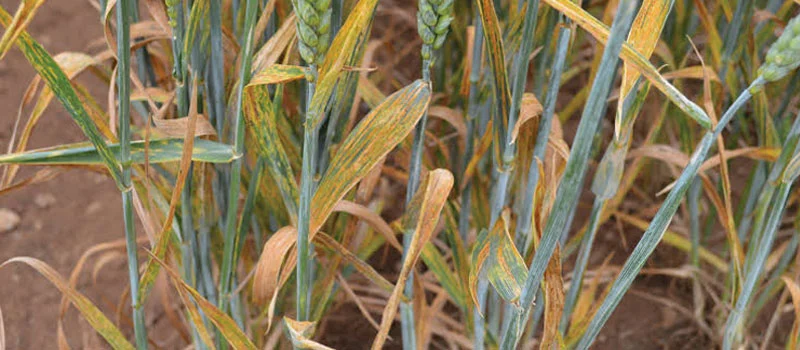
Propiconazole is a Demethylation Inhibitor (DMI) in FRAC Group 3 and inhibits the enzyme C14-demethylase required in the synthesis of ergosterol from lanosterol. Fungal cell membranes that lack functioning ergosterol lose their structural integrity, causing the cells to die. This mechanism of action enables wide-spectrum control of Ascomycetes, Basidiomycetes, and Deuteromycetes, including powdery mildews, rusts, Septoria leaf blotch, and anthracnose.
Acropetal movement (upward via the xylem) protects freshly born leaves and shoots following treatment due to the systemic nature of this fungicide. Residual activity is generally three to five weeks, depending on disease load and environmental conditions, minimizing the need for frequent reapplication and cutting total input costs for commercial plants.
Safety Protocols and Regulatory Compliance
The propiconazole technical concentration should be handled under stringent safety procedures. Operators mixing or loading this product should use proper personal protective equipment, including chemical-resistant gloves, goggles, and respirators. Storage facilities should be kept at a temperature between 5°C and 30°C, away from direct sunlight and moisture, to avoid deterioration.
Toxicology: Propiconazole is of moderate mammalian toxicity (oral rat LD50 1500-1800 mg/kg). Environmental risk evaluations suggest minimal acute toxicity to birds and aquatic creatures when used according to label guidelines, although precautions should be made to avoid drift into non-target water bodies. In the United States and equivalent regulatory jurisdictions throughout the world, EPA guidelines guarantee that formulations fulfill strict MRL (Maximum Residue Limit) criteria for food crops, protecting the safety of the applicator and the consumer.
It is important to have resistance management techniques to maintain the effectiveness of Propiconazole over time. Rotation of fungicides with various mode-of-action groups, such as strobilurins (FRAC 11) or SDHIs (FRAC 7), avoids selection pressure that causes resistance development. The best sustainable technique is integrated pest management (IPM) programs that incorporate cultural practices, disease monitoring, and chemical treatments
Best Practices for Propiconazole Application: Techniques and Effectiveness Optimization
Application Methods and Timing
Propiconazole provides versatility in application techniques. The most popular treatments are still foliar sprays, which have protective and curative effects if timed right. Best results are obtained when used at the first signs of illness or prior to the beginning of infection periods. Seed treatment products give a baseline level of protection during germination and early seedling stages, lowering the threat of soilborne diseases. Soil drench applications are sometimes employed in high-value ornamental and grass management programs for control of root and crown diseases.
Timing is everything. Propiconazole provides maximum control when used early in disease development, preferably at the first sign of illness or when appropriate meteorological conditions (high humidity and moderate temperature) exist. The greatest protection against wheat rust is obtained by treatment from stem elongation to flag leaf emergence. In fruit orchards, application during bloom or early fruit development decreases scab and powdery mildew incidence.
Dose Calibration and Environmental Conditions
Dose calibration is important to guarantee effectiveness without risking phytotoxicity or waste. The normal field application rate for propiconazole 250g/L EC formulations is 0.3 to 0.5 liters per hectare diluted in 200 to 400 liters of water, depending on crop variety and disease severity. Suspension concentrate formulations provide comparable versatility with better tank-mix stability and lower solvent concentration.
Performance is greatly affected by the environmental conditions during application. Apply in calm weather; spray drift is low, and coverage will be precise. Do not apply if rain is forecast within two hours. Propiconazole needs one to two hours to become rainfast. Extreme temperatures (less than 10°C or more than 30°C) might adversely affect absorption and translocation efficiency; hence, applications should be made in the mid-morning or late afternoon when temperatures are moderate.
Equipment Precision and Resistance Monitoring
Calibrated precision spraying equipment designed to provide homogeneous droplet size and coverage increases fungicide deposition into target tissues. The choice of nozzle impacts the droplet spectrum, with medium-sized droplets offering a mix of coverage and penetration while reducing drift. Proper maintenance, such as cleaning spray tanks and nozzles after each use, avoids cross-contamination and provides constant delivery.
Ongoing monitoring of resistance is important to identify early changes in pathogen susceptibility. If everything is applied correctly and disease control is not enough, suspect resistance. Rotating propiconazole with non-DMI chemicals in rotation schedules may break resistance cycles. The combination of propiconazole with complementary modes of action in tank mixes or premix formulations boosts durability and broadens the range of diseases. This ensures powerful protection while controlling resistance risk.
Propiconazole vs Other Fungicides: A Comparative Analysis for Informed Purchasing
Efficacy Comparison Across Key Fungicides
Propiconazole is competitive with several of the main classes of fungicides, and each has its benefits. Tebuconazole is another triazole fungicide with a similar mechanism of action but with significantly longer residual activity and better effectiveness against certain rust species. Propiconazole, however, is frequently more effective curatively on established infections because of its fast absorption and transfer.
Azoxystrobin is a strobilurin fungicide (FRAC 11) that has high preventative action and translaminar mobility but no curative characteristics. A tank blend of Propiconazole provides both preventative and therapeutic effects, increases the windows of protection, and controls resistance. Fungicides such as mancozeb and chlorothalonil that work by contact have several sites of action, which reduces the possibility of resistance, but they need to be applied more often and have no effect after infection.
Pyraclostrobin is another strobilurin and is excellent in its greening and yield improvement benefits beyond disease control. However, pyraclostrobin is prone to resistance development and hence must be rotated with systemic fungicides such as propiconazole. Cost-effectiveness studies indicate that propiconazole provides competitive disease control with a 20-30% price advantage over branded products, making it appealing to cost-sensitive enterprises without losing performance.
Formulation Types and Field Performance
The choice of formulation influences ease of use, stability, and effectiveness. Emulsifiable concentrates (EC) Propiconazole 250g/L EC Form stable emulsions on spontaneous dilution with high rainfastness and cuticular penetration. Suspension Concentrates (SC) remove organic solvents, lowering odor and environmental effects, yet remain stable. Wettable powders (WP) and water-dispersible granules (WDG) provide flexibility for bespoke formulation development and registration in markets with distinct regulatory preferences.
Propiconazole has shown good results in case studies for grain production. In wheat experiments for Septoria tritici blotch, the administration of propiconazole during flag leaf emergence decreased disease severity by 70 to 85% and increased yield by 8 to 12%. Propiconazole is an efficient rice blast control agent in rice production, especially used at the panicle initiation stage to ensure grain quality and marketability.
Procurement Guide: How to Source Quality Propiconazole for Your Business
Identifying Trusted Manufacturers and Suppliers
The first step to finding excellent propiconazole is locating producers with a history of success. Look for suppliers that have ISO 9001 quality management certificates, GMP (Good Manufacturing Practice) compliance, and are registered with the appropriate agricultural regulatory bodies. Robust export capabilities: Experience with international logistics and customs paperwork is crucial for smooth cross-border operations.
All technical parameters must be verified, no exceptions. Request Certificates of Analysis (CoA) for each batch, with active ingredient content confirmed by GLC or HPLC testing, isomer ratios (usually 40:60 cis/trans), and impurity profiles. Stability of emulsions is also checked using CIPAC MT 36.3 procedures to guarantee that the manufactured product remains homogeneous following dilution and storage. Water concentration < 0.5% (Karl Fischer titration) avoids hydrolysis and phase separation.
Pricing Structures and Packaging Options
The price of propiconazole depends on the order amount, formulation, and type of packaging. Bulk technical concentrate (TC) is often less expensive per kilogram than formulated goods, but it needs in-house formulating capability. Wholesale purchasers may get bulk savings when buying 3 to 15 tons of formulated fungicide or 1 to 3 tons of TC per shipment. Combination premix solutions with propiconazole plus complementary active chemicals come with a 20 to 35% premium yet provide distinct market positioning and better disease management.
By customizing packaging, you may differentiate your business and ensure compliance with regulations. Bulk purchasers may choose from jerry cans, drums, and IBC totes. Retail-ready bottles with anti-UV barriers and multi-language labels are also on offer. Printing custom branding and disease-specific application methods right on the package improves end-user trust and product value.
Logistics and Supplier Partnership Strategies
International orders take 3-6 weeks on average to arrive. This period includes manufacturing time, quality testing, and shipping time. Knowing import laws such as phytosanitary certifications, pesticide registration requirements, and hazardous material handling guidelines may help avoid expensive delays. Working with vendors that are experts in destination-market compliance makes the clearing process easier.
Open communication, consistent quality, and solid after-sales service are the bedrock of long-term supplier partnerships. Evaluate vendors on customer ratings, response to technical questions, and readiness to offer samples for field testing. Long-term supply agreements with established quality SLAs (Service Level Agreements) guarantee continuity, which is vital for sustaining production schedules and competitiveness in the marketplace. Payment conditions such as T/T (30% deposit and 70% before shipment) or L/C for government customers help to mitigate risk and cash flow requirements.
Conclusion
Propiconazole continues to be an important fungicide for the control of a wide range of fungal infections in cereals, fruit, vegetables, and turf. Commercial farmers and agrochemical distributors can’t do without it because of its systemic action, broad-spectrum activity and compatibility with integrated resistance control strategies. Proper application procedures with timing, dosage calibration, and equipment accuracy increase effectiveness and minimize the danger of resistance. When procuring propiconazole, reliable product performance and business continuity depend on quality verification, supplier credentials, and logistical experience. This knowledge will allow purchasers to make educated choices that will preserve crop investments and promote sustainable agricultural production by knowing the technical qualities, competitive advantages, and procurement tactics discussed here.
FAQ
1. What Safety Precautions Should Handlers Follow?
Handlers must wear chemical-resistant gloves, goggles, and respirators during mixing and loading to prevent dermal and inhalation exposure. Store propiconazole in cool, dry conditions away from food and feed, and ensure proper ventilation in storage areas. Following label instructions and local regulatory guidelines minimizes health risks.
2. How Does Propiconazole Differ from Contact Fungicides?
Unlike contact fungicides that remain on the plant surface, propiconazole is systemic, absorbing into plant tissues and translocating upward. This provides both protective and curative activity, stopping infections even after pathogen penetration. Contact fungicides require thorough coverage and frequent reapplications, especially after rain.
3. What Factors Influence Fungal Resistance Development?
Repeated use of propiconazole or other DMI fungicides without rotation increases selection pressure, favoring resistant pathogen strains. Resistance management strategies—including rotating with different mode-of-action fungicides, using tank mixes, and integrating cultural practices—reduce this risk and prolong efficacy.
4. Where Can I Source Certified Bulk Propiconazole?
Certified bulk propiconazole is available from established manufacturers with ISO certifications and regulatory compliance. Verify supplier credentials, request CoAs for quality assurance, and confirm export capabilities. Reputable suppliers offer technical support, custom formulations, and reliable logistics.
Partner with Hontai for Reliable Propiconazole Supply Solutions
Looking for a trusted propiconazole supplier to support your crop protection programs? Hontai delivers high-purity propiconazole 95%TC and multiple formulation options, including EC, SC, and WDG, backed by rigorous quality control and global logistics expertise. Our professional, skilled team provides fast response times, custom formulation development, and technical guidance tailored to your specific disease management challenges. Whether you're an agricultural distributor, OEM brand owner, or commercial farm operation, we offer flexible packaging, stable product quality, and worldwide agricultural service to meet your procurement needs. Reach out to our team at admin@hontai-biotech.com to request product samples, technical datasheets, or discuss custom Propiconazole formulations designed for your market. Let's work together to build effective fungicide solutions that protect yields and drive your business forward.
References
1. Hewitt, H. G. (1998). Fungicides in Crop Protection. CAB International, Wallingford, UK.
2. Morton, V. & Staub, T. (2008). "A Short History of Fungicides," APSnet Features, American Phytopathological Society.
3. Russell, P. E. (2005). "A Century of Fungicide Evolution," Journal of Agricultural Science, 143(1), 11-25.
4. Brent, K. J. & Hollomon, D. W. (2007). Fungicide Resistance: The Assessment of Risk, FRAC Monograph No. 2, Global Crop Protection Federation.
5. Gisi, U., Sierotzki, H., Cook, A., & McCaffery, A. (2002). "Mechanisms Influencing the Evolution of Resistance to Fungicides," Pest Management Science, 58(9), 859-867.
6. Food and Agriculture Organization (2016). FAO Specifications and Evaluations for Agricultural Pesticides: Propiconazole, FAO Plant Production and Protection Papers, Rome, Italy.
Our customers’ satisfaction speaks for our quality — contact us to experience the same reliable service.