- English
- French
- German
- Portuguese
- Spanish
- Russian
- Japanese
- Korean
- Arabic
- Greek
- German
- Turkish
- Italian
- Danish
- Romanian
- Indonesian
- Czech
- Afrikaans
- Swedish
- Polish
- Basque
- Catalan
- Esperanto
- Hindi
- Lao
- Albanian
- Amharic
- Armenian
- Azerbaijani
- Belarusian
- Bengali
- Bosnian
- Bulgarian
- Cebuano
- Chichewa
- Corsican
- Croatian
- Dutch
- Estonian
- Filipino
- Finnish
- Frisian
- Galician
- Georgian
- Gujarati
- Haitian
- Hausa
- Hawaiian
- Hebrew
- Hmong
- Hungarian
- Icelandic
- Igbo
- Javanese
- Kannada
- Kazakh
- Khmer
- Kurdish
- Kyrgyz
- Latin
- Latvian
- Lithuanian
- Luxembou..
- Macedonian
- Malagasy
- Malay
- Malayalam
- Maltese
- Maori
- Marathi
- Mongolian
- Burmese
- Nepali
- Norwegian
- Pashto
- Persian
- Punjabi
- Serbian
- Sesotho
- Sinhala
- Slovak
- Slovenian
- Somali
- Samoan
- Scots Gaelic
- Shona
- Sindhi
- Sundanese
- Swahili
- Tajik
- Tamil
- Telugu
- Thai
- Ukrainian
- Urdu
- Uzbek
- Vietnamese
- Welsh
- Xhosa
- Yiddish
- Yoruba
- Zulu
How to Choose a Reliable Propiconazole 95%TC Supplier?
share:
Choosing a reliable propiconazole 95% TC supplier comes down to five non-negotiable pillars: verified active ingredient purity, transparent quality documentation, regulatory compliance capacity, stable supply logistics, and responsive technical support. Skipping any of these pillars can lead to batch inconsistency, registration delays, and field performance complaints. This guide walks you through each pillar with practical screening criteria so you can move from shortlist to signed contract with confidence.
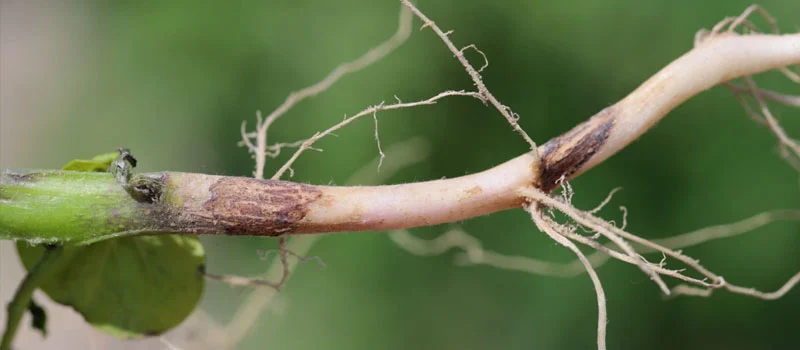
Understanding Propiconazole 95% TC: Key Characteristics and Application Needs
Propiconazole 95% TC is a systemic triazole fungicide. Its chemical formula is C₁₅H₁₇Cl₂N₃O₂, and its EINECS number is 262-104-4. At the 95% technical concentrate grade, it looks like a thick yellow to light brown liquid—not a true powder, as some catalogues say—and it gets very thick below 15°C, so the drum needs to be heated to 40–50°C before it can be moved.
Mode of Action and Crop Coverage
Propiconazole stops fungus cells from making ergosterol, which has both healing and protective effects. On cereals, it controls a very wide range of pathogens, including Cochliobolus sativus, Erysiphe graminis, Leptosphaeria nodorum, Rhynchosporium secalis, and Septoria spp.; on bananas, it controls Mycosphaerella musicola and Mycosphaerella fijiensis var. difformis; on turf, it controls Sclerotinia homoeocarpa, Rhizoctonia solani, Puccinia spp., and Erysiphe graminis; and on maize, it controls Rhizoctonia solani.
Why Purity Grade Matters for Formulators?
There are a lot of 1,2,4-triazole leftovers and synthesis byproducts in low-purity technicals. These make emulsions less stable, lower the net biological load per kilogram, and can affect formulation performance. A confirmed active ingredient level of at least 95% reduces these impurity profiles and supports shelf-life stability. This is especially important for 25% EC finished goods that will be kept in tropical climates at 30°C/70% RH for 24 months.
Identifying Your Procurement Needs
Before asking for a quote, make a detailed list of what you need. Different types of buyers have very different needs when it comes to the right specs. Orders that don't match up cause expensive cycles of reformulation or customs holds.
Here are the core procurement variables you should define before supplier outreach:
- Volume tier: Triazole TC is usually shipped in lots of 1 to 3 metric tonnes. Most of the time, 2–8 tonne amounts are shipped for combination premix developments like propiconazole 95% TC + tebuconazole. Before you agree to an MOQ, make sure you know how much you will use every three months.
- Formulation destination: If you want to register a 25% EC for the cereal market in the CIS, you need a source who can give you paperwork that is suitable with Russian GOST. The ANVISA and MAPA routes in Latin America need GLP bioefficacy kits that are labelled in Portuguese. Align your paperwork plan with the registration authority you want to use before you start sampling.
- Packaging format: HDPE drums are the usual way to package thick liquid TC. For light-sensitive co-formulations, it's best to use anti-UV drum liners. At the TC stage, OEM brand owners should make sure that the seller offers containers with unique labels.
Criteria to Evaluate Propiconazole 95% TC Suppliers: Screening and Verification
Most mistakes in procurement happen when the suppliers are being checked out. Buyers often accept price sheets without asking for the paperwork that proves the product's trustworthiness. Here are the proof steps that can't be changed for Propiconazole 95% TC.
Quality Documentation You Must Request
As soon as possible, any reliable supplier of propiconazole technical concentrate should give you a batch-specific Certificate of Analysis confirming AI content ≥95.0% w/w by HPLC; a Karl Fischer water content report; an acidity/alkalinity result per CIPAC MT 31; and an insoluble-in-acetone result per CIPAC MT 27. It's also important to give out the isomer ratio, since changes in this ratio from batch to batch can affect product performance against certain pathogens.
Manufacturing Credentials and Certifications
Consistency in production is covered by ISO 9001 certification, and cleanliness and tracking are covered by GMP compliance. Check to see if the supplier has legal licences to make pesticides from the right national body. Hontai's products are made in Hebei Province, China, which is known as a hub for pesticide production. The company is officially registered, and it has export paperwork that supports major market entry routes. Beyond certifications, conduct a reference check. Request names of current distribution clients in your target region and ask specifically about batch consistency over 12-month supply windows, not just single-sample quality.
Comparing Propiconazole 95% TC Suppliers and Making an Informed Decision
After comparing two or three providers based on their paperwork and certification, you can move on to comparing them based on price and service. Pricing that is clear is a basic assumption. A trustworthy seller lists price ranges for different amounts of propiconazole 95% TC, makes it clear if prices include export paperwork fees, and offers common ways to pay, like a 30% T/T deposit and the remaining 70% before shipment, or L/C for large buyers.
The level of technical support is what sets commodity traders apart from real manufacturing partners. Propiconazole fungicide raw material providers that are the best will give you formulation compatibility data, tank-mix advice with strobilurins like azoxystrobin for resistance rotation, and field trial data packages to help with registration. If a supplier can't answer questions about the effects of cis/trans isomers or the breakdown pathways in tropical storage, it's likely that they are trading and not manufacturing.
The comparison ends with logistics dependability. Check the current wait times, the warehouse's ability to handle large orders, and your knowledge of the customs rules at the port of arrival. Operational maturity is shown by suppliers who have built freight handling networks and have shipped samples by both sea and air express.
Ensuring Efficient Procurement: Best Practices and Compliance Tips
Getting triazole technical concentrate efficiently requires following both physical handling rules and strict paperwork. The temperature where it is stored should stay between 0°C and 35°C. If you want to decant in the winter, you should have drum heating tools on hand. The temperature where it is stored should stay between 0°C and 35°C. If you want to decant in the winter, you should have drum heating tools on hand.
When it comes to compliance, most controlled markets need a valid phytosanitary certificate or chemical import permit, a copy of the supplier's export licence, an SDS that meets GHS standards, and, if needed, a Certificate of Origin. For destinations that check for residue MRL, ask the supplier for their residue analytical method so that your QC lab can make sure that the material coming in meets export standards.
After receiving a lot, test it before sending it to preparation. Even if the supplier is qualified, regular HPLC spot checks on AI content and water content verification help identify changes caused by transit and mislabelled packages.
Conclusion
It's not about price when choosing a propiconazole 95% TC supplier; it's about quality and reliability first, with price based on documented value. Before signing a large-scale deal, make sure the data is pure, the certifications are checked, the company meets the rules in your area, and there is good technical help. When it comes to total procurement performance, suppliers who invest in clear documentation, formulation advisory services, and flexible logistics partnerships are much better than those who only compete on price.
FAQ
1. What purity level should propiconazole technical concentrate meet?
≥95.0% w/w by HPLC analysis is the standard in the business and is in line with FAO/WHO guidelines. Anything below this level adds impurities that make EC formulas less stable and lower the bioactive load per kilogram.
2. How do I verify a supplier's product before placing a bulk order?
Request a 200 g–1 kg TC sample for HPLC measurement and testing of formulation suitability by a third party. Ask for the batch COA, details on the water content, and the acidity finding as well. Compare these to the FAO's requirements before giving the package the go-ahead for Propiconazole 95% TC.
3. Why does the cis/trans isomer ratio matter?
It is true that both isomers act against fungal pathogens, but they are more or less effective against different pathogens. Field performance can be predicted if the ratio stays the same from batch to batch. If the ratio changes from batch to batch, it means that the synthesis process isn't stable at the maker level.
4. What payment terms are standard for TC procurement?
Most of the time, T/T with a 30% deposit and the remaining 70% due before shipping is used. L/C is usually used by buyers from the government and institutions. Distribution partners who have been working together for two years or more may be able to negotiate 60-day payment terms.
Partner with Hontai — Your Trusted Propiconazole 95% TC Manufacturer
Hontai ships verified propiconazole 95% TC from Hebei, China, with full quality documents, open OEM formulation support, and fast shipping around the world. Our technical team helps you with registration routes, resistance rotation design, and custom packaging, and our prices are 20–30% less than big brand options. You can get examples and a quote right away by emailing admin@hontai-biotech.com today.
References
1. FAO/WHO. Pesticide Specifications: Propiconazole Technical Material. Joint FAO/WHO Meeting on Pesticide Specifications (JMPS), 2010.
2. Tomlin, C.D.S. (Ed.). The Pesticide Manual: A World Compendium. 17th ed. British Crop Production Council, 2018.
3. CIPAC. CIPAC Handbook: Methods for the Analysis of Pesticide Formulations. Collaborative International Pesticides Analytical Council, 2009.
4. Brent, K.J., & Hollomon, D.W. Fungicide Resistance in Crop Pathogens: How Can It Be Managed? 2nd ed. Fungicide Resistance Action Committee (FRAC), 2007.
5. European Food Safety Authority (EFSA). Peer Review of the Pesticide Risk Assessment of the Active Substance Propiconazole. EFSA Journal, 2011.
6. United States Environmental Protection Agency (USEPA). Reregistration Eligibility Decision (RED) for Propiconazole. EPA 738-R-06-027, 2006.
Our customers’ satisfaction speaks for our quality — contact us to experience the same reliable service.