- English
- French
- German
- Portuguese
- Spanish
- Russian
- Japanese
- Korean
- Arabic
- Greek
- German
- Turkish
- Italian
- Danish
- Romanian
- Indonesian
- Czech
- Afrikaans
- Swedish
- Polish
- Basque
- Catalan
- Esperanto
- Hindi
- Lao
- Albanian
- Amharic
- Armenian
- Azerbaijani
- Belarusian
- Bengali
- Bosnian
- Bulgarian
- Cebuano
- Chichewa
- Corsican
- Croatian
- Dutch
- Estonian
- Filipino
- Finnish
- Frisian
- Galician
- Georgian
- Gujarati
- Haitian
- Hausa
- Hawaiian
- Hebrew
- Hmong
- Hungarian
- Icelandic
- Igbo
- Javanese
- Kannada
- Kazakh
- Khmer
- Kurdish
- Kyrgyz
- Latin
- Latvian
- Lithuanian
- Luxembou..
- Macedonian
- Malagasy
- Malay
- Malayalam
- Maltese
- Maori
- Marathi
- Mongolian
- Burmese
- Nepali
- Norwegian
- Pashto
- Persian
- Punjabi
- Serbian
- Sesotho
- Sinhala
- Slovak
- Slovenian
- Somali
- Samoan
- Scots Gaelic
- Shona
- Sindhi
- Sundanese
- Swahili
- Tajik
- Tamil
- Telugu
- Thai
- Ukrainian
- Urdu
- Uzbek
- Vietnamese
- Welsh
- Xhosa
- Yiddish
- Yoruba
- Zulu
What Is Thiodicarb 75 WP Used For in Crop Protection?
share:
Thiodicarb 75 WP is a wettable powder insecticide formulation containing 75% active ingredient, widely recognized for controlling Lepidopteran larvae, mollusks, and resistant pest populations across cotton, soybean, vegetable, and grain crops. As an oxime carbamate compound, it acts primarily as a stomach poison and cholinesterase inhibitor, disrupting pests' nervous systems to deliver rapid knockdown and extended residual activity. For global procurement managers, agricultural distributors, and OEM brand owners, thiodicarb 75 wp represents a strategic asset in integrated pest management programs, combining potent efficacy with technical reliability and flexible formulation options suited to diverse regional markets.

Understanding Thiodicarb 75 WP and Its Role in Crop Protection
Chemical Profile and Mode of Action
Thiodicarb is an oxime carbamate that works by blocking acetylcholinesterase enzymes in target pests. When ingested, the chemical is converted into methomyl, which increases its ability to kill insects. The dual-action mechanism ensures the efficient control of larvae under thick crop canopies and resistant strains that have evolved resistance to organophosphates and pyrethroids. The translaminar movement of the active ingredient facilitates penetration through leaf tissues to pests on undersides and protected surfaces where contact sprays generally fail.
The formulation is a beige to light brown powder with a subtle sulphurous odour designed to maintain a pH between 5.0 and 7.5. This acid-to-neutral range is designed to minimise early hydrolysis and provide extended shelf life and consistency of field performance. The wettable powder is easily dispersed in water to generate stable suspensions, which may be used with standard sprayers. Thiodicarb 75 WP has residual activity of 7 to 14 days for effective pest control. It provides long-lasting pest control with fewer reapplications and less labour expenditure.
Target Pests and Crop Applications
Thiodicarb 75 WP has a wide range of action against economically destructive pests of key farming systems. It protects fruiting structures by safeguarding cotton fields against bollworms (Helicoverpa armigera) and armyworms (Spodoptera spp.) during important growth phases. It is used by soybean growers to control defoliating caterpillars that threaten photosynthetic capability and production potential. Vegetable gardeners safeguard marketable crop quality against leafminers, budworms, and loopers.
Thiodicarb formulations are also useful molluscicides for the control of slugs and snails in vineyards, decorative gardens, and high-value horticultural activities, in addition to agricultural crops. The ovicidal action of the substance kills the pests’ eggs, reducing the population’s rebound and allowing a longer period between treatments. The multi-faceted effectiveness means numerous pest pressures in one application, simplifying inventory management for distributors and lowering chemical inputs for end users.
Dosage Recommendations and Application Guidelines
The effectiveness of thiodicarb 75 wp is dependent upon the directions on the label, which are specific to the crop type, insect pressure, and development stage. Typical application rates are 500 to 1,000 grams per hectare, dissolved in enough water to provide full canopy coverage. Spray applications should be timed using pest monitoring information and targeted at the early larval instars when the pest is most susceptible and prior to economic harm.
Compatible in tank-mix with other agrochemicals, which increases the flexibility of the program. A compatibility test is recommended before mixing with alkaline compounds that may cause destabilisation of the formulation. Rainfastness is usually obtained 6 hours after application in an effort to guard against wash-off during unexpected rainfall. Mixing and application require the use of personal protective equipment in accordance with safety guidelines, and pre-harvest intervals must be followed to reduce residue levels within regulatory limits for food crops.
Comparing Thiodicarb 75 WP with Other Insecticides
Efficacy Against Resistant Pest Populations
In many agricultural areas, pest populations have been seen to have cross-resistance to numerous pesticide classes. The unique mechanism of action of thiodicarb gives an alternate chemistry for rotation techniques, breaking resistance cycles created by prolonged usage of single-class chemicals. Field investigations show that thiodicarb may be used as a replacement for failing synthetic pyrethroids to improve control of pyrethroid-resistant Heliothis spp. and restore effectiveness without the need for dosage escalation.
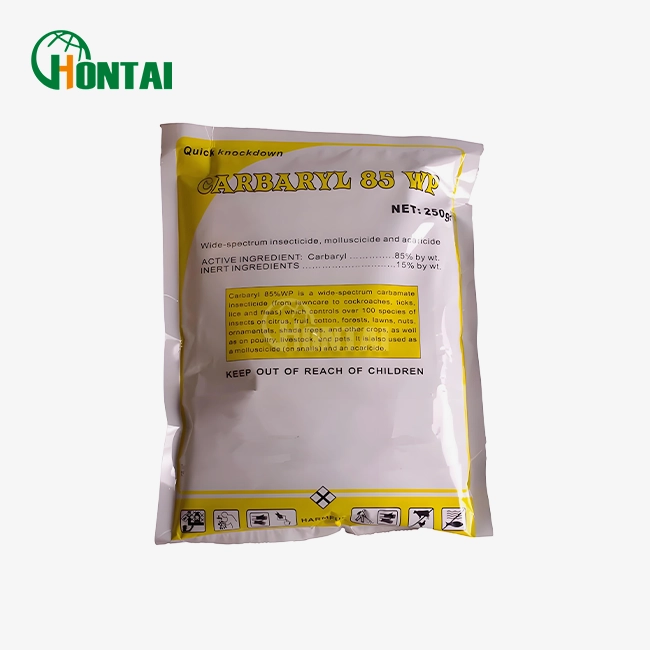
Carbaryl, a carbamate insecticide, is also neurotoxic but lacks the translaminar characteristics and ovicidal potency of thiodicarb. Organophosphates like chlorpyrifos are good broad-spectrum control agents, but their use is becoming limited because of concerns about their persistence and toxicity in the environment. Neonicotinoids are systemic via seed treatments and soil applications; nonetheless, foliar-applied thiodicarb remains an important tool for controlling outbreak populations that exceed systemic residues.
Synthetic Versus Organic Solutions
Certified organic growers and those aiming for sustainability are drawn to organic pest control solutions such as neem oil, Bt products, and botanical extracts. Their environmental hazards are smaller, and they have fewer residual problems, but their efficiency varies with insect species, application settings, and quality of the formulation. Bt treatments are effective against particular caterpillar species but need application at the right time and reapplication owing to brief residual activity.
Thiodicarb wettable powder fills the gap between organic restrictions and broad-spectrum synthetic effectiveness, delivering immediate insect knockdown and prolonged protection with none of the environmental persistence of organochlorines or earlier chemistries. Thiodicarb is a good choice for IPM systems in large-scale commercial situations with complex pest populations. It will allow biological controls and cultural techniques while preserving uniformity of treatment under different environmental circumstances.
Resistance Management Strategies
Thiodicarb utility will need aggressive resistance control. Rotating classes of insecticides, alternating carbamates with pyrethroids, neonicotinoids, or spinosyns, will lessen selection pressure on any one method of action. Monitoring pest populations for changes in susceptibility allows you to adapt treatment plans in a timely manner to prevent resistance from developing before crop loss increases.
Use of thiodicarb along with non-chemical methods enhances pest control and reduces the development of resistance. Crop rotation, alteration of habitat for natural enemies, and scouting based on thresholds are among the practices that reduce the need for chemical inputs. For procurement managers looking for crop protection solutions, goods that enable integrated resistance management techniques provide long-term value by maintaining effectiveness throughout growing seasons and decreasing the risk of product obsolescence.
Procurement Insights for Thiodicarb 75 WP
Pricing Structures and Supplier Selection
Competitive procurement of thiodicarb 75 WP demands thorough evaluation of FOB pricing, active ingredient purity, and supplier reliability. Wholesale buyers targeting 10 to 15% cost savings relative to multinational brands benefit from engaging certified manufacturers in agrochemical production regions such as Hebei, Jiangsu, and Anhui provinces. High-volume orders of 5 to 20 metric tons secure favorable pricing tiers, though minimum order quantity (MOQ) flexibility remains critical for distributors servicing smaller regional markets.
The credibility of the supplier is based on quality certifications such as ISO 9001 production standards and conformity with FAO pesticide regulations. Certificates of Analysis (COA) reporting active ingredient concentration, moisture levels, and impurity profiles provide for verification of batch-to-batch consistency, decreasing the likelihood of inferior formulations. Authorised distributors with a history of exporting provide an extra level of assurance that products are compliant with regulations and traceable across the foreign supply chain.
Terms of Payment: 30% payment in advance via telegraphic transfer and 70% before shipping. L/C at sight arrangements are convenient for government tenders and first-time transactions since the bank releases payment for the documents to the exporter as the documents are verified. Credit conditions remain scarce for new customers, consistent with industry standards of financial stability in cross-border agrochemical commerce.
Bulk Purchasing Benefits and MOQ Flexibility
Buying in bulk enables large agricultural businesses and government buying agencies to achieve considerable cost reductions. Consolidation of orders across many product lines – fungicides, herbicides and plant growth regulators – further decreases per-unit transport costs and streamlines supplier relationships. For distributors establishing complete agrochemical portfolios, obtaining many products from a single manufacturer simplifies paperwork, shipment coordination, and inventory management.
OEM Brand Owners may use flexible MOQ Structures to support phased market entry strategies while doing registration trials. The first orders are for 100-500 grams for effectiveness testing and submissions to regulators, and they may be easily scaled up to commercial production quantities when the permissions are obtained. The strategy limits capital exposure in 12- to 24-month registration cycles, matching inventory build-up with proven market demand.
Shipping, Storage, and Shelf Life Considerations
Thiodicarb compositions should be kept in cool, dry places away from direct sunshine and moisture penetration. Proper storage maintains active ingredient integrity across shelf-life periods generally ranging from 24 to 36 months. Packaging in moisture barrier containers (e.g., aluminum-lined bags or HDPE drums) protects the product against hydrolytic degradation. Containerised shipping ensures that products are not exposed to extremes of temperature and physical damage during transportation.
Procurement managers need to consider lead times of 15 to 30 days from order confirmation to port delivery and prepare for inventory replenishment to meet seasonal demand peaks. Customs clearance methods vary by target market, and paperwork needs include phytosanitary certifications, MSDS (Material Safety Data Sheets), and country-specific registration permissions. Working with vendors that understand international pesticide trading helps to speed up clearance and decrease shipping delays.
Best Practices for Using Thiodicarb 75 WP Effectively
Mixing Procedures and Tank-Mix Compatibility
Mixing instructions: Fill the spray tank to 1/4 to 1/2 full with clean water. With agitation, add the specified amount of thiodicarb 75 WP. To achieve complete dissolution, the solids have to be prevented from sinking to the bottom by mixing. The mixing assures the solids stay suspended for the duration of application. Agitating and topping out the tank with more water keeps it homogeneous and avoids blockage of the nozzle.
When mixing thiodicarb with adjuvants, fertilisers, or other pesticides, it is important to carry out tank-mix compatibility tests. Alkaline substances, such as lime sulphur and Bordeaux mixes, are incompatible with carbamate formulations, causing fast hydrolysis and loss of potency. Jar tests are carried out before large-scale mixing in an effort to identify incompatible combinations that lead to expensive application failures and phytotoxic harm to crops.
Application Timing and Spray Intervals
The best application time should target the life phases of the pest most vulnerable to the mechanism of action of thiodicarb. Early larval instars feed on less vegetation and have less developed detoxifying systems, therefore increasing death rates and decreasing the dosage for control. Scouting systems that track pest egg hatching and larval emergence may guide accurate spray scheduling, optimising treatment effect and minimising off-target exposure.
The spray intervals are set by pest production cycles, length of residual activity, and crop growth rates. Reapplication at 7- to 14-day intervals will keep residues at levels that will provide protection during times of prolonged pest pressure. Integrated monitoring may, however, indicate that natural enemy populations or environmental circumstances are suppressing pest growth, allowing longer intervals between applications. Proper calibration of spray equipment allows for precise dosage administration and uniform coverage, both of which are crucial to attaining the effectiveness stated on the label.
Resistance Monitoring and IPM Integration
Routine bioassays for thiodicarb susceptibility of pests offer early notice of resistance changes, allowing prompt modification before control fails. Working with extension services or research universities provides access to diagnostic capacity and resistance monitoring networks, feeding into regional management recommendations. Documenting treatment results and pest reactions develops institutional knowledge to inform future product selection and rotation schedules.
Several complementary techniques used in conjunction with thiodcarb’s integration in broad IPM systems help lessen dependency on any one control strategy. Biological controls—like parasitoid wasps and predatory beetles—keep pest populations in check between chemical treatments, reducing total treatment frequency. Cultural methods that reduce refugia for the insect and improve the efficiency of chemical treatments, if required, include manipulation of planting date, trap cropping, and cleanliness.
Building Trust: Why Choose Our Thiodicarb 75 WP Solutions?
Quality Assurance and International Certifications
At Hontai, our thiodicarb 75 wp production adheres to stringent quality control protocols validated by international certification bodies. Each production batch undergoes High-Performance Liquid Chromatography (HPLC) analysis to verify active ingredient content, ensuring 75% ± 2% concentration consistency.
Moisture content determined by Karl Fischer titration is less than 2%, which prevents caking and ensures flowability during storage. The suspensibility test will ensure that at least 80% of the formulation is dispersed evenly throughout the field, and there will be no settling or nozzle obstruction problems.
Our manufacturing plant is ISO 9001 accredited, which ensures the quality management system in terms of raw materials, manufacturing process, and testing of the final product. Global procurement experts can be certain that products meet FAO pesticide criteria and GMP (Good Manufacturing Practice) compliance, ensuring product integrity and regulatory alignment. Each cargo is accompanied by a Certificate of Analysis (COA) to ensure traceability and to ease customs clearance in various regulatory settings.
Tailored B2B Support and Flexible Ordering
We know that a diversified customer base requires adaptable procurement options. Our MOQ structure enables small-batch sampling for registration trials from 100 grams, allowing OEM brand owners to undertake field effectiveness testing and complete regulatory dossiers without high upfront costs. As market approval is achieved, easy to scale up to commercial quantities of 1 to 20 metric tonnes means gradual market entrance and inventory management according to proven demand.
We provide custom packaging choices like aluminium bottles, HDPE containers, and customised label printing in several languages to help your business stand out in the marketplace and meet local regulations. Our technical team delivers formulation stability data packages to assist registration applications in hot-climate markets in Africa, Southeast Asia and Latin America, including 2-year accelerated ageing studies at 50°C/75% relative humidity settings. Responsive communication is the hallmark of proactive account managers, who handle technical queries and coordinate logistics to fulfil difficult delivery dates.
Demonstrated Reliability and Client Success
We have a proven track record with agricultural distributors in Nigeria, Vietnam, Brazil, and Kazakhstan for consistent product performance and reliable supply chains. Clients report effective control of resistant bollworm populations in cotton systems with 85 to 95% mortality within 72 hours after treatment. Government procurement agencies respect our capability to meet the big volume tender requirements up to 50 metric tonnes per contract with on-time delivery and comprehensive documentation to assist public health vector control initiatives.
Testimonies from plantation enterprises with over 500 hectares of thiodicarb 75 wp integration show the economic advantages, including decreased treatment frequency compared to shorter residual alternatives and increased yield protection during important reproductive development periods. Our OEM partners value our NDA protection measures that preserve secret formulation information and co-development of unique solutions optimised to regional pest pressures and application equipment.
Conclusion
Thiodicarb 75 WP remains an indispensable tool in modern crop protection programs, delivering reliable control of Lepidopteran larvae, resistant pest populations, and mollusks across diverse agricultural systems. Its unique mode of action, translaminar movement, and ovicidal properties provide strategic advantages in integrated pest management, complementing biological controls and sustainable farming practices. For global procurement professionals, selecting a trusted supplier offering consistent quality, flexible ordering, and comprehensive technical support ensures long-term program success and operational efficiency.
FAQ
1. Is Thiodicarb 75 WP Suitable for All Crop Types?
Thiodicarb 75 WP is registered for use on cotton, soybeans, vegetables, corn, and certain fruit crops, with specific label instructions varying by country. Always consult local registration databases and product labels to confirm approved uses and comply with regional regulations.
2. What Is the Shelf Life Under Recommended Storage?
When stored in original sealed containers under cool, dry conditions away from direct sunlight, thiodicarb 75 wp maintains full efficacy for 24 to 36 months. Moisture exposure accelerates degradation, so inspect packaging integrity regularly.
3. Can Thiodicarb 75 WP Be Mixed with Other Pesticides?
Compatibility depends on pH and formulation chemistry. Avoid tank-mixing with alkaline products such as lime sulfur or copper-based fungicides. Conduct jar tests before combining with adjuvants or other agrochemicals to prevent destabilization and crop injury.
4. How Does Thiodicarb 75 WP Support Resistance Management?
Rotating thiodicarb with insecticides from different mode-of-action groups—such as pyrethroids, neonicotinoids, or spinosyns—reduces selection pressure and delays resistance development. Integrate with monitoring programs to detect early susceptibility shifts.
Partner with Hontai for Premium Thiodicarb 75 WP Supply
Hontai stands ready to support your crop protection needs with premium-grade thiodicarb 75 WP formulations backed by rigorous quality assurance and global logistics expertise. As a trusted thiodicarb 75 wp manufacturer based in Shijiazhuang, Hebei Province, we deliver competitive FOB pricing, flexible minimum order quantities from sampling to commercial scale, and comprehensive registration support for diverse international markets. Our professional sales team responds promptly to technical inquiries, providing formulation stability data, COA documentation, and customized packaging solutions that enhance your brand positioning. Contact us today at admin@hontai-biotech.com to request detailed quotations and explore how our worldwide agricultural service can strengthen your supply chain reliability.
References
1. Tomlin, C.D.S. (2009). The Pesticide Manual: A World Compendium. 15th Edition. British Crop Protection Council, Alton, Hampshire, UK.
2. Food and Agriculture Organization of the United Nations. (2016). FAO Specifications and Evaluations for Agricultural Pesticides: Thiodicarb. FAO Plant Production and Protection Paper.
3. Sparks, T.C. & Nauen, R. (2015). IRAC: Mode of Action Classification and Insecticide Resistance Management. Pesticide Biochemistry and Physiology, 121, 122-128.
4. United States Environmental Protection Agency. (2018). Reregistration Eligibility Decision for Thiodicarb. EPA Office of Pesticide Programs, Washington, D.C.
5. Collaborative International Pesticides Analytical Council. (2020). CIPAC Handbook: Methods for the Analysis of Pesticide Formulations. Volume K, Harpenden, UK.
6. Metcalf, R.L. & Luckmann, W.H. (1994). Introduction to Insect Pest Management. 3rd Edition. John Wiley & Sons, New York, USA.
Our customers’ satisfaction speaks for our quality — contact us to experience the same reliable service.