- English
- French
- German
- Portuguese
- Spanish
- Russian
- Japanese
- Korean
- Arabic
- Greek
- German
- Turkish
- Italian
- Danish
- Romanian
- Indonesian
- Czech
- Afrikaans
- Swedish
- Polish
- Basque
- Catalan
- Esperanto
- Hindi
- Lao
- Albanian
- Amharic
- Armenian
- Azerbaijani
- Belarusian
- Bengali
- Bosnian
- Bulgarian
- Cebuano
- Chichewa
- Corsican
- Croatian
- Dutch
- Estonian
- Filipino
- Finnish
- Frisian
- Galician
- Georgian
- Gujarati
- Haitian
- Hausa
- Hawaiian
- Hebrew
- Hmong
- Hungarian
- Icelandic
- Igbo
- Javanese
- Kannada
- Kazakh
- Khmer
- Kurdish
- Kyrgyz
- Latin
- Latvian
- Lithuanian
- Luxembou..
- Macedonian
- Malagasy
- Malay
- Malayalam
- Maltese
- Maori
- Marathi
- Mongolian
- Burmese
- Nepali
- Norwegian
- Pashto
- Persian
- Punjabi
- Serbian
- Sesotho
- Sinhala
- Slovak
- Slovenian
- Somali
- Samoan
- Scots Gaelic
- Shona
- Sindhi
- Sundanese
- Swahili
- Tajik
- Tamil
- Telugu
- Thai
- Ukrainian
- Urdu
- Uzbek
- Vietnamese
- Welsh
- Xhosa
- Yiddish
- Yoruba
- Zulu
We Asked a Pest Pro If Neem Oil Kills Thrips, and We Might Have Been Doing It Wrong
share:
Thrips are among the most dreaded pests in gardens and on houseplants. Once established, these tiny insects are challenging to eradicate, and they can quickly take a toll on your plants.
Early and consistent treatment is essential for managing these pests and saving your plants, and neem oil is frequently recommended as a viable option. Neem oil is a popular organic insecticide favored for its effectiveness in treating a variety of pests and fungi, but is it truly effective in killing thrips?
We asked a garden pest expert whether neem oil is effective in killing thrips, and she spilled her best insights and tips. Here’s what you need to know about using neem oil to treat thrips.
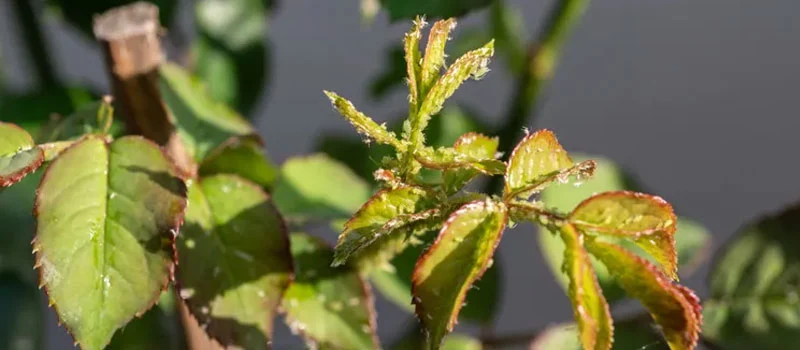
Does Neem Oil Kill Thrips?
In short, Michelle Opela, Senior IPM Manager at Costa Farms, says that yes, neem oil can be effective for killing thrips. However, it all comes down to applying this horticultural oil on the infested plants correctly.
Neem oil is considered a suffocant, meaning it works to treat pests through suffocation. It blocks the insect’s spiracles (the small holes used for breathing), eventually leading to death. However, it’s only able to do this if the oil comes in direct contact with the pest.
“Horticultural oils may not work if they don’t actually contact the pest and get to the spiracle," Opela says. "That’s why adequate coverage is such a huge discussion point for many of us in the industry. Oils work great—but only when they get where they need to go."
Simply dabbing a few areas of an infested plant with neem oil isn't going to work. Complete and consistent coverage is essential when using neem oil to treat thrips, otherwise, you’ll be left with a thrips infestation that spirals out of control.
How to Use Neem Oil to Treat Thrips Effectively
So what’s the key to using neem oil to eradicate thrips once and for all? Opela offers two main tips.
First, to ensure adequate coverage, Opela recommends applying neem oil using a spray. The key here is to get the mist as fine as possible.
“Commercially, we can get this by adjusting our nozzles and pressure," she says. "But at home, you can use a small handheld spray bottle (my personal favorite in terms of droplet size)."
Ensure you cover the whole plant, including both sides of the leaves and the crevices at the base of the petioles. It’s the small, hard-to-reach areas where thrips love to hide.
Next, and perhaps most importantly, add a surfactant to your oil solution. Surfactants help ensure even coverage by breaking the surface tension of the spray solution, allowing it to spread more evenly.
Instead of droplets of oil that pool or run off the leaf, you’ll be left with a nice, wet leaf with 100% coverage, Opela says.
So, what is a surfactant? Dish soap is a frequently recommended surfactant for cleaning and residential gardening purposes; however, Opela recommends using a commercial-grade surfactant for optimal results.
“Make sure this is a horticulture grade surfactant for insecticides [or] fungicides and follow the label," she says. "The use of adjuvants and surfactants really can make or break it when it comes to sprays and helps give you that extra oomph."
Make sure you reapply the neem oil solution every few days until you are confident the infestation is gone. Keep your plant out of direct sunlight during this time to prevent sunburn—you don’t want the neem oil to turn into tanning oil for your plant.
Our customers’ satisfaction speaks for our quality — contact us to experience the same reliable service.