- English
- French
- German
- Portuguese
- Spanish
- Russian
- Japanese
- Korean
- Arabic
- Greek
- German
- Turkish
- Italian
- Danish
- Romanian
- Indonesian
- Czech
- Afrikaans
- Swedish
- Polish
- Basque
- Catalan
- Esperanto
- Hindi
- Lao
- Albanian
- Amharic
- Armenian
- Azerbaijani
- Belarusian
- Bengali
- Bosnian
- Bulgarian
- Cebuano
- Chichewa
- Corsican
- Croatian
- Dutch
- Estonian
- Filipino
- Finnish
- Frisian
- Galician
- Georgian
- Gujarati
- Haitian
- Hausa
- Hawaiian
- Hebrew
- Hmong
- Hungarian
- Icelandic
- Igbo
- Javanese
- Kannada
- Kazakh
- Khmer
- Kurdish
- Kyrgyz
- Latin
- Latvian
- Lithuanian
- Luxembou..
- Macedonian
- Malagasy
- Malay
- Malayalam
- Maltese
- Maori
- Marathi
- Mongolian
- Burmese
- Nepali
- Norwegian
- Pashto
- Persian
- Punjabi
- Serbian
- Sesotho
- Sinhala
- Slovak
- Slovenian
- Somali
- Samoan
- Scots Gaelic
- Shona
- Sindhi
- Sundanese
- Swahili
- Tajik
- Tamil
- Telugu
- Thai
- Ukrainian
- Urdu
- Uzbek
- Vietnamese
- Welsh
- Xhosa
- Yiddish
- Yoruba
- Zulu
Updated onion thrips management guidelines for Michigan onion growers
share:
A new tool for your pest management toolbox: Vertento is now available for the 2026 season. Check out our latest guide on how to strategically integrate this new chemistry into your existing rotation to maximize efficacy and protect against resistance.
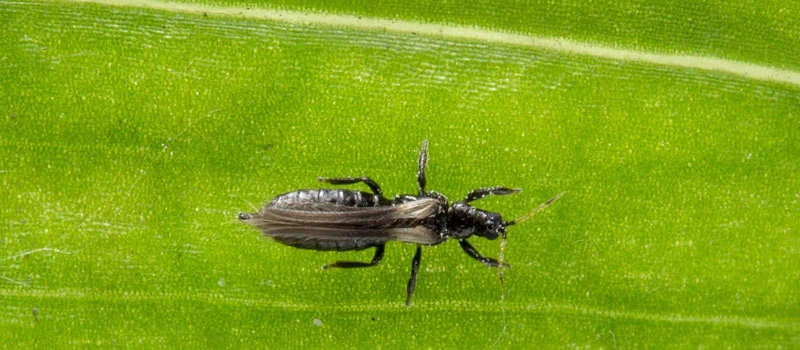
Onion thrips remain one of the most challenging insect pests in onion production. Feeding damage can reduce photosynthetic capacity, weaken plants and contribute to yield losses, particularly during hot, dry conditions that favor population growth. Thrips can also contribute to spreading both fungal and bacterial diseases of onions.
Because thrips populations can increase rapidly, management decisions are most effective when based on regular scouting and pest thresholds rather than reacting only after severe injury becomes visible. In Michigan’s direct seeded onions, the first insecticide applications become necessary around the end of June in a typical year.
One challenge for growers is determining not only when to spray, but which products to use and when to rotate them. The most effective programs adjust insecticide choices based on pest pressure and rotate modes of action to maintain efficacy and slow resistance development.
Radiant SC has been one of the most effective tools available for onion thrips management, but repeated use may increase the risk of reduced susceptibility over time. Radiant should be viewed as a valuable tool that must be protected rather than a product to rely on every year. A new insecticide, Vertento by Syngenta, in a novel mode of action class (Group 30) has just become available to growers in 2026. This creates an opportunity for growers to rotate away from using Radiant annually, reducing resistance risks.
The first step in an effective thrips management program is weekly field scouting. Examine plants from multiple areas of the field and determine the average number of thrips per leaf. This average provides a practical way to estimate population pressure and guide treatment decisions.
Insecticide applications typically consist of two applications of the same active ingredient seven days apart. For example, all the programs described below start with two applications of Movento a week apart. Movento is an insecticide that moves to new onion growth and controls immature stages of thrips. After this insecticide is applied twice, thrips populations usually stay below the treatment threshold for a couple of weeks. So, this is one instance when scouting is worth the investment!
Use the following categories to classify onion thrips pressure levels based on scouting. Once pressure levels have been identified, follow a treatment sequence appropriate for that level.
Our customers’ satisfaction speaks for our quality — contact us to experience the same reliable service.