- English
- French
- German
- Portuguese
- Spanish
- Russian
- Japanese
- Korean
- Arabic
- Greek
- German
- Turkish
- Italian
- Danish
- Romanian
- Indonesian
- Czech
- Afrikaans
- Swedish
- Polish
- Basque
- Catalan
- Esperanto
- Hindi
- Lao
- Albanian
- Amharic
- Armenian
- Azerbaijani
- Belarusian
- Bengali
- Bosnian
- Bulgarian
- Cebuano
- Chichewa
- Corsican
- Croatian
- Dutch
- Estonian
- Filipino
- Finnish
- Frisian
- Galician
- Georgian
- Gujarati
- Haitian
- Hausa
- Hawaiian
- Hebrew
- Hmong
- Hungarian
- Icelandic
- Igbo
- Javanese
- Kannada
- Kazakh
- Khmer
- Kurdish
- Kyrgyz
- Latin
- Latvian
- Lithuanian
- Luxembou..
- Macedonian
- Malagasy
- Malay
- Malayalam
- Maltese
- Maori
- Marathi
- Mongolian
- Burmese
- Nepali
- Norwegian
- Pashto
- Persian
- Punjabi
- Serbian
- Sesotho
- Sinhala
- Slovak
- Slovenian
- Somali
- Samoan
- Scots Gaelic
- Shona
- Sindhi
- Sundanese
- Swahili
- Tajik
- Tamil
- Telugu
- Thai
- Ukrainian
- Urdu
- Uzbek
- Vietnamese
- Welsh
- Xhosa
- Yiddish
- Yoruba
- Zulu
Preemergence Metamitron Controls Resistant Broadleaf Weeds in Western Sugar Beet Crops
share:
Field trials across western United States agricultural regions demonstrate that preemergence applications of the herbicide metamitron successfully control several troublesome broadleaf weed species in sugar beet production, although the chemical fails to manage kochia.
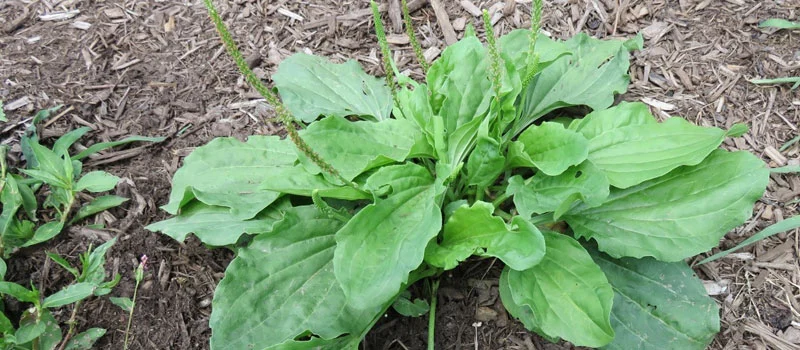
Currently, sugar beet growers have no effective preemergence or postemergence herbicide options available for managing populations of kochia and Palmer amaranth that exhibit resistance to glyphosate as well as acetolactate synthase inhibitors. To address this crop protection limitation, agronomists evaluated preemergence metamitron applications across multiple commercial production environments.
The field experiments took place in Lingle, Wyoming, and Scottsbluff, Nebraska, during the 2019 growing season. Researchers repeated the trials during 2020 at the Scottsbluff location and expanded testing into two distinct Oregon agricultural sites situated in Nyssa and Ontario.
The tested individual preemergence treatments included cycloate applied at 4.03 kilograms of active ingredient per hectare, ethofumesate applied at 1.58 kilograms per hectare, and metamitron applied at rates of 2.82, 5.63, and 7 kilograms per hectare. The team also evaluated a preemergence tank mixture combining metamitron at 5.63 kilograms per hectare with ethofumesate at 1.58 kilograms per hectare.
Complex sequential herbicide programs tested the preemergence metamitron and ethofumesate mixture followed by postemergence applications of ethofumesate at 1.58 kilograms per hectare or acetochlor at 1.26 kilograms per hectare at the two to four true-leaf stage. Further sequences delivered ethofumesate or acetochlor at both two to four and six to eight true-leaf stages, or ethofumesate followed by acetochlor across those respective growth intervals.
For experimental comparison, researchers maintained a nontreated control along with a weed-free check treatment consisting of glyphosate applied at the two to four and six to eight true-leaf stages of sugar beet development.
When applied alone preemergence, ethofumesate provided 65 percent or less control of Palmer amaranth, common lambsquarters, and redroot pigweed. In comparison, adding metamitron at 5.63 kilograms per hectare as a tank mixture partner elevated control of all three target weed species to 95 percent or greater.
Across all experimental trials, any treatment containing metamitron at 5.63 kilograms per hectare or higher provided at least 80 percent control of Palmer amaranth, common lambsquarters, and redroot pigweed, but did not control kochia. Furthermore, in test plots where kochia was absent, any herbicide combination containing metamitron at or above 5.63 kilograms per hectare produced sugar beet root yields and recoverable sugar levels comparable to standard glyphosate-based programs.
The research indicates that preemergence metamitron applications of at least 5.63 kilograms per hectare suppress Palmer amaranth, common lambsquarters, and redroot pigweed until sugar beet reaches the two true-leaf stage, when producers can safely apply secondary herbicides such as very-long-chain fatty acid inhibitors.
Our customers’ satisfaction speaks for our quality — contact us to experience the same reliable service.