- English
- French
- German
- Portuguese
- Spanish
- Russian
- Japanese
- Korean
- Arabic
- Greek
- German
- Turkish
- Italian
- Danish
- Romanian
- Indonesian
- Czech
- Afrikaans
- Swedish
- Polish
- Basque
- Catalan
- Esperanto
- Hindi
- Lao
- Albanian
- Amharic
- Armenian
- Azerbaijani
- Belarusian
- Bengali
- Bosnian
- Bulgarian
- Cebuano
- Chichewa
- Corsican
- Croatian
- Dutch
- Estonian
- Filipino
- Finnish
- Frisian
- Galician
- Georgian
- Gujarati
- Haitian
- Hausa
- Hawaiian
- Hebrew
- Hmong
- Hungarian
- Icelandic
- Igbo
- Javanese
- Kannada
- Kazakh
- Khmer
- Kurdish
- Kyrgyz
- Latin
- Latvian
- Lithuanian
- Luxembou..
- Macedonian
- Malagasy
- Malay
- Malayalam
- Maltese
- Maori
- Marathi
- Mongolian
- Burmese
- Nepali
- Norwegian
- Pashto
- Persian
- Punjabi
- Serbian
- Sesotho
- Sinhala
- Slovak
- Slovenian
- Somali
- Samoan
- Scots Gaelic
- Shona
- Sindhi
- Sundanese
- Swahili
- Tajik
- Tamil
- Telugu
- Thai
- Ukrainian
- Urdu
- Uzbek
- Vietnamese
- Welsh
- Xhosa
- Yiddish
- Yoruba
- Zulu
Planthoppers Threaten Rice Production, BRIN Encourages Farmers to Adopt This Approach
share:
The brown planthopper is one of the main threats to rice production in Indonesia. To mitigate this threat, the National Research and Innovation Agency (BRIN) is encouraging farmers to implement integrated brown planthopper pest control as a means of maintaining rice productivity while reducing the risk of losses caused by plant pests.
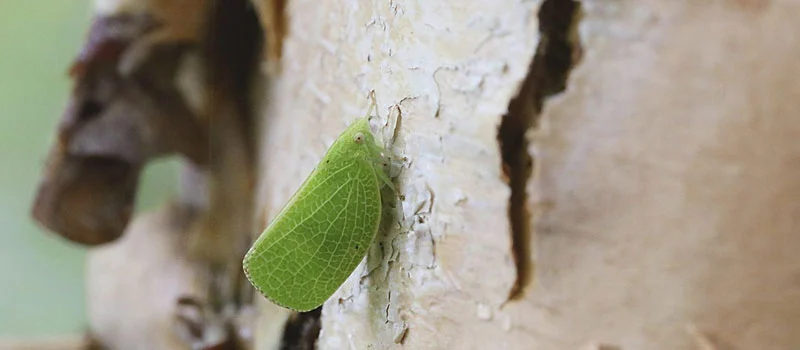
These efforts were presented by BRIN researchers during the Workshop on Integrated Brown Planthopper Pest Control, held in Sidowayah Village, Polanharjo Subdistrict, Klaten Regency, Central Java, on Thursday (6/8).
Arlyna Budi Pustika, a researcher at BRIN’s Research Center for Food Crops, explained that the brown planthopper is one of the primary pests of rice plants; it not only directly damages the plants but also acts as a vector for spreading the grassy stunt virus and the hollow stunt virus.
“These pest infestations can cause stunted plant growth, yellowing leaves, wilting, and even symptoms of ‘hopperburn’ or desiccation, which have the potential to significantly reduce crop yields,” she explained.
According to him, on average, farmers lose about 30 percent of their potential yield due to plant pest and disease attacks, while yield losses from insect infestations range from 20 to 25 percent. In fact, brown planthopper infestations have affected hundreds of thousands of hectares of land in Indonesia, resulting in production losses of 1–2 metric tons of paddy per hectare and economic losses amounting to trillions of rupiah.
“The spread of the brown planthopper is influenced by many factors, ranging from the reduced implementation of Integrated Pest Management (IPM), continuous rice cultivation, inappropriate pesticide use, selection of unsuitable varieties, to the decline in natural enemy populations due to disruptions in the ecosystem balance,” said Arlyna.
Furthermore, excessive use of insecticides can actually accelerate the development of resistance in the planthoppers, thereby further reducing the effectiveness of control measures. On the other hand, non-simultaneous planting patterns ensure a constant food supply for the planthoppers, allowing their populations to continue growing.
“For this reason, BRIN encourages farmers to implement integrated pest management strategies that combine various approaches. These measures include synchronized planting, crop rotation, the use of planthopper-resistant rice varieties, regular population monitoring, and the use of biological agents as early as possible, such as Metarhizium anisopliae and Beauveria bassiana,
“and the use of chemical insecticides should be a last resort only when pest populations have exceeded the economic threshold,” she explained
She emphasized that pest control cannot rely solely on pesticides. The success of planthopper control is largely determined by the implementation of an integrated strategy, ranging from coordinated planting schedules, population monitoring, the use of resistant varieties, to preserving natural enemies.
“The timing of control measures is a critical factor in success. Monitoring brown planthopper populations using light traps and direct field observations must be conducted regularly so that control actions can be taken early on, before the population develops into the next generation, which is more difficult to control,” she added.
BRIN also recommends the use of rice varieties resistant to the brown planthopper, such as Inpari 47 WBC, Inpari Gemah, Inpari 48 Blas, Inpari Digdaya, Inpari 45 Dirgahayu, and several other high-yielding varieties. The use of these pest-resistant varieties is considered capable of reducing the risk of infestation while also decreasing farmers’ reliance on chemical pesticides.

Our customers’ satisfaction speaks for our quality — contact us to experience the same reliable service.