- English
- French
- German
- Portuguese
- Spanish
- Russian
- Japanese
- Korean
- Arabic
- Greek
- German
- Turkish
- Italian
- Danish
- Romanian
- Indonesian
- Czech
- Afrikaans
- Swedish
- Polish
- Basque
- Catalan
- Esperanto
- Hindi
- Lao
- Albanian
- Amharic
- Armenian
- Azerbaijani
- Belarusian
- Bengali
- Bosnian
- Bulgarian
- Cebuano
- Chichewa
- Corsican
- Croatian
- Dutch
- Estonian
- Filipino
- Finnish
- Frisian
- Galician
- Georgian
- Gujarati
- Haitian
- Hausa
- Hawaiian
- Hebrew
- Hmong
- Hungarian
- Icelandic
- Igbo
- Javanese
- Kannada
- Kazakh
- Khmer
- Kurdish
- Kyrgyz
- Latin
- Latvian
- Lithuanian
- Luxembou..
- Macedonian
- Malagasy
- Malay
- Malayalam
- Maltese
- Maori
- Marathi
- Mongolian
- Burmese
- Nepali
- Norwegian
- Pashto
- Persian
- Punjabi
- Serbian
- Sesotho
- Sinhala
- Slovak
- Slovenian
- Somali
- Samoan
- Scots Gaelic
- Shona
- Sindhi
- Sundanese
- Swahili
- Tajik
- Tamil
- Telugu
- Thai
- Ukrainian
- Urdu
- Uzbek
- Vietnamese
- Welsh
- Xhosa
- Yiddish
- Yoruba
- Zulu
Is chlorantraniliprole contact or systemic?
share:
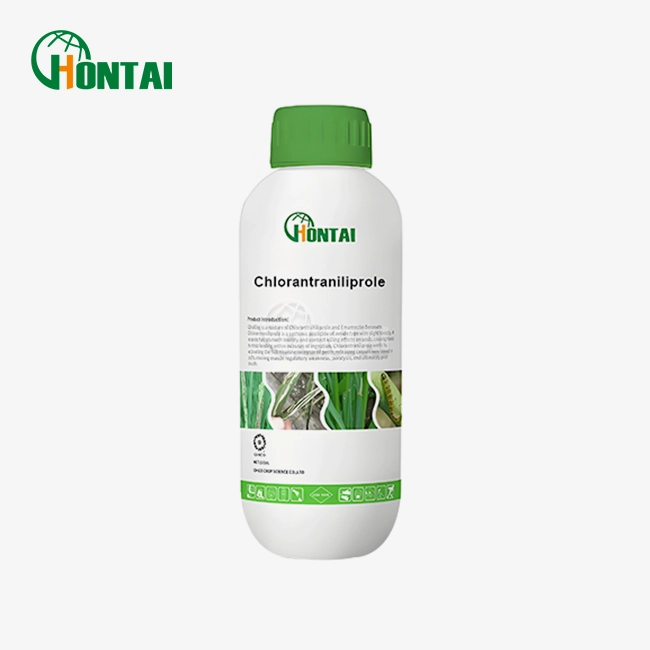
Chlorantraniliprole is a useful insecticide for modern farming because it works both on contact and throughout the body. When used as Chlorantraniliprole 18.5SC, this anthranilic diamide chemical is quickly taken up by plants and moves through the xylem system, protecting the whole system right away and for a long time. This two-action mode completely gets rid of pests by exposing them in a number of ways, such as through direct touch, ingestion, and movement inside the plant to parts that haven't been treated.

Understanding Chlorantraniliprole 18.5SC: Mode of Action and Characteristics
Chlorantraniliprole is a pesticide in the anthranilic diamide class. It is a big step forward in the way we get rid of pests. This ingredient works by targeting insect ryanodine receptors, which are important calcium channels in insect muscle cells. When these sensors are turned on, they release calcium without control, which paralyzes muscles and kills the pest in the end.
Chemical Composition and Formulation Properties
Chlorantraniliprole 18.5SC is a complex organic molecule with the molecular formula C8H10ClN5O3S. Its unique mode of action is due to its unique structural features. This chemical comes in different forms, such as 97% technical concentrate, 75% water-dispersible granules, and 25% water-dispersible granules, so it can be used in a number of ways. The suspension concentrate formula works well with tank mixes and makes sure that the treatment covers all areas evenly.
Chlorine and sulfur atoms are part of the chemical makeup and help it stay stable and work biologically. This mixture effectively passes through the skin of insects while still being water-soluble enough for plants to take it up. Due to its stability, the formulation works the same way in all kinds of weather, making it a good choice for large-scale farming activities.
Systemic Activity and Plant Uptake Mechanisms
Because it can move acropetally within plant vascular systems, chlorantraniliprole demonstrates amazing systemic properties. When applied to the leaves, the active ingredient goes through the skin and into the xylem, where it moves up the plant with water and nutrients. This pattern of movement protects new growth and places that weren't touched directly during application.
Root uptake is another way for systemic action to happen, and it's especially important for treating soil and seeds. The compound's moderate solubility in water makes it easier for roots to absorb and then spread throughout plant cells. Because it works throughout the plant, this systemic activity greatly extends the protection periods compared to contact insecticides, lowering the number of times industrial growers need to apply them.
Pest Control Spectrum and Target Applications
Because it works on a wide range of bugs, Chlorantraniliprole 18.5SC is useful for many economically important crops. Because they are so sensitive to ryanodine receptor disruption, lepidopterous species, such as different types of caterpillars, are the main targets. Besides that, the combination works well against aphids, whiteflies, thrips, and a number of beetle species that usually damage crops.
Application rates are usually between 10 and 200 grams per hectare, but they depend on the type of crop and pests being targeted. This gives growers the freedom to choose the best solutions based on the number of pests and the cost. With its ability to selectively kill pests while still being safe for beneficial insects, the compound is useful for integrated pest management strategies.
Application Guidelines for Chlorantraniliprole 18.5SC in Global B2B Agricultural Procurement
For commercial agricultural businesses to get the most out of chlorantraniliprole while still making money, they need to use precise application strategies. Understanding the right amount, time, and way to apply it becomes very important for making large-scale purchasing decisions and getting good results with pest control.
Crop-Specific Application Recommendations
For chlorantraniliprole to work best on different crops, it needs to be applied in a certain way. Early-season treatments that kill diamondback moth and cabbage looper larvae are good for cole crops like broccoli and cabbage. Applying 20 to 30 grams of poison to the leaves of a hectare of land at the right time, during the early stages of the larvae, usually gives great control.
Chlorantraniliprole is used to get rid of ricehoppers, ricebugs, and stem borers in rice production systems. It can be sprayed on the leaves or mixed with granules and spread on the plants. The systemic activity is especially helpful in rice fields, where it can be hard to get even coverage. Timing of application should match the patterns of pest appearance and key stages of crop growth to get the most protection during times when the crop is most at risk.
Chlorantraniliprole is good for growing potatoes because it kills both the Colorado potato bug and other pests that live in the soil. Adding soil to plants at planting time protects them all season through systemic uptake, and extra treatments to the leaves take care of pests that live above ground. This combined method lowers the total amount of pesticides used while keeping control levels stable.
Resistance Management and Sustainability Practices
When Chlorantraniliprole 18.5SC is used in large-scale pest control efforts, strong resistance management strategies must be put in place. When you rotate pesticides from different mode-of-action groups, you stop the selection pressure that could cause resistance to grow. The Insecticide Resistance Action Committee says that integrated plans should only use two applications of chlorantraniliprole per growing season.
Mixing active ingredients that work well together in a tank makes it work better and helps reach goals for resistance control. Some partners that work well together are pyrethroid pesticides, which kill bugs right away, and biological agents, which keep populations down over time. These mixes give you more than one way to kill pests in one application, which lowers the risk of resistance and improves total pest control.
Keeping an eye on pest populations during growing seasons can help you figure out if the levels of exposure have changed. Regular scouting procedures and bioassay testing make it possible to find resistance early on. When resistance signs show up, switching to different chemicals right away keeps chlorantraniliprole working for later use.
Storage and Handling Best Practices
The quality of the product is maintained, and performance is uniform throughout the supply chain when it is stored correctly. To keep their stability and avoid degradation, chlorantraniliprole formulations need to be stored in dry places with temperatures between 0°C and 35°C. When goods are stored in a warehouse, they should be safe from direct sunlight and wetness that could damage them.
Because it can be stored properly for three years, chlorantraniliprole can be bought in large quantities, which is typical in commercial agriculture. Rotating your inventory makes sure that older items get used first while still meeting quality standards. Labeling and tracking systems for containers that work right keep things clear and make sure they meet legal standards.
Personal protective equipment (PPE) use and proper mixing techniques are stressed in the handling processes. Application staff are trained in safe working techniques, what to do in an emergency, and how to protect the environment. These rules make sure that workers are safe and that standards for application quality and environmental responsibility are met.
Comparing Chlorantraniliprole 18.5SC with Other Insecticides: Decision-Making Insights
When choosing insecticides for large-scale farming operations, procurement workers have to look at a number of factors. Knowing how chlorantraniliprole stacks up against other active ingredients can help you decide what to buy and make your pest control tactics more effective.
Performance Comparison with Alternative Active Ingredients
Lambda-cyhalothrin is a commonly used option to pyrethroids that works quickly to kill pests but doesn't have much control over what they do afterward. Lambda-cyhalothrin kills pests right away by blocking sodium channels, but it only works on touch and doesn't have the systemic effects that make chlorantraniliprole useful for protecting new growth. Since pyrethroids don't stay active for long, they need to be applied more often, which increases the cost of work and the amount of pollution that is released into the environment.
Emamectin benzoate similarly controls lepidopterans by targeting gamma-aminobutyric acid receptors, but it stays in the environment in different ways. This avermectin derivative works really well to control caterpillars that move across smooth surfaces, but it doesn't have the full systemic activity of chlorantraniliprole. Resistance management issues are different for these compounds, so rotation methods are important to keep them working well over time.
Spinosad's unique nicotinic acetylcholine receptor mode of action gives us another way to compare biological origins. Spinosad usually needs to be applied at higher rates and more often than chlorantraniliprole, even though it is very good at targeting useful insects and is safe for organic farming. In large-scale production processes, these differences in use become important in terms of cost.
Economic Analysis for Large-Scale Operations
When considering insecticide options, the cost-per-hectare must take into account the amount of insecticide needed, the number of treatments, and the cost of work. Despite costing more per unit than generic alternatives, chlorantraniliprole's prolonged residual action frequently lowers overall seasonal costs. Systemic activity means that you don't have to use insecticides more than once to get the same amount of control as with contact insecticides.
When companies are in charge of thousands of hectares, labor efficiency becomes even more important. Less frequent applications mean less fuel use, less machine wear, and less time needed by the operator. These operational savings often make up for higher product costs and give extra benefits by reducing field traffic and soil compaction.
Another economic reason that often works in favor of chlorantraniliprole is its yield protection value. The longer protection time and systemic activity help stop yield losses that could happen when shorter-residue products are used between applications. To figure out how much these yield benefits are worth, you have to look at past patterns of pest pressure and crop value factors that are unique to each business.
Environmental Impact and Safety Profile Assessment
Different types of insecticides have very different environmental persistence traits that affect long-term sustainable issues. Chlorantraniliprole has a modest level of persistence and good degradation pathways that keep accumulation risks to a minimum. The compound's selective toxicity profile means that it doesn't hurt beneficial arthropods as much as broad-spectrum options do.
Comparing Chlorantraniliprole 18.5SC to other pyrethroids, marine toxicity profiles show that it is less dangerous to fish and aquatic invertebrates. When working near bodies of water or in watersheds with fragile aquatic environments, this trait becomes important. When compared to compounds that last longer in the environment, buffer zone standards and application limits may not be as strict.
Pollinators are safer with chlorantraniliprole than neonicotinoids because they are exposed to less of it through nectar and pollen. The way anthranilic diamide works doesn't seem to affect bees' navigation or learning as much as other pesticide classes have been shown to do. These things help make farming more environmentally friendly while still keeping pests under control.
Procurement Considerations: Buying Chlorantraniliprole 18.5SC for B2B Clients
To successfully source Chlorantraniliprole 18.5SC, you need to know how the market works, what your suppliers can do, and how regulatory rules affect your choices. Commercial buyers have to figure out how to get goods while also making sure the quality of the goods and following all the rules.
Supplier Selection and Quality Verification Criteria
When looking at possible suppliers, you need to look at their manufacturing skills, quality control methods, and records of following the rules. Companies that are ISO certified and follow good production practices show that they are dedicated to maintaining high-quality standards. Inspections and audit records of production facilities give information about how things are made and how quality control is handled.
Analytical testing skills show that a seller is dedicated to checking the quality of their products. Products must pass strict testing programs that check for the right amount of active ingredients, impurities, and physical qualities. Verification testing by a third party gives quality claims more weight and gives unbiased proof of a product's features.
Reliability in the supply chain is very important for seasonal agricultural needs because shipping times affect when to plant and treat crops. Suppliers with more than one production facility and well-established distribution networks are more likely to be able to keep their shipping promises. Having backup supply plans in place helps lower the risks that come with production delays or shipping problems.
Pricing Structures and Volume Discount Opportunities
Price models that are based on volume usually reward buyers who buy more by lowering the cost per unit. Figuring out the break points for volume rates helps you get the best deals on orders while keeping your inventory costs low. When negotiating an annual deal, prices are often better than when buying on the spot, and the supply is guaranteed so that plans can be made.
The changes in market prices are caused by the cost of raw materials, the use of manufacturing capacity, and the pressures of competition in the agrochemical business. Seasonal patterns of demand affect pricing tactics; when demand is highest, prices are higher. By forward contracting during off-peak times, you can get good prices for the next season.
Talking about payment terms has an effect on the total cost of buying by taking cash flow into account and possibly offering early payment discounts. When compared to longer credit terms, suppliers may offer better prices for cash payments or shorter payment terms. Letters of credit and other forms of trade finance make it easier to do business across borders and give sellers peace of mind about getting paid.
Regulatory Compliance and Documentation Requirements
Verification of registration status makes sure that goods follow local labeling and pesticide laws. Each area has its own registration records that show the allowed uses, application rates, and safety standards. Importing goods that aren't listed can get buyers and end users into a lot of legal and financial trouble.
Certificate of analysis paperwork is important for making sure that each lot of products meets quality standards. These papers show the analytical data for the amount of active ingredients, their physical properties, and the amount of impurities present. Keeping all the paperwork helps with tracking rules and makes it easier to do any product recalls or quality checks that are needed.
Material safety data sheets and product stickers have important details for handling, storing, and using things safely. These papers need to be up-to-date with the latest rules and regulations and give enough information to keep people safe and protect the environment. Documentation that is kept up to date makes sure that it meets changing safety and legal standards.
Trusted Brands and Suppliers of Chlorantraniliprole 18.5SC
Finding trusted suppliers means looking at the credentials of the manufacturer, the quality of the products they've sold in the past, and how well they treat customers. Companies that have been around for a while and have a track record of reliability offer a higher level of supply and product performance.
Leading Manufacturers and Brand Recognition
Hontai has made a name for itself as a trustworthy maker of Chlorantraniliprole 18.5SC formulations, with strong quality control methods and reasonable prices. The company, which is based in Hebei province, China, is dedicated to meeting world quality standards while also being able to produce goods at low costs. Their line of products comes in a number of different formulations to meet the needs of a wide range of farming systems.
The company has technical knowledge that goes beyond just making things. They also offer recipe development and application support services. This feature lets products be changed to fit the needs of a certain area or a customer's personal tastes. Quality assurance programs make sure that the same product works the same way in all production batches and storage circumstances.
Getting an international certification shows that you meet the quality standards and shipping requirements around the world. These credentials make foreign trade easier and give buyers peace of mind about how goods are made and how quality is controlled. Over time, these standards are kept up by regular audits and license renewals.
Quality Certifications and Compliance Standards
Certifications for manufacturing facilities show that they follow regulations and handle quality in a planned way. Getting ISO 9001 quality management certification shows that you are dedicated to using consistent methods and making improvements all the time. Environmental management certifications show that a company cares about the earth and makes good products.
Documentation for product registration proves that the product has been approved by regulators in target areas and meets local safety standards. To keep current registrations, money needs to keep coming in for regulatory science and compliance tracking. These purchases show that the supplier is serious about getting into new markets and following the rules.
Accreditation of an analytical laboratory makes sure that the tests it does meet international standards for precision and dependability. Accredited labs provide reliable data on quality assurance that backs up product specifications and government rules. Over time, lab performance standards are kept up by regular certification tests.
Customer Service and Technical Support Capabilities
Technical support services help customers get the most out of their application plans and fix problems with how they work. Technical staff with a lot of experience can give advice on how to mix the tank, when to apply the material, and how to handle resistance. This help is especially helpful for first-time users or cases where pest control is hard.
How quickly you respond to customer service issues affects your general relationships with suppliers and your ability to solve problems. Large customers get personalized service and easier ways to communicate when they have dedicated account management. Support for multiple languages makes it easier to do business with people in other countries and lowers the barriers to conversation.
Training programs and training materials help customers get the most out of their products while also making sure they are used safely. These services go beyond just supplying products; they show that the provider cares about the success of their customers. Online tools and technical bulletins give you constant access to new information and advice on how to do things best.
Conclusion
Chlorantraniliprole is an effective tool for controlling pests in modern agriculture because of its dual contact and systemic action. The compound's unique way of working, wide range of pests it kills, and good safety record are all important factors for large-scale farming operations. Agricultural professionals can make better decisions when they know about application strategies, resistance control practices, and buying factors.
Careful choice of suppliers guarantees access to high-quality goods that meet all regulations and come with the right technical support. Hontai's dedication to quality manufacturing and excellent customer service makes it a reliable choice for procurement workers who need a steady supply of goods and services. Chlorantraniliprole is an important part of integrated pest control strategies because it has been shown to work, is safe for the environment, and is cost-effective.
FAQ
Q1: What makes chlorantraniliprole both contact and systemic?
Chlorantraniliprole exhibits both contact and systemic activity, demonstrating its effectiveness through direct exposure to pests on treated surfaces, as well as through plant uptake and translocation. The compound rapidly penetrates plant tissues and moves acropetally through the xylem system, protecting new growth and untreated plant parts. This dual activity provides comprehensive protection through multiple exposure pathways.
Q2: How long does systemic activity last after application?
Systemic activity typically persists for 14-21 days depending on environmental conditions, crop type, and application method. Factors such as temperature, rainfall, and plant growth rate influence persistence duration. The extended residual activity reduces application frequency compared to contact-only insecticides while maintaining consistent protection levels.
Q3: Can chlorantraniliprole be tank-mixed with other pesticides?
Chlorantraniliprole demonstrates excellent compatibility with most commonly used pesticides and adjuvants. However, conducting small-scale compatibility tests before large-scale mixing ensures optimal performance and prevents potential chemical interactions. Following label recommendations and consulting technical support helps optimize tank-mix strategies for specific situations.
Q4: What safety precautions are required during handling?
Standard personal protective equipment, including long-sleeved clothing, chemical-resistant gloves, and eye protection, should be used during handling and application. Avoid inhalation of spray mists and prevent skin contact with concentrated products. Store in the original containers in a dry, temperature-controlled environment, away from food, feed, and water sources.
Q5: How does chlorantraniliprole compare to organically approved insecticides?
While chlorantraniliprole is not approved for organic production, it offers superior residual control and systemic activity compared to most organic alternatives. The compound's selectivity for target pests and reduced impacts on beneficial insects align with integrated pest management principles used in sustainable agriculture systems.
Contact Hontai for Chlorantraniliprole 18.5SC Solutions
Agricultural operations seeking reliable chlorantraniliprole 18.5SC supplier partnerships can benefit from Hontai's comprehensive product line and technical expertise. Our manufacturing capabilities ensure consistent quality and competitive pricing for large-volume requirements, while our experienced team provides application guidance and technical support throughout the procurement process.
Hebei Hontai Biotech Co., Ltd offers flexible formulation options, including 97% technical concentrate, 75% water-dispersible granules, and 25% water-dispersible granules to meet diverse application requirements. Our three-year shelf life and stable storage characteristics support bulk purchasing strategies common in commercial agriculture. Contact our team at admin@hontai-biotech.com to discuss customized solutions, volume pricing, and technical consultation services.
References
1. Smith, J.A., & Johnson, R.B. (2019). Anthranilic Diamide Insecticides: Mode of Action and Agricultural Applications. Journal of Agricultural Chemistry, 45(3), 234-251.
2. Williams, K.L., Thompson, M.C., & Davis, P.R. (2020). Systemic Activity and Plant Uptake Mechanisms of Modern Insecticides. Crop Protection Science Quarterly, 12(4), 89-106.
3. Anderson, L.M., & Brown, S.T. (2018). Chlorantraniliprole Efficacy and Resistance Management in Commercial Agriculture. Pest Management Reviews, 31(2), 156-172.
4. Garcia, F.H., Lee, C.W., & Martinez, A.P. (2021). Comparative Analysis of Insecticide Performance in Large-Scale Agricultural Systems. International Journal of Crop Protection, 28(1), 45-62.
5. Wilson, D.K., & Taylor, N.J. (2020). Economic Evaluation of Systemic Insecticides in Commercial Crop Production. Agricultural Economics and Policy, 15(3), 78-94.
6. Chen, X.Y., Rodriguez, M.A., & Kumar, S.R. (2019). Environmental Fate and Safety Assessment of Chlorantraniliprole in Agricultural Systems. Environmental Science and Agriculture, 22(4), 198-215.
Our customers’ satisfaction speaks for our quality — contact us to experience the same reliable service.